
The subject of genetically modified organisms (GMOs) is regularly popping up at cheese counters this year. Customers want to know if a cheese is made with GMOs and have a lot of questions about rennet. The short and sweet answer is that all cheese in the case is free of GMOs.
GMOs in the US are regulated jointly by the Food and Drug Administration (FDA), Department of Agriculture, and the Environmental Protection Agency. The FDA is the agency that determines if a GMO (or GMO ingredient) is safe to eat. The FDA currently allows 10 species of genetically edited plants and two species of genetically engineered animals to be consumed by humans. These are things like corn, soybeans, papayas, pigs, and salmon. No species in this list are ingredients in cheesemaking or animals that produce milk from which we make cheese. So why do so many people associate cheese with GMOs? The answer lies in one ingredient: rennet.
Rennet is any enzyme used to coagulate the caseins, or proteins, in milk to create a firm-bodied cheese. An enzyme is a biological catalyst, meaning it can change things. Enzymes are the workhorses of living beings and are most often proteins. The instructions for making a protein are encoded in DNA. For a cell to synthesize a protein, the enzyme transcriptase runs along a gene (a segment of DNA), reading the instructions and transcribing them into another molecule: RNA. The RNA floats off and is read by another part of the cell—the ribosome—which uses the instructions in the RNA to synthesize a protein. This unidirectional process from DNA to RNA to protein is the central dogma of molecular biology.
All rennet, therefore, is derived from a living organism whose DNA contains the genes which encode the instructions for producing the rennet. This is true for cardosin, one of the enzymes found in the cardoon thistle used for making Spanish and Portuguese torta-style cheeses, or for chymosin, the primary enzyme in animal rennet.
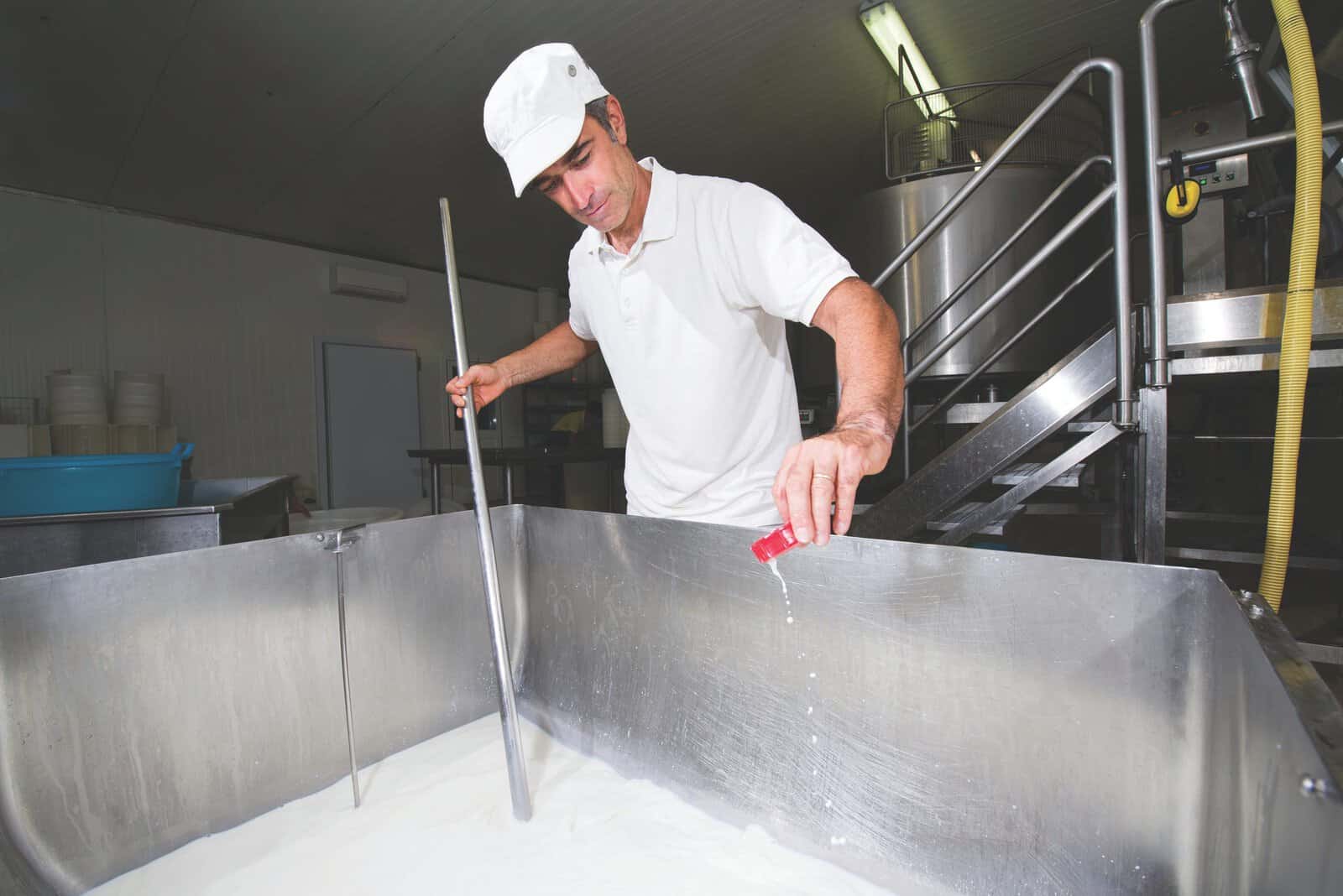
Chymosin is an incredibly predictable and reliable enzyme. It breaks down the kappa-casein in the exact same spot without causing any other chemical reactions. It is an ideal rennet. However, traditional harvesting from the abomasum—the fourth chamber of a ruminant’s stomach—doesn’t produce pure chymosin. Pepsin, another enzyme, often makes up a portion of the rennet. This enzyme can cause additional flavor development in cheese, which some cheesemakers do not want.
During most of the twentieth century, rennet producers chemically purified animal rennet to remove pepsin, creating chymosin-only rennets and making pure chymosin expensive. In 1973, this changed with an experiment.
Scientists Stanley Cohen and Herbert Boyer created a small ring of DNA called a plasmid, which contained the gene for antibiotic resistance. They forced the plasmid to be absorbed through the cell wall of E. coli bacteria in a process known as transformation. This allowed the modified bacteria to create proteins for antibiotic resistance and survive in the presence of antibiotics.
In 1978, Genentech and Eli Lilly used this biotechnology to create a low-cost insulin that became commercially available in 1982. Bacteria were modified with the human insulin-producing gene grown in a bioreactor; the insulin protein was precipitated out for use. This process is precision fermentation.
Pfizer used this same idea to generate chymosin. In 1990, the FDA approved fermentation produced chymosin (FPC) to be used in cheesemaking. This was the first time an ingredient produced using organisms with recombinant DNA was approved for our food supply. Chemically, FPC and animal-derived chymosin are identical. It is the method of manufacturing that differs.
Precision fermentation is widely used in our food and medicine systems today. It is used to make enzymes found throughout food production, including the lactase for making lactose-free milk, amylase used in bread baking, pectinase used in orange juice production, riboflavin and B-12 vitamins added to cereals, and amino acids in baby formula. Like GLP-1s and Humulin, none of these ingredients are GMO, but instead employ modified bacteria and yeasts at some point during production.
Josh Windsor
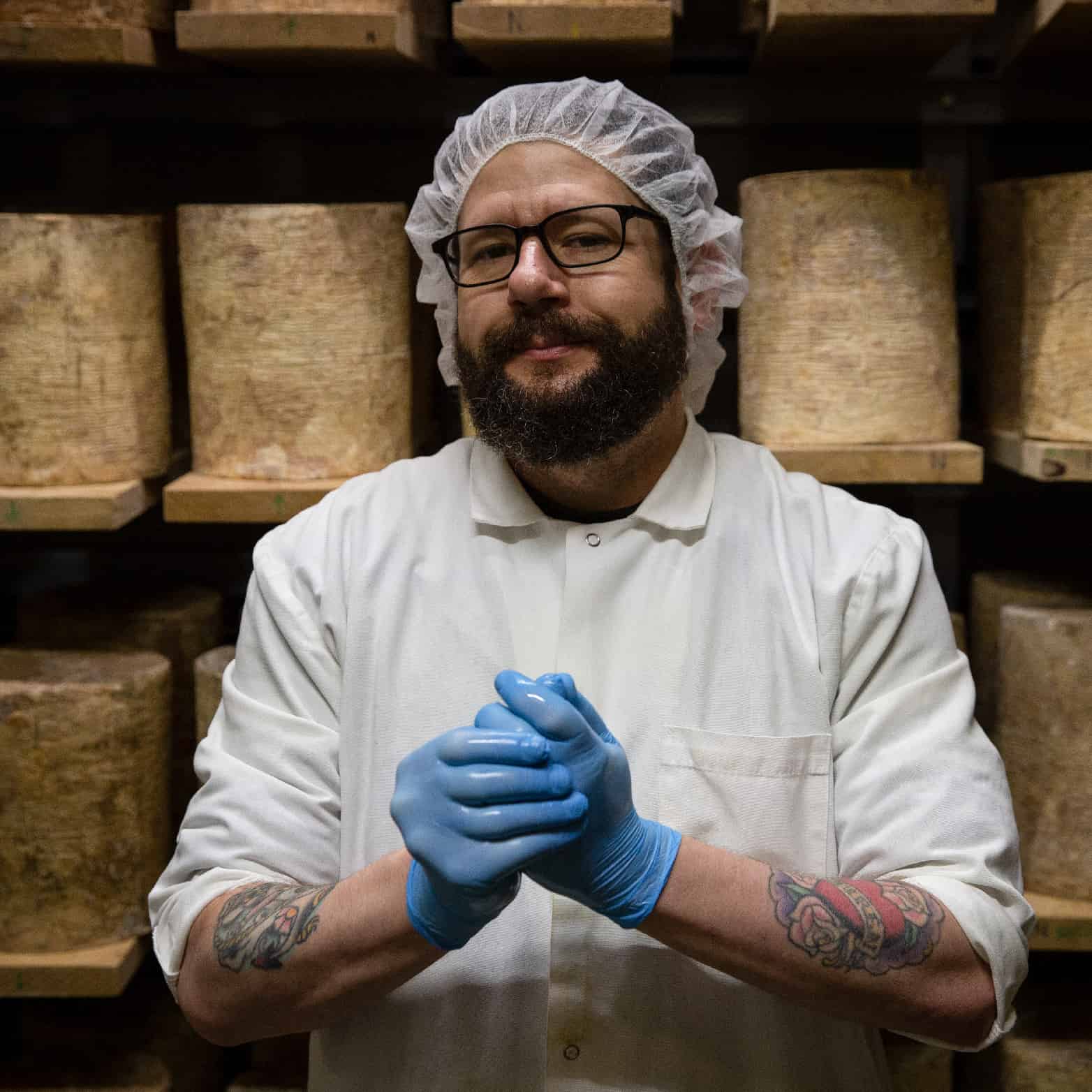
Josh Windsor is an affineur and the Senior Caves Manager at Murray’s Cheese in New York City, where he actively nurtures and ages the Cave Aged line of specialty cheeses including the 2019 American Cheese Society (ACS) “Best in Show” winner Stockinghall Clothbound Cheddar and the 2022 World Cheese Awards “Best American Cheese” winner Greensward. Always curious about how cheese ages, Josh is an active member of the community biology lab, Genspace, where he explores the microbial world of cheese rinds. Josh shares his love of all things dairy by teaching cheese appreciation, science, and history at Murray’s Cheese and sensory evaluation at Cornell University’s cheese short courses.