

Microbe Managing - The Lifesaving Potential of Cheese Bacteria
“When you’re eating the rind of a cheese, you’re consuming more microbial cells than there are stars in the sky.”
That bit of hyperbole comes from Rachel Dutton, a biologist and self-described microbe fan working at Harvard Medical School. I met her at the “Science of Cheese” talk held at the MIT Museum’s annual science festival, where her work was described as “groundbreaking” by Vince Razionale, the cheese buyer for Cambridge-based Formaggio Kitchen.
While most of Rachel’s career centers around nonfood topics—she’s currently finishing a PhD thesis on protein folding in the bacterium that causes tuberculosis—she’s made it her personal mission to educate the public on the beneficial properties of bacteria and fungi. That’s what led her to cheese. Most of us notice microbes only when they’re making us ill, but cheese is a universally beloved product of microbial action.
Since Louis Pasteur identified microbes as the cause of both fermentation and foodborne illness, most dairy food science has concentrated on those two avenues of study: how to make cheese and how to keep it fresh. What makes Dutton’s work unique is that she’s not particularly concerned with production or hygiene. What most interests her is studying cheeses for what they really are: unique microscopic worlds of their own.
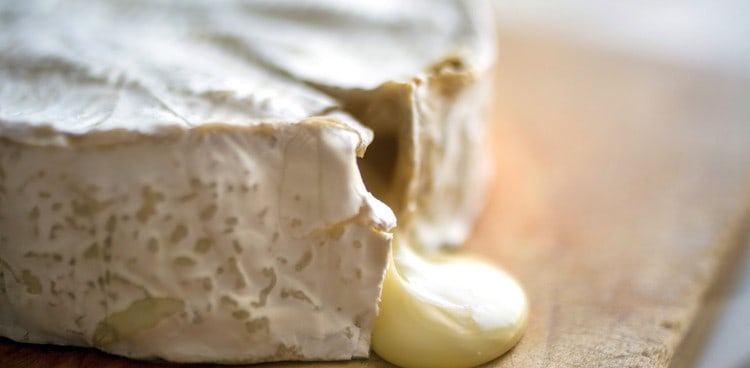
Take a look at an uncut wheel of Camembert, wrapped in its bloomy white jacket. All that luscious rind—the best part to many people—is made of microbes; the cheese itself begins a few millimeters under the surface. The entire outer crust is actually a colony of organisms, sealing the paste away from pathogens and contributing its own unique flavors to the finished product.
The technical term for this community is biofilm, a web of interconnected microbes that rely on each other to create their own environment, like a coral reef. Biofilms are found everywhere that microbes settle, from a slippery river rock to the lining of your stomach. “When I looked at the cross section of a cheese rind,” says Dutton, “I thought it looked a lot like the microbial mats that you find in wetlands, and they’re some of the most ancient life-forms on earth. We have fossil mats over three billion years old.”
But biofilms aren’t just masses of microbes; they’re organized. Individual cells constantly send out and measure chemical signals in a process called quorum sensing. When the bacterium or fungus detects enough of its own kind (or enough other species) in the area, the cells switch from acting as individuals to acting as part of a community of connected organisms.
By knitting themselves together with strands of protein and sugars, the microbes become much tougher. While this is a problem with pathogenic microbes, which become harder to control with chemicals or antibiotics, cheesemakers take advantage of biofilm’s toughness by cultivating edible versions that resist the growth of undesirable bacteria and mold, while regulating the flow of gas and moisture into and out of the cheese paste.
Industrial cheesemaking techniques ensure that cheeses are inoculated with just one or two key species, so a commercial Brie might be dominated by a single strain of Penicillium camemberti, like a farmer’s field sewn with one strain of corn or soybeans. This helps keep cheese production consistent, of course, but doesn’t maximize complex, interesting flavors.
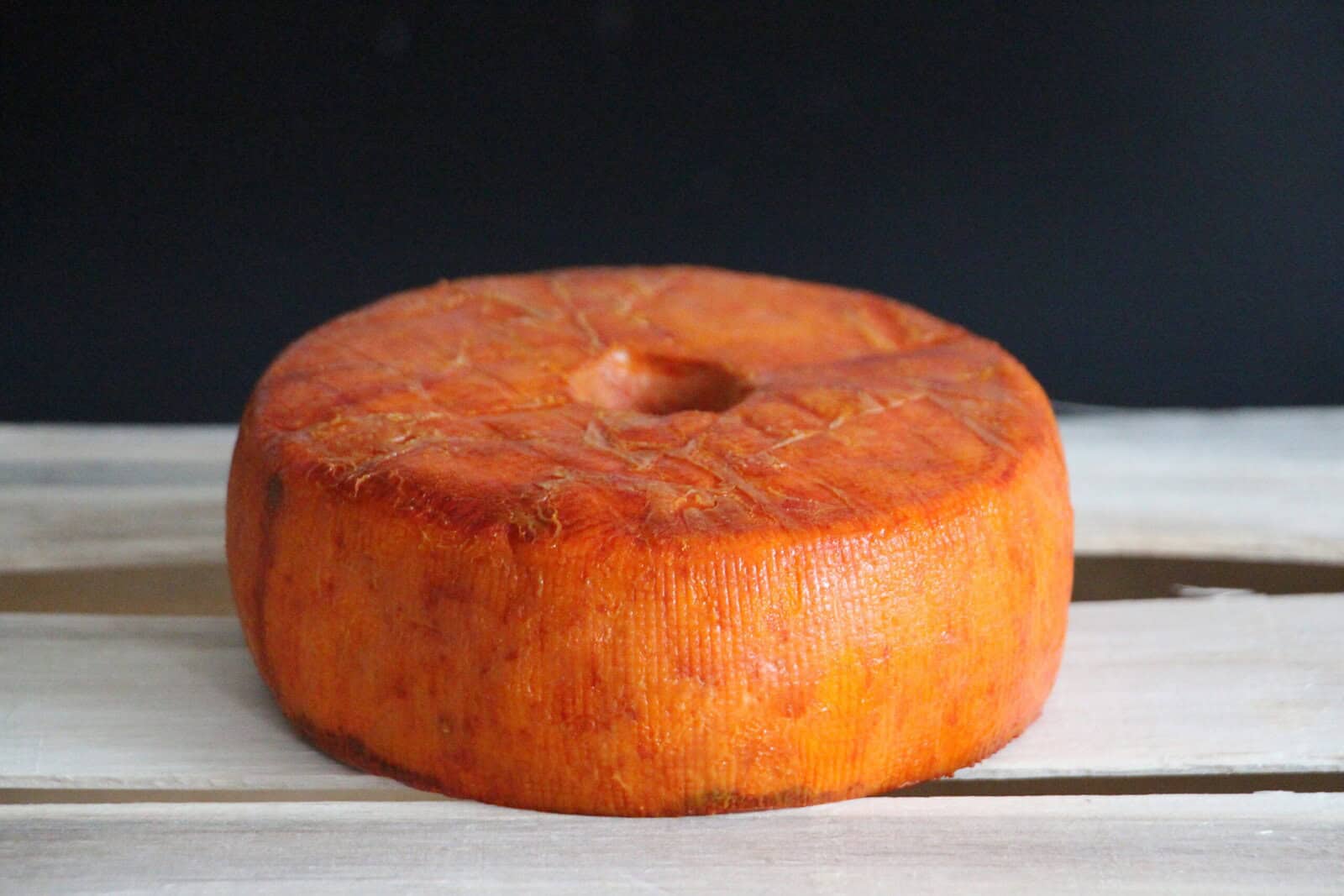
Other biofilms are more diverse, like a rainforest ecosystem, with many dozens of organisms relying on one another. Take Jasper Hill’s Winnimere, culture’s first centerfold cheese. Its rind is washed in beer brewed from microbes living in the cheese’s aging cave. When Dutton and the students in her undergraduate lab class at Harvard analyzed Winnimere’s rind, they found an “exceptionally cosmopolitan” community of microorganisms living there.
Because of the salty conditions on the surface, it’s not surprising that they discovered so many salt-loving (halophilic) bacteria there, similar to what you’d find in ocean water. But what was surprising was the range of other unfamiliar bugs that are also found in places like Etruscan tombs, Tunisian oil wells, or Arctic sea ice.
This is a far cry from the “big three” that dairy scientists generally focus on: the Lactococcus bacterial strains that produce the cheese paste, the Penicillium fungi that produce blue and bloomy rinds, and the Brevibacterium that supply the pungent pieds-de-Dieu aroma of washed rinds.
The exact role of each of the oddball microbes found in Winnimere isn’t known, but it’s understood that without this specific mix living on the rind, Winnimere wouldn’t have its unique flavor. Cheesemakers put tremendous effort into creating and maintaining the unique little ecosystems that occur on the surface of every cheese, carefully controlling each element in a cheese’s creation just so that the right milk is colonized by the right bacteria and fungi at the right time. The entire tradition of cheesemaking and affinage can be seen as a kind of micro-gardening, creating the same conditions on the surface of curdled milk season after season, down through the decades, to produce the same delicious flavors.
It’s this reproducibility that attracts Dutton to cheese. Besides being an ambassador for the good that microbes do us, she sees cheese as a model for how all kinds of microbial systems work, helping researchers better understand both their healthy functioning and how to treat them when something’s gone wrong. Just as a mouse can stand in for a person when testing a new cancer drug, a cheese could act as a proxy for an oil-slicked wetland, or the distressed lung of a cystic fibrosis sufferer.
In this context, Dutton will be pursuing a fellowship at Harvard to study microbial communities, in cheese and elsewhere. What she learns may not end up on our plates, but it could end up saving the world.
Written by Will Fertman
Will is a Boston-based writer and raconteur.
Illustration by Jacqueline Rogers
scrolling="no" frameborder="0"
style="border:none; width:450px; height:80px">