
This interview is part of culture’s 2026 Hot List. Click here to learn more about our selection process and to see the latest Hot List class.
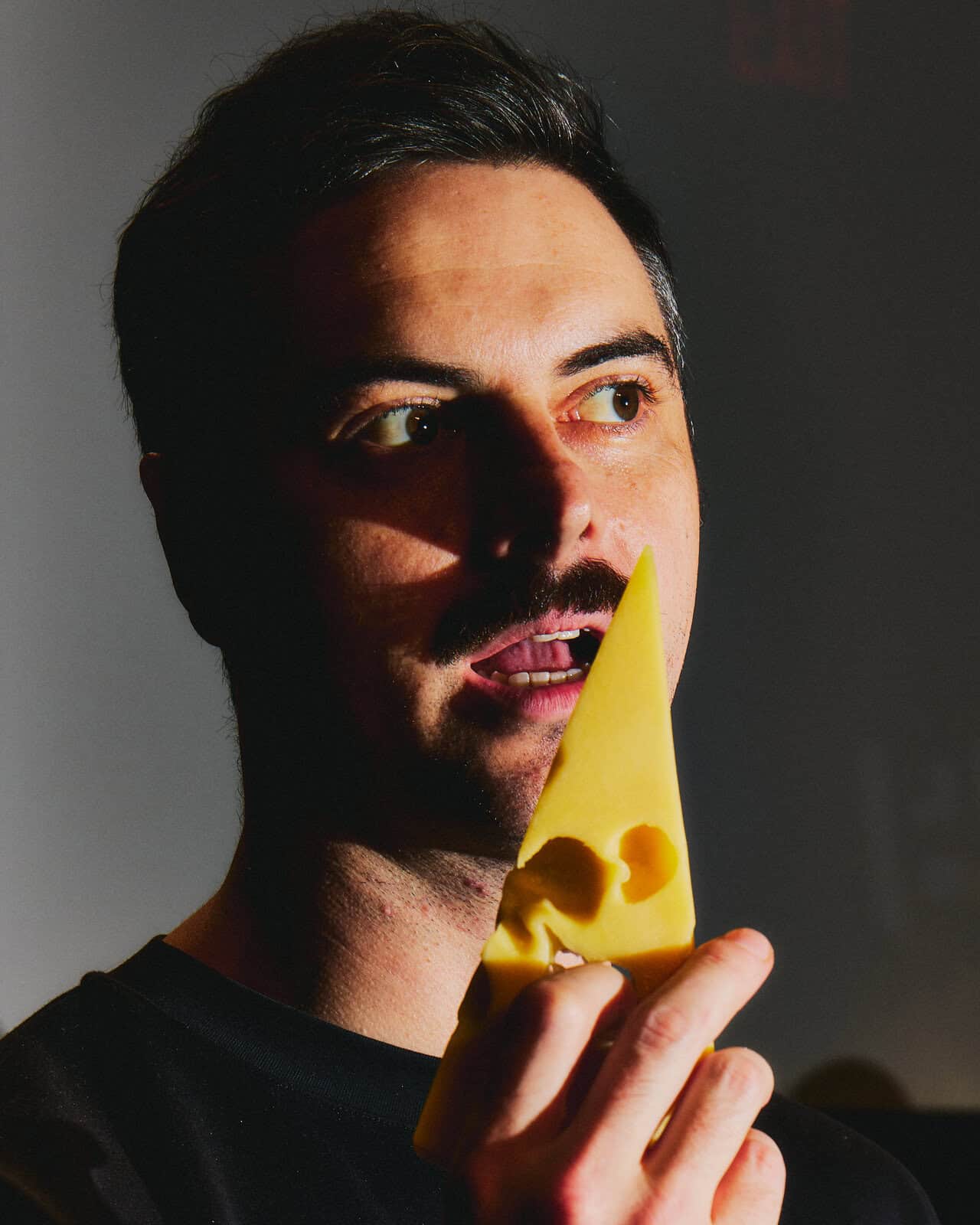
Alex Armstrong, ACS CCP
Cheese Specialist & Head Cheesemonger, Maker to Monger
New York
Alex Armstrong has built a career that moves fluidly across the many worlds of cheese. From milking goats and making farmstead cheese to working as a monger, educator, sensory evaluator, and importer, his path has been anything but linear—and that’s exactly the point.
Over the past 14 years, Armstrong has developed a holistic understanding of cheese that spans production, distribution, and evaluation. His time at Jasper Hill Farm, where he worked across roles including sensory evaluation and research and development, helped shape a perspective rooted in science and experience. As a recipient of the Daphne Zepos Teaching Award, he brought that perspective to Europe, studying sensory evaluation and sharing his findings with the broader industry.
Today, Armstrong approaches cheese not just as a product, but as a framework for understanding people, place, and culture—and one that continues to evolve with each bite.
OK, so why cheese?
From the first time I made cheese, I was hooked. There’s something about science you can eat that grabbed me immediately. But what really kept me in it was how many different avenues there are to explore.
Cheese touches everything—microbial ecology, pasture diversity, history, culture, logistics, even philosophy. It’s a focal point for understanding the world. And at the end of the day, you get to share something delicious with people. That’s pretty special.
Your career path has moved through so many roles. How has that shaped your perspective?
I’ve been lucky to experience nearly every link in the chain—from small farmstead production to mongering, to large-scale affinage, to sensory evaluation, and now importing.
That’s helped me understand that cheese isn’t just about land or animals—it’s also about people. The relationships, the decisions, the culture behind it all.
If you have the chance to make cheese with a community, take it. It will deepen your understanding in ways you can’t anticipate.
What do you only understand by being close to where cheese is made—and what do you only get in a city?
Off the grid, you really grasp the amount of time, labor, and coordination it takes to make cheese. There are so many hands involved before it ever reaches a shop.
In a city, you get access to diversity. Shops become hubs for an incredible range of cheeses and experiences—classes, tastings, competitions. It’s where the full spectrum comes into focus.
What’s one of the wildest tasting notes you’ve picked up?
Good: Hawaiian pizza—like the whole thing, crust and all. Or an Oreo you dropped on the ground but ate anyway.
Bad: Chicken coop. Or cadaverine … which is exactly what it sounds like.
Do you ever turn off your cheese brain?
I never get sick of eating cheese—ever.
But I do try to shift how I engage with it. Sometimes it’s analytical, connecting sensory inputs to technical understanding. Other times, it’s just about experiencing the cheese for what it is.
I think of it as walking through a museum—taking in the art without always needing to judge it.
How do you like to experience a new cheese region?
A little bit of everything, but I think about it in terms of mind, body, and soul. Mind is structured learning—tastings, tours, conversations. Body is immersion—food, markets, events. Soul is leaving space to wander, meet people, and follow whatever happens.
What’s the coolest place you’ve traveled for cheese?
Almnäs Bruk in Sweden. It’s this incredible balance of old and new—an 800-year-old estate with cutting-edge cheesemaking.
They’re reviving traditional cheeses while building something entirely new for the future. It’s thoughtful, intentional, and deeply connected to place. And the people are amazing.

culture: the word on cheese
Culture is America's first and best magazine devoted to the love of cheese. Explore our website for stunning photos, cheesemaker profiles, recipes, wine, beer, and a community of readers always willing to help and chat.