
On taking lessons from radically traditional farming
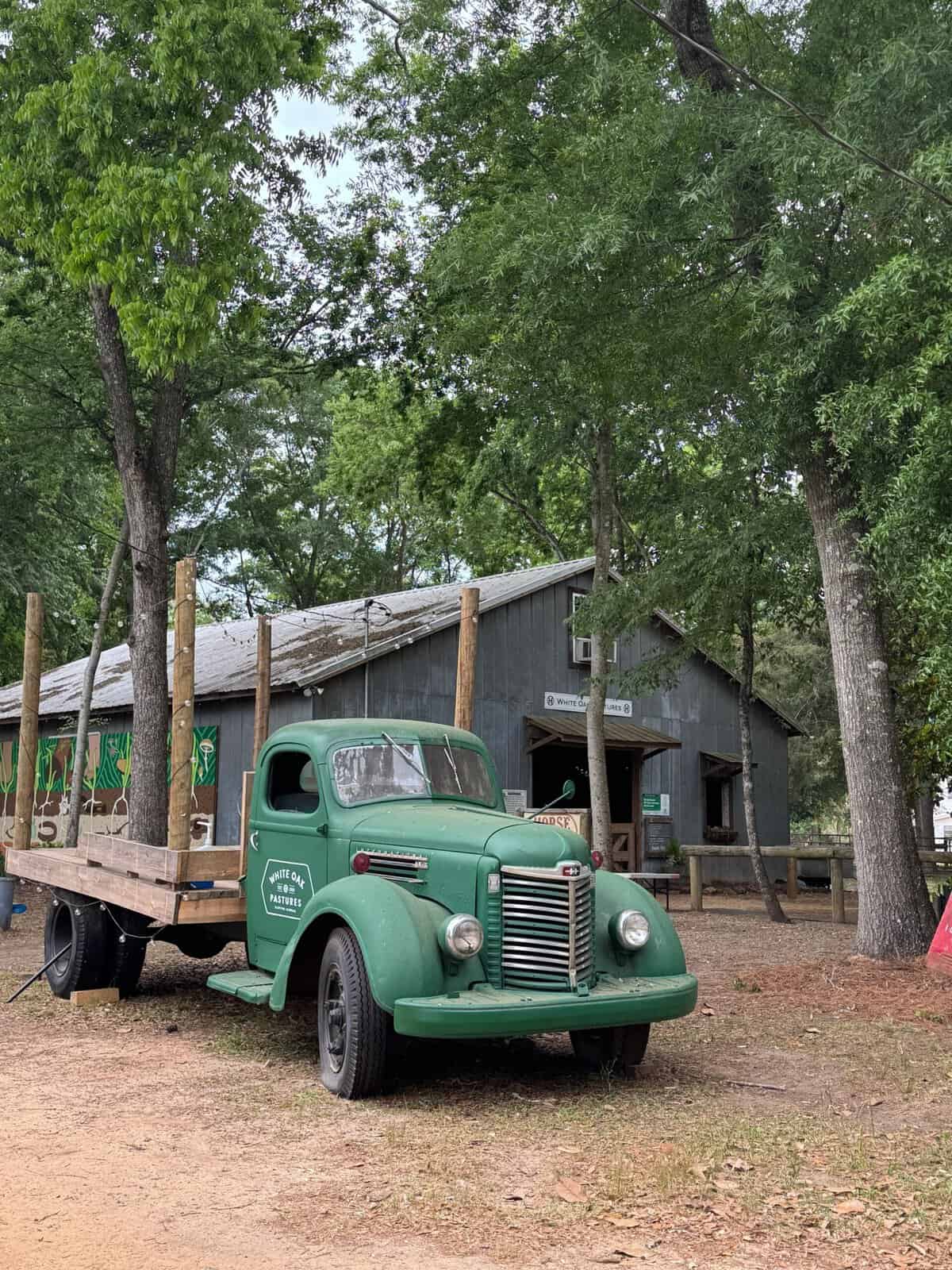
On site at White Oak Pastures. Photographed by Mallory Scyphers.
Standing in a cluttered historic courtroom that’s been converted into Will Harris’ office, I ask the legendary cattleman why he doesn’t make cheese.
I glance around the one-room building, taking in the mounted shotguns and framed portraits of his father, grandfather, and great-grandfather gazing across the room at Harris’ desk, which is planted firmly in the former judge’s bench.
“We tried to make cheese at one point, years ago,” he explains as his grandson flips through an old book. An enthusiastic employee convinced him to take a risk, and Harris invested in all the necessary equipment, letting the kid “do his thing.”
“Unfortunately,” Harris says bluntly with a shrug, “it never took off.” With everything else happening on the farm, dairy didn’t seem like the right financial choice. “Maybe one day we’ll pick it back up,” Harris says, “but it’s not in the plans right now.”
I’m surprised cheesemaking isn’t part of White Oak Pastures’ business model, given the other ventures the farm has undertaken. And yet, I’m not shocked.
Earlier this year, the cheese community buzzed after Keith Adams detailed his reasons for leaving cheesemaking, laying bare many of the hurdles small producers face. His essay felt like a mic drop. It sparked difficult conversations across the industry, and although I visited White Oak Pastures months before Adams published his piece, finally sitting down to write about the trip couldn’t have come at a better time. What started as a story about regenerative farming suddenly felt like it belonged within a much larger conversation. Leslie Cooperband recently penned an article for The Cheese Professor, offering her thoughts on saving American artisan cheese. And even The New York Times entered the chat with an article about why selling artisan cheese is difficult despite rising consumer interest.
Before we get into all of that, though, let’s rewind about eight months.
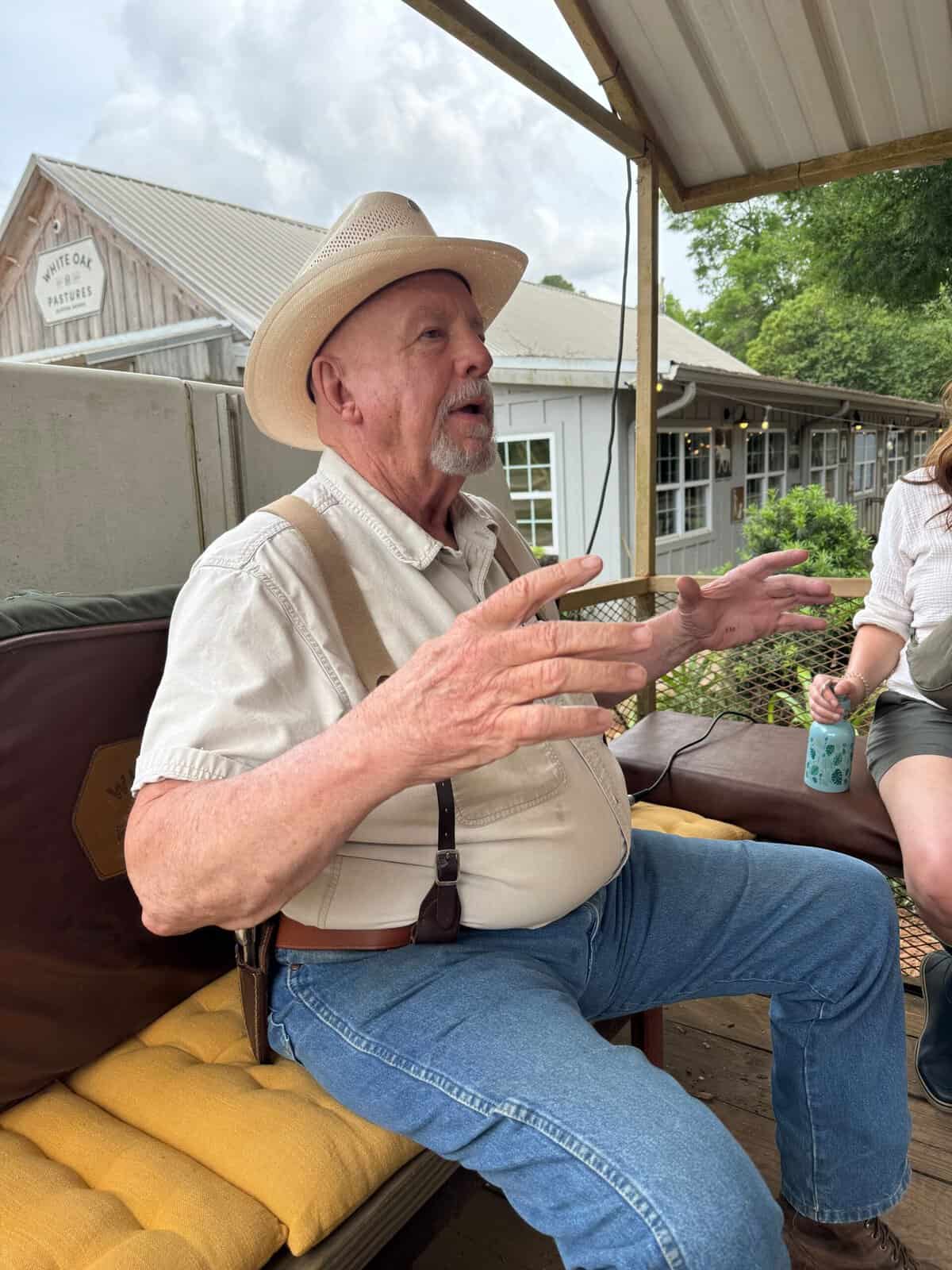
Will Harris, the fourth-generation cattleman at the helm of White Oak Pastures. Photographed by Mallory Scyphers.
Giving a Damn
I’m in the car with my husband, Steven. He’s listening to an audiobook (while simultaneously narrating every detail from the previous chapters to catch me up). He assigned Harris’ A Bold Return to Giving a Damn for his upcoming sustainability class at the University of South Alabama. Now, I’m typically a purist when it comes to reading the old-fashioned way, but there was something about listening to Harris’ thick Southern drawl and the conviction behind it that drew me in.
Harris has a way of talking about agriculture that’s equal parts philosophy and plainspoken wit. “If you will just sit still and shut up and pay attention,” he says, “nature will tell you everything you need to know”; “Cultivating food using the modern industrial system is like pissing your pants to stay warm”; and my personal favorite: “Even with all our big-hatted efforts to outwit [nature] and improve on her … from nature’s perspective, we will always be a fart in a hurricane.”
A couple months after the car ride, Steven suggested the book to a few of our friends. They read it. Before long, we schemed a girls’ trip to Bluffton, Georgia, to meet the man behind all that colorfully-worded wisdom.
My friends and I have vastly different careers: a therapist and composter, an artist and designer, a media and communications guru, a data nerd and literary activist, a sustainability strategist, and then there’s me, the editor of a cheese magazine. What we have in common is a fascination with our environment and a desire to better understand the food systems we’re participating in.
So, spas be damned, we were driving to the middle of nowhere to learn about cows.
Radically Traditional Farming
White Oak Pastures wasn’t always the agricultural trailblazer we know today.
The Harris family has farmed their land for generations, but for decades it looked much like any other industrial cattle operation. It wasn’t until 1995, when Harris took over, that the farm began transitioning to what he dubs “radically traditional farming.”
When I asked Harris how often he comes across farmers adapting these “radical traditional” practices, he confirmed my suspicion. “I see very little transitioning farmers,” Harris says matter-of-factly, leaning back in his chair as he swats a fly from his suspenders. “Most people I see are new farmers.”
In A Bold Return to Giving a Damn, Harris recounts fertilizer salesmen promising greener grass and an agricultural culture that rewarded appearance over ecology. It was just how farming was done at that time. The irony, Harris argues, is that traditional farming isn’t necessarily what his father or grandfather practiced. Instead, he’s looking further back, reviving practices that largely disappeared in favor of industrial efficiency.
Without regurgitating the entire book, I can tell you this much: Harris, indeed, gives a damn.
This ethos runs through every corner of White Oak. “Organic Farm. No Pesticides.” signs dot the highway leading into Bluffton. The farm has become widely known for its commitment to animal welfare and whole-animal utilization—tallow rendered into soap and candles, organs turned into dog treats, hides tanned into leather. The term “zero waste” gets thrown around a lot these days, but White Oak has built an entire business model around maximizing value from nearly everything that passes through the farm.
Harris told us that the town has a population of roughly 100 people, and White Oak employs around 160. The farm has grown from 500 acres to more than 3,200 since 1866. Harris says that after World War II, when the family embraced industrial agriculture, much of the surrounding community disappeared as farming became more mechanized.
Now, they’re trying to rebuild it, and one of the ways they’re doing that is through tourism.
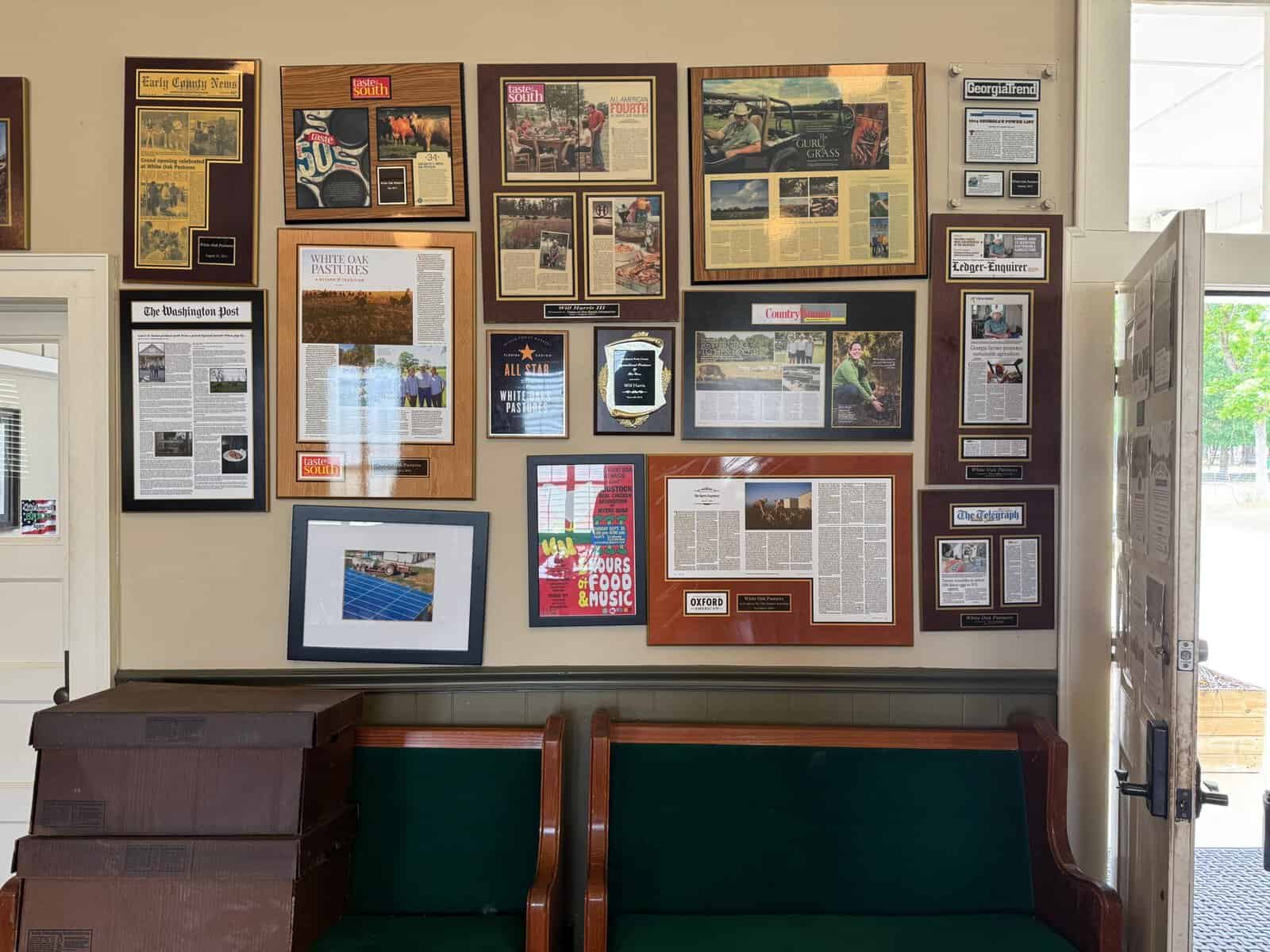
Awards and news articles line the wall, highlighting White Oak’s successful tourism efforts. Photographed by Mallory Scyphers.
Agritourism on the Rise
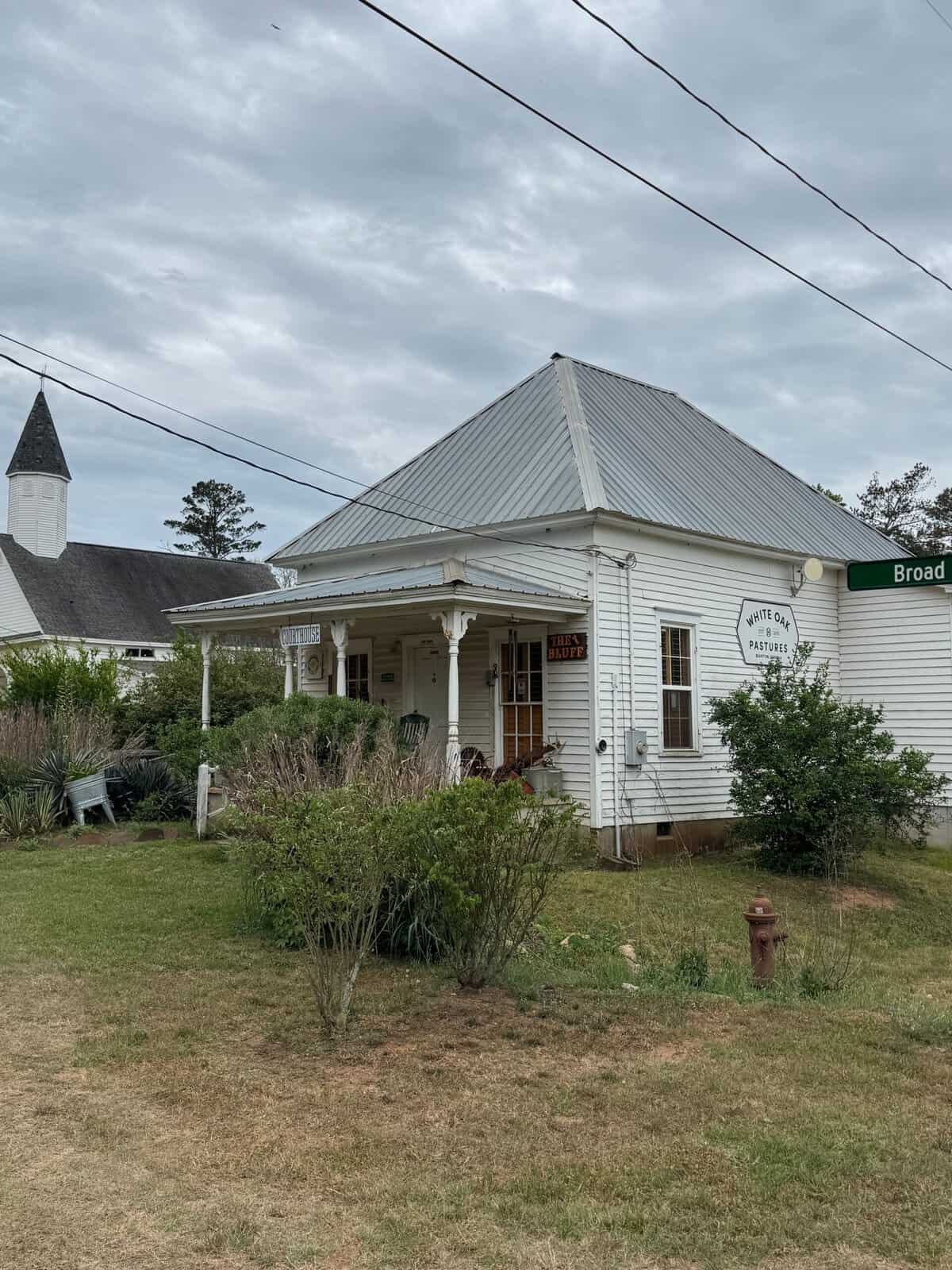
Our group rented one of White Oak’s single-family houses, just a block from the town center. But don’t be fooled by the phrase “town center.” It consists of the White Oak General Store, White Oak’s Farmer’s Table restaurant, the Bluffton Baptist church, the White Oak events center, and a post office, plus a sprinkling of homes. We quickly realized that Bluffton is synonymous with White Oak Pastures.
This kind of experiential travel has become one of the fastest-growing segments of the food business. In fact, the Adventure Travel Trade Association’s 2025 industry report found that culinary and gastronomy experiences have become the top trending activity among travelers. I see it all the time in cheese, too. Hardly a week goes by without someone pitching culture on a carefully curated itinerary through the Alps or a behind-the-scenes tour of English cheesemakers. Experiences that used to belong almost exclusively to buyers, importers, retailers, and journalists are increasingly available to anyone willing to book a ticket.
White Oak is leaning into the trend. Visitors can rent cabins and houses, schedule wagon tours, ride horses, shoot skeet, wake up at the crack of dawn to herd cattle, or simply spend a weekend on the farm. Much of that operation now falls under the umbrella of Harris’ daughter, Jodi Harris Benoit, and it’s become an important part of the business. In fact, all of Harris’ daughters have returned to Georgia after stints around the world to work for White Oak—a testament to their commitment to rebuilding Bluffton’s community and their beloved family farm.
As I walked around the property, I couldn’t help but think about the different ways White Oak creates value from the same piece of land. Not just through beef, but hospitality, education, restaurants, events, and tourism. The cattle are still the foundation, but they no longer have to carry the entire financial burden of the operation.
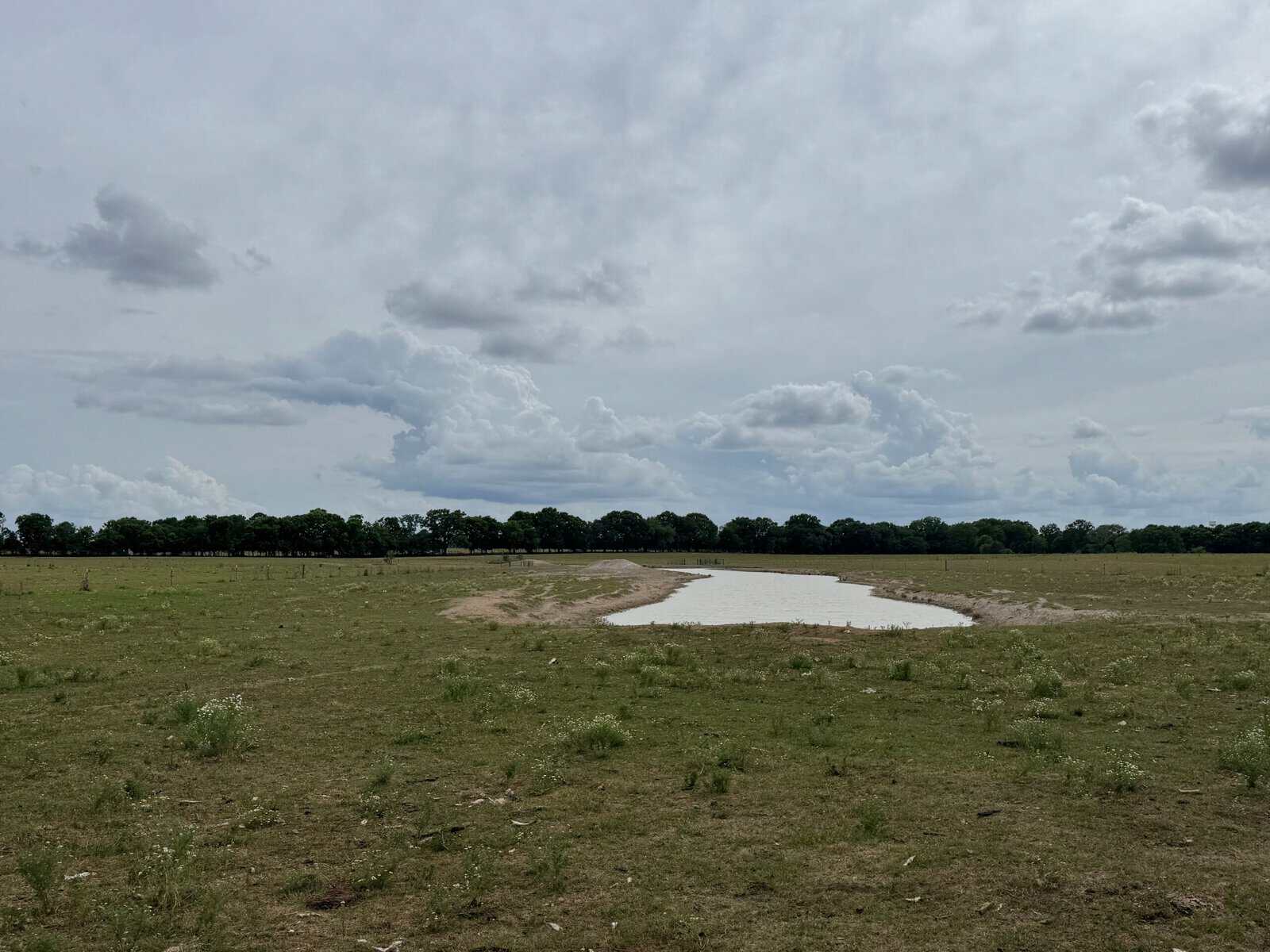
A serene landscape from White Oak Pastures. Photographed by Mallory Scyphers.
Nothing Moves the Needle but Consumers
After I left White Oak, I kept coming back to that conversation in Harris’ office: They tried making cheese, but between personnel challenges and economics, it didn’t work.
That’s not a criticism. If anything, it reinforces what Adams was getting at. His essay focused largely on the difficulty of moving product, and he’s right—that conversation deserves every bit of attention it’s received. But recently opening my own side hustle has given me a deeper appreciation for the issue.
For years, as culture’s editor, I had access to virtually any cheese I wanted. I visited makers, attended the American Cheese Society Conference and Fancy Food Show, accepted samples, and spent my career writing about remarkable cheeses.
Then after moving to Alabama and opening The Fairhope Cheese Post, I became the buyer.
Suddenly, I was trying to get those same cheeses into a cheese desert, where refrigerated freight is expensive, distribution is limited, and the math changes. Cheeses I’d taken for granted became really difficult to source.
But the experience has also challenged some of my assumptions. I’ve found an enthusiastic audience on Alabama’s Gulf Coast—customers willing to try washed rinds and blues, cheeses I’d been warned may not sell. They’ve shown up for tastings, asked thoughtful questions, and, perhaps most encouragingly, they’ve come back. The demand is here. What was missing was access.
After an afternoon rainstorm, we bounced across White Oak’s pastures in a covered trailer as Harris ruminated on everything from composting to stormwater. Then he paused, looked across the herd, and matter-of-factly said, “Nothing moves the needle but consumers.”
And I suspect that’s the next chapter of this discussion. Yes, it’s about moving cheese, but it’s also about getting people to care about everything that happens from the dirt to the deli case. Of course, caring is only part of the equation.
Two decades of consumer research from the International Food Information Council has found that taste consistently outranks every other factor in food purchasing decisions, followed by price. That is the reality any conversation about artisan cheese has to contend with. A compelling story cannot make an expensive cheese more affordable, and a walk through a pasture can’t overcome a cheese that doesn’t taste good.
But that doesn’t make the story irrelevant. Taste may get someone to reach for a cheese, and price may determine whether it makes it into the basket, but a good story can help explain why one cheese costs more than another and give consumers a reason to decide that the difference is worth it, and become devoted customers. Storytelling cannot solve the economics of artisan cheese. It can, however, make those economics more visible, giving consumers a better understanding of what they’re paying for and why it matters.
Will Harris’ office, which is a former courthouse. Photographed by Mallory Scyphers.
What Can the Cheese Industry Learn from White Oak?
Nothing moves the needle but consumers. And remember: consumers don’t wake up one morning caring about regenerative agriculture or raw-milk cheese or heritage breeds. White Oak isn’t just producing beef. It’s creating opportunities for people to experience the farm firsthand—to meet the people behind the food, walk the pastures, ask uncomfortable questions, and decide for themselves whether it matters.
Artisan cheese has a rich food history of families, landscapes, traditions, microbes, animals, and seasons. Yet too often these stories live in one-on-one conference conversations, trade publications, and cheese counters, with the assumption that words like “artisanal” and “farmstead” are enough to make consumers care.
Now, I fully acknowledge that better storytelling won’t fix distribution challenges, lower freight costs, or make milk cheaper. Those are structural problems. But if consumers aren’t asking for artisan cheese in the first place, solving those problems becomes even harder.
White Oak didn’t create Americans’ growing interest in regenerative agriculture, local food, or transparency in farming. It recognized those currents early and evolved to give people multiple ways to engage with the farm. That willingness to adapt extends beyond tourism. Today, White Oak is also partnering with solar developers, grazing sheep beneath solar panels—a practice that allows agricultural land to continue producing food while supporting renewable energy infrastructure. Again, the farm isn’t abandoning agriculture. It’s adapting to changing markets while remaining rooted in agriculture.
The artisan cheese industry may be facing a similar moment. Consumers are increasingly asking questions about raw milk, animal welfare, food additives, and where their food comes from. Sometimes those conversations are informed; sometimes they’re deeply politicized. Either way, curiosity exists. The opportunity is to meet it.
I think that’s a lesson worth considering—not because every creamery should build cabins or offer wagon rides, but because every cheesemaker has an opportunity to create meaningful connections with consumers beyond the cheese itself. Consumers may move the needle. But first, they have to remember who they’re moving it for.
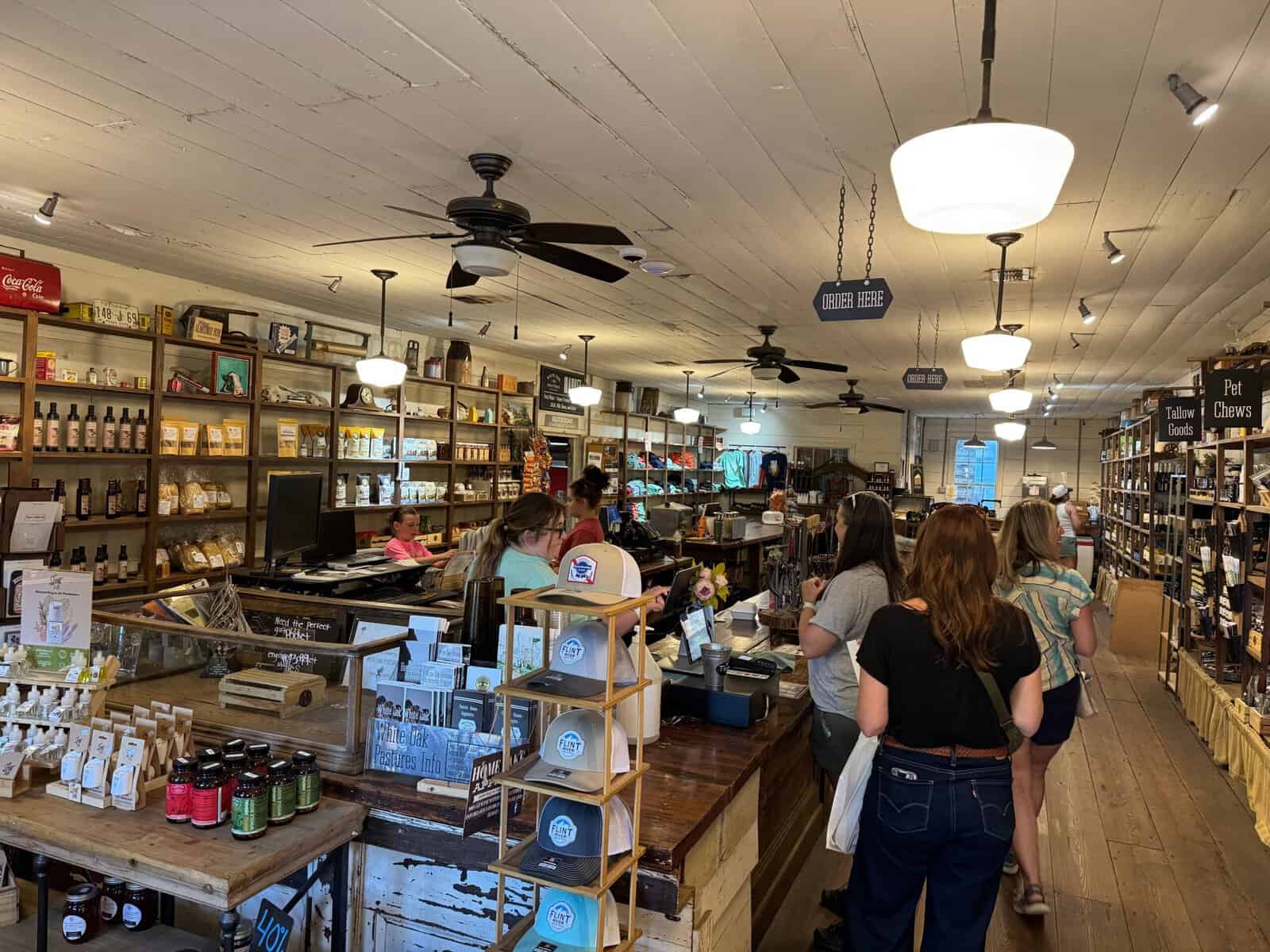
White Oak employs many residents of Bluffton, Georgia. Photographed by Mallory Scyphers.
Mallory Scyphers
Mallory Scyphers is culture's Executive Content Director and has been with the company since 2018. She lives on Mobile Bay with her husband, two young daughters, one rambunctious golden retriever, and two loyal cats. Her favorite cheeses are alpine styles and mineral-y blues.