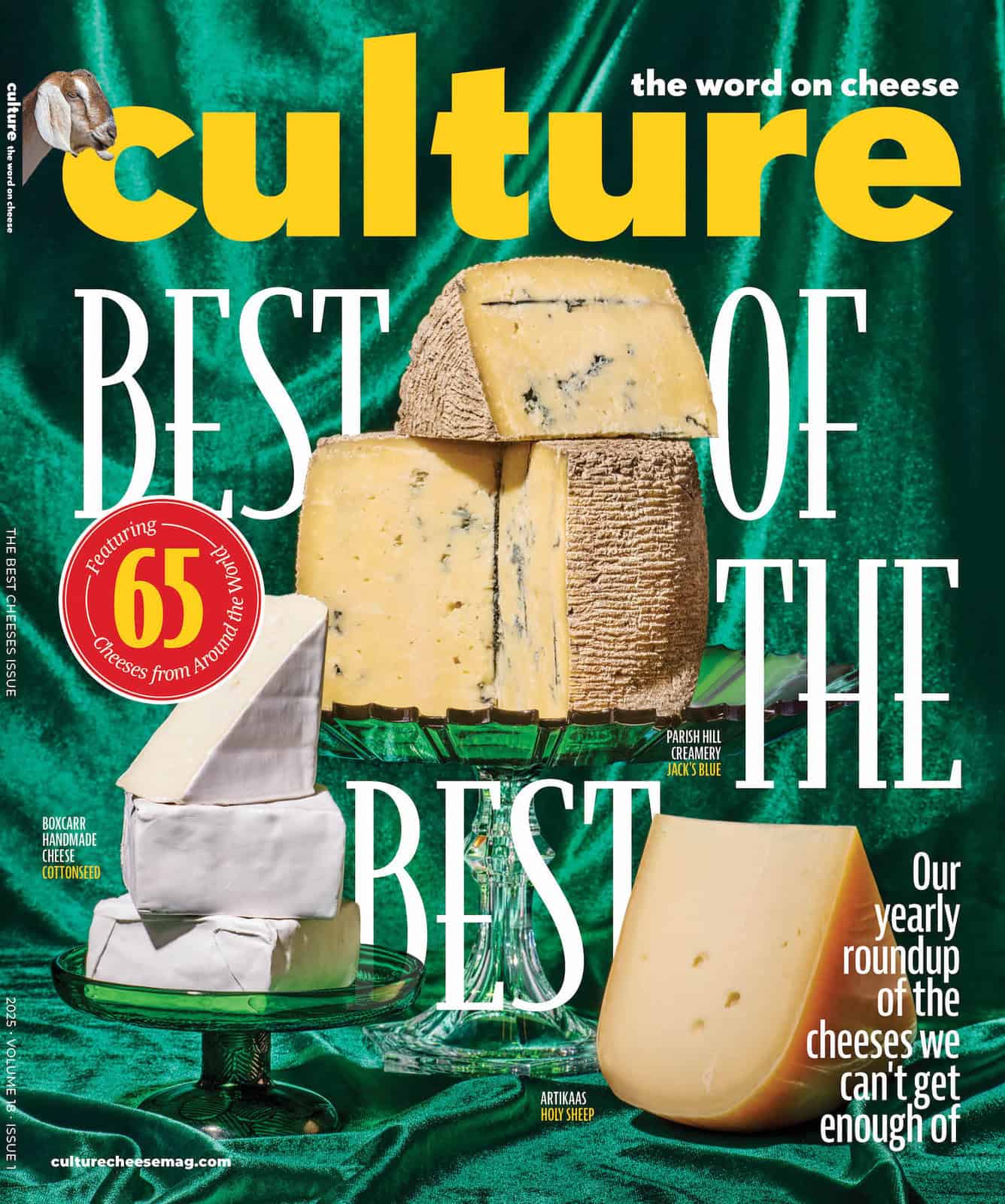

Put this flavorful stunner from across the pond at the center of your holiday grazing table.
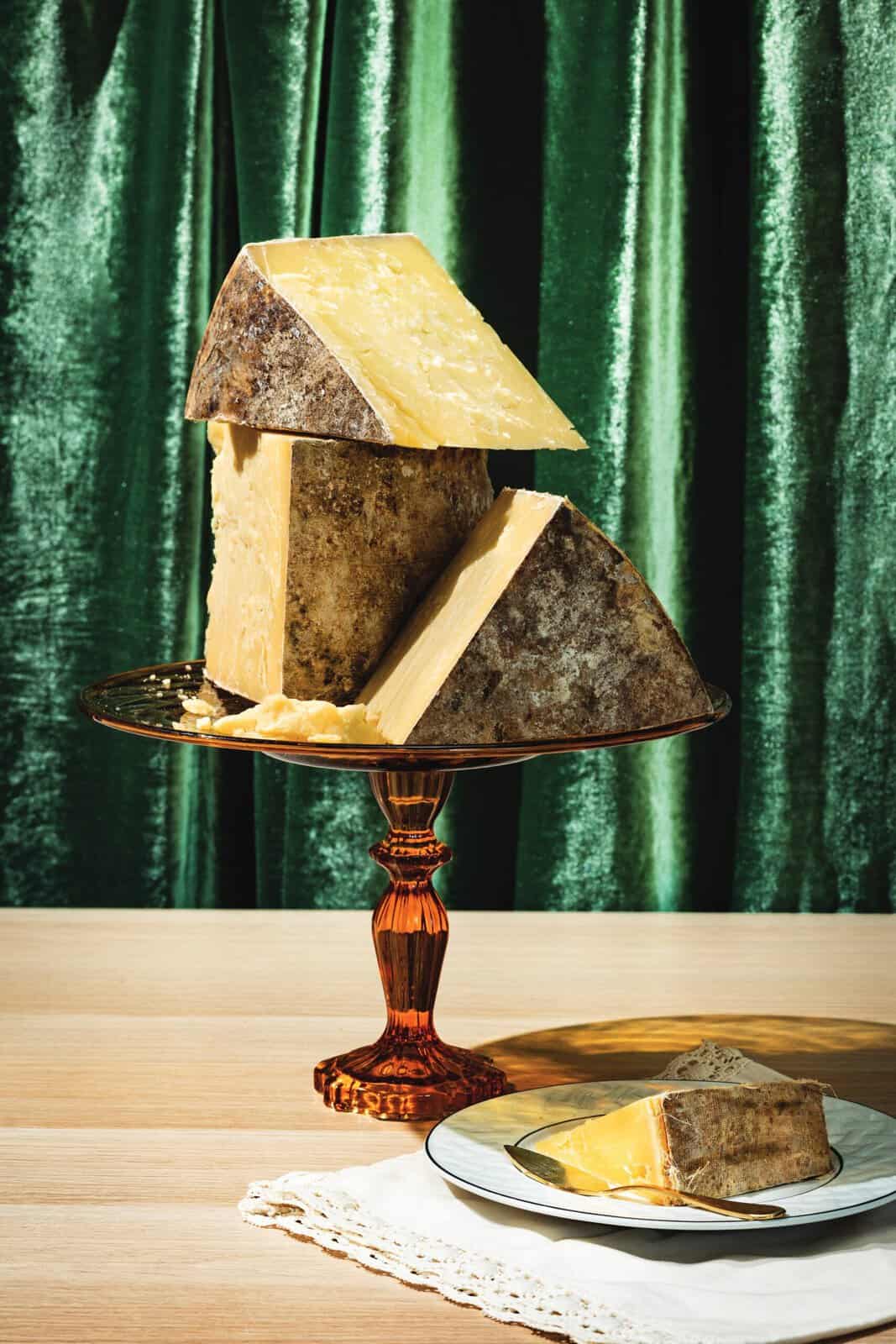
Photographed by Adam DeTour | Styled by Kendra Smith | Props provided by Verne Cordova
For many, a vintage cheddar is simply an old cheddar. But at Quicke’s, the designation is less about age and more about judgment.
Produced on the Quicke family’s farm in Devon, England, Quicke’s vintage cheddar is clothbound, naturally matured for around 24 months, and selected from only the finest wheels. “It’s so much more than age that makes it a vintage,” says Jane Quicke, CEO of Quicke’s and a 15th-generation farmer. “That’s all to do with the selection grading.”
Every cheese is graded twice during its lifetime: first at three months, and again just before the mature cheddar is ready to sell. Using a cheese iron, the team extracts a core from the center of each wheel, squeezing the paste between their fingers to assess its body.
“Even if the flavor is there, [a fantastic] body is the non-negotiable factor,” says Jane.
Flavor matters, of course. Jane and her mother, Mary Quicke—one of Britain’s most respected farmhouse cheesemakers—look for balance among three flavor families: sharp and grassy; savory, meaty, and brothy; and buttery caramel. A Vintage Clothbound Cheddar should express all three, but caramel should be the primary flavor note.
That pursuit of balance begins long before a wheel reaches the grading room. It starts in the pastures of Devon, where the Quicke family have focused on producing exceptional milk from grass-grazed cows for hundreds of years.
“Milk matters,” says Mary.
The phrase may be simple, but it reflects a philosophy that has long guided the family. Jane grew up with cheese as a constant presence, learning alongside her mother while watching the farm evolve. Today, Mary still participates in grading sessions, helping ensure each batch meets the standards that have defined Quicke’s for decades.
When asked about the responsibility of stewarding a family farm, Jane recalls a story about her ancestors planting oak trees on land that could have remained productive fields. “It’s a crop that you’re not going to yield the benefit from in your lifetime,” she says.
For Jane, that story illustrates a philosophy of farming that extends beyond a single season—or a single generation. Decisions are made not to maximize short-term returns, but to protect and improve the land for those who will farm it next.

Josie Krogh
Josie Krogh is culture's Digital Strategy Lead. She earned her master's degree in Agricultural and Applied Economics from The University of Georgia. Josie developed a love of food while working at farmstands in the D.C. area as a young adult, and discovered her love of cheese while living and working on a dairy farm on Martha's Vineyard. Josie currently lives in Catskill, NY.