
Photographed by Erik Simmons
Many students measure output by pages, but at the Tillamook Dairy Innovators Lab at Oregon State University (OSU), output is measured by pounds and gallons.
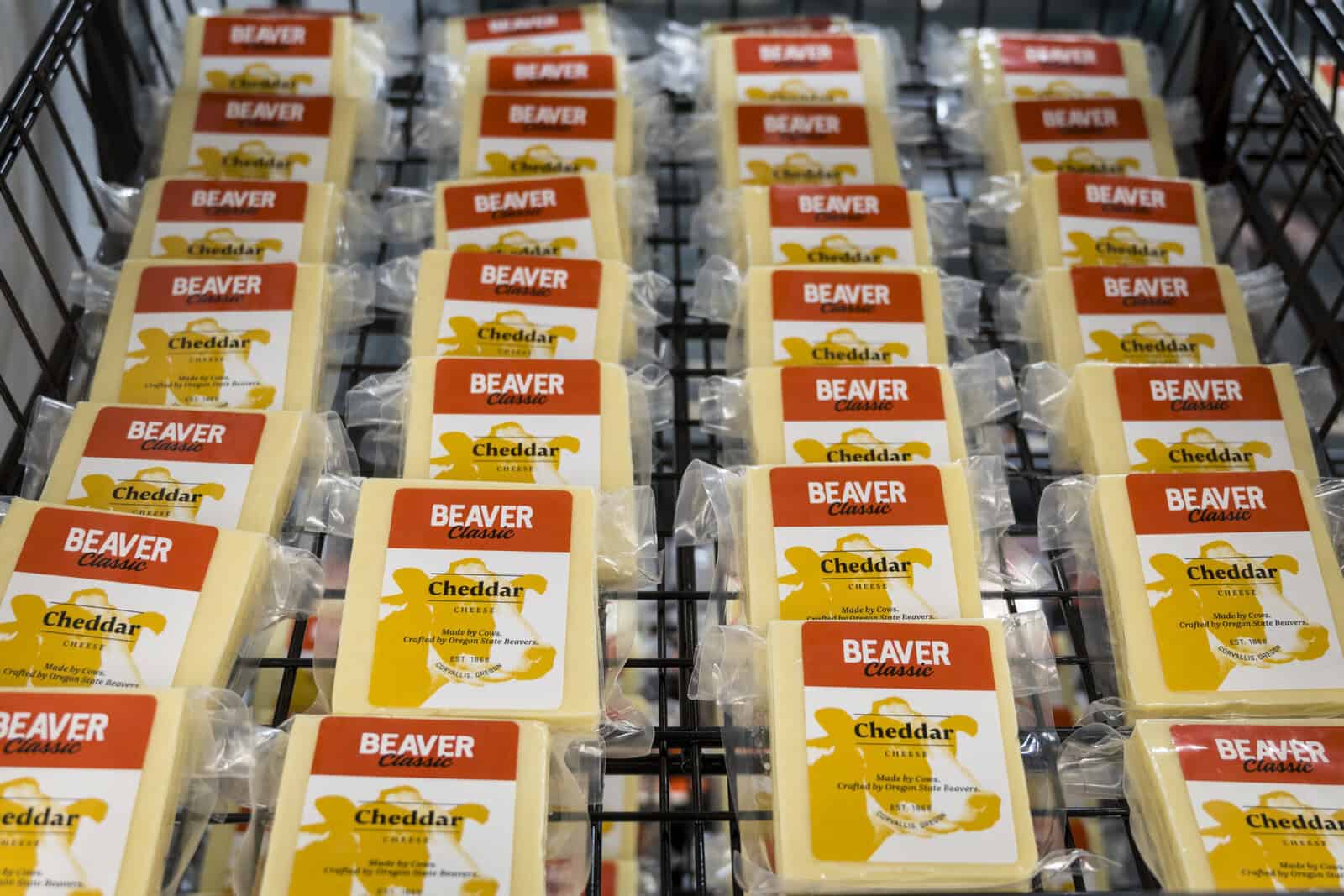
After a four-year renovation of Withycombe Hall concluded in the spring of 2025, students in OSU’s College of Agricultural Sciences get hands-on experience in crafting high-volume cheese and ice cream at the lab, which OSU sells at local farmers’ markets and to local retailers.
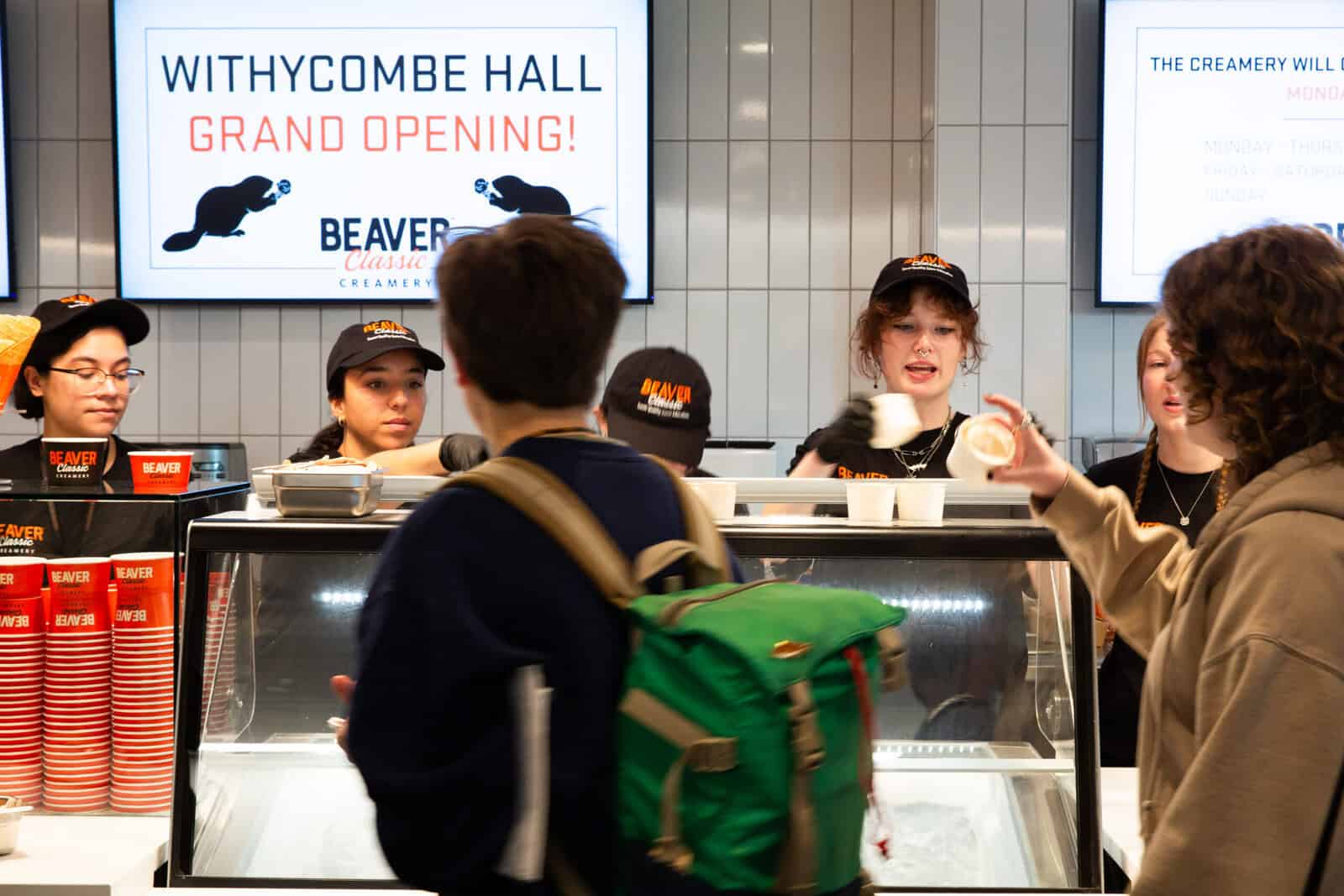
With a sleek new retail counter, the Beaver Classic Creamery scoops cones, blends shakes, and sells other OSU agricultural items such as cheese, honey, and meat products.
Just a mile away, OSU’s herd of 120 Jersey cows provide the foundation for every product. A team of student employees process milk in the gleaming 7,000-square-foot facility, under the tutelage of Brandon Riesgaard, the dairy pilot plant manager.
Three 600-gallon silos pasteurize, homogenize, and store the milk, which is then transferred to a make room featuring a 30-gallon pilot cheese vat, a 200-gallon cheese vat, a cheddaring table, two cheese presses, and a mozzarella machine. Cheddar, swiss, and provolone are aged in a cabinet-style box and two aging rooms downstairs.
They make test batches of ice cream in a 3-gallon batch freezer and larger quantities in an inline freezer, which dispenses 10 gallons of ice cream a minute.
Beaver Classic Creamery customers can view all the tasty action through an enormous window as they lick cones and savor shakes. And history comes full circle with this brand-new shop: When Withycombe Hall first opened in 1952, it had an ice cream shop and a creamery, but the ice cream counter closed in the late 1960s.
Producing dairy products here is a job, not a class. Most students, however, are part of the Department of Food Science and Technology, such as sophomore Alyssa Moy. “After graduation, I know I want to do something with food,” Moy says. “I want to work in product development or something hands-on.” She recalls helping make havarti: “Seeing it come to life was very rewarding.”
The department has about 100 undergraduate and 50 graduate students, says Lisbeth Goddik, department head of food science and technology.
Riesgaard illustrates how plant experience can help launch employment and success in the real world. “That’s how I started my relationship with Rogue Creamery,” he explains. “They used to sell ice cream and needed a place to produce it. So, they used to come with their own milk, and we would help them pasteurize it and make the ice cream base and then run it through our machine with them.”
The Rogue team encouraged Riesgaard to apply to their company after graduation, which led to several years of employment before he returned to OSU to run the dairy plant.
Working in a dairy processing operation is excellent training for any role in food production, according to Riesgaard. “Dairy and fish are considered some of the most hazardous foods, and they take the most dedication and knowledge to keep those production facilities and processes safe. So, cheesemaking gives you a really broad, in-depth look at food production.”
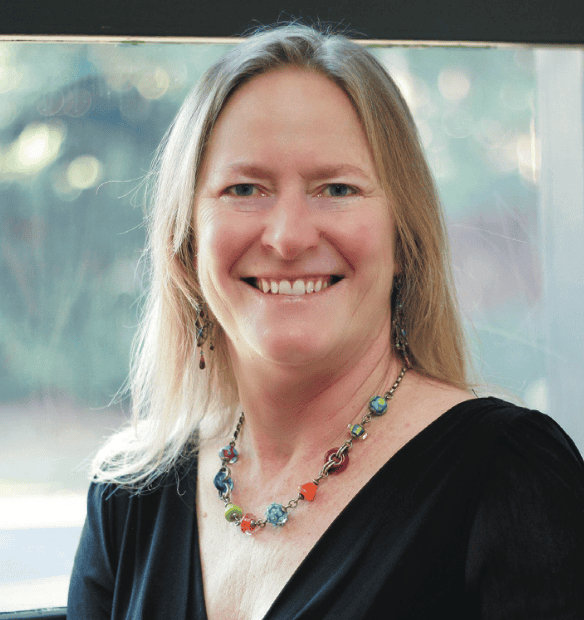
Annelise Kelly
Annelise Kelly thrives on the vibrant local food scene in her hometown of Portland, Oregon. Her culinary curiosity fuels her travels, on back roads and around the globe. Night markets, regional grocery stores, fine dining, and street food all feed her soul as well as her belly, and she’s perpetually fascinated by food, culture, and sustainability. She writes for Oregon Wine Press, Travel Oregon, the Willamette Valley Visitors Association, and more. She credits, with gratitude, her Danish heritage for her superior lactose tolerance.