
Nothing—not even a record-breaking storm—can suppress the artistry of cheesemaker Victor Chiarizia

The winding roads of Appalachia’s Blue Ridge Mountains are characterized by jutting pine trees, sprouting wildflowers, and a hazy blue blanket of mist. The serenity and mystique surrounding these mountains have long drawn artisans, makers, and storytellers to take root in the foothills. That same allure brought cheesemaker and glassblower Victor Chiarizia to Fairview, North Carolina, in 2005. A self-starter by nature, Chiarizia fell in love with the traditional methods of crafting cave-aged cheeses. In 2010, he took a backhoe to the side of the mountain on his property and carved his own cheese cave, launching Blue Ridge Mountain Creamery. Little did Chiarizia know, this cave—a testament to his creativity and grit—would soon withstand one of the most devastating natural disasters to ever hit North Carolina.
Calm Before the Storm
Chiarizia has a particular proclivity for creativity. Whether his mind is swirling around a sandblasted sculpture or a marbled espresso cheese wheel, Chiarizia’s hands are always coaxing out something creative from the mundane. A glassblower by trade since 1975, Chiarizia’s custom flameworked creations have shown at galleries across the US and are inspired by botanicals, mythology, and his Italian American upbringing. Their organic shapes and storied bodices echo pieces from renowned American glass artist Dale Chihuly.
This same precision and care are infused into his cheeses. “Both glassblowing and cheesemaking can lean industrial or artistic, and there’s a rhythm and system to each,” he says. “For me, I’m here for the artistry.” After a fire leveled his studio in Connecticut in 2004, Chiarizia wanted to pursue a second business that would be easier on his body, and cheesemaking was something that had resonated with him since childhood. “My father was a self-sufficient Italian man. He worked hard, no questions asked. We made small-batch farmer’s cheese together when I was a kid,” Chiarizia says.
Since the region is packed with notable goat cheesemakers like Looking Glass Creamery, White Tree Farm, and Round Mountain Creamery, Chiarizia decided to produce cow’s milk cheese to fill the gap. To make his cheeses, he travels twice a week to his friends at Looking Glass Creamery in Columbus for grass-fed raw milk from their herd of 30 cows. When he returns to the make room, Chiarizia pours around 35 gallons of milk into a kettle, where it’s heated, cultures are added, acidity is built and monitored, and curds and whey are separated. Once the acidity and curds are stabilized, the cheese is drained and formed into wheels, then transferred to the cave for aging.
If You Build It, Cheese Will Come
While ideating plans for his creamery, Chiarizia continued to visit family in Italy. He strove to emulate what French and Italian cheesemakers were doing abroad with his own line of aged cheeses.
Most had one secret for success: a cave. So Chiarizia decided to build one in his own backyard, borrowing a friend’s backhoe to chip away at the land until he hit bedrock nearly 30 feet underground. Satisfied with his newly formed bunker, Chiarizia then poured footings to build an 8-inch concrete frame. Then the cave was covered in 7 feet of soil for insulation. Chiarizia added drains, refrigeration, and a humidification system so the inside would stay around 50 degrees with high humidity. The 18-by-18-foot cave took two years to construct, with walls framing the cave made from rock reserved during the excavation.

“I wasn’t entirely sure how the cheeses would react to the natural environment, so it felt highly experimental,” Chiarizia notes. But just as they do globally, unique molds began to appear—a shifting culture of gray, white, and blue molds that make up the unique terroir of each wheel. Rainwater seeps through the rock wall on the back of the cave, integrating flora from the region.
Appalachian Cave-Aged Cheeses
“Cheesemaking is mostly about cleaning and waiting,” says Chiarizia, who is no stranger to a long and cumbersome process.
Blue Ridge Mountain Creamery produces a variety of cave-aged, natural-rind cow’s milk cheeses, all carefully affinaged in Chiarizia’s underground cave. Their Alpine-style tomme, Ugly Baby, is a mild 5-pound wheel aged for at least three months. It’s the first cheese Chiarizia produced, and it received the mocking namesake in reference to the blind, unwavering love of mothers. Another popular cheese is their garden-fresh, sage-infused wheel aptly titled Alpine Sage. Their pepper jack is aged three months and infused with locally grown Thai chiles. Another fan-favorite, the Johnny Valdez, boasts curds and a rind infused with espresso. This striking cheese gets its playful name from Colombian fictional character Juan Valdez and Chiarizia’s uncle Johnny. Some of their larger wheels include Asiagos aged for a minimum of eight months, and naked and clothbound cheddars—the latter wrapped in muslin and coated in lard from hogs raised by Chiarizia.
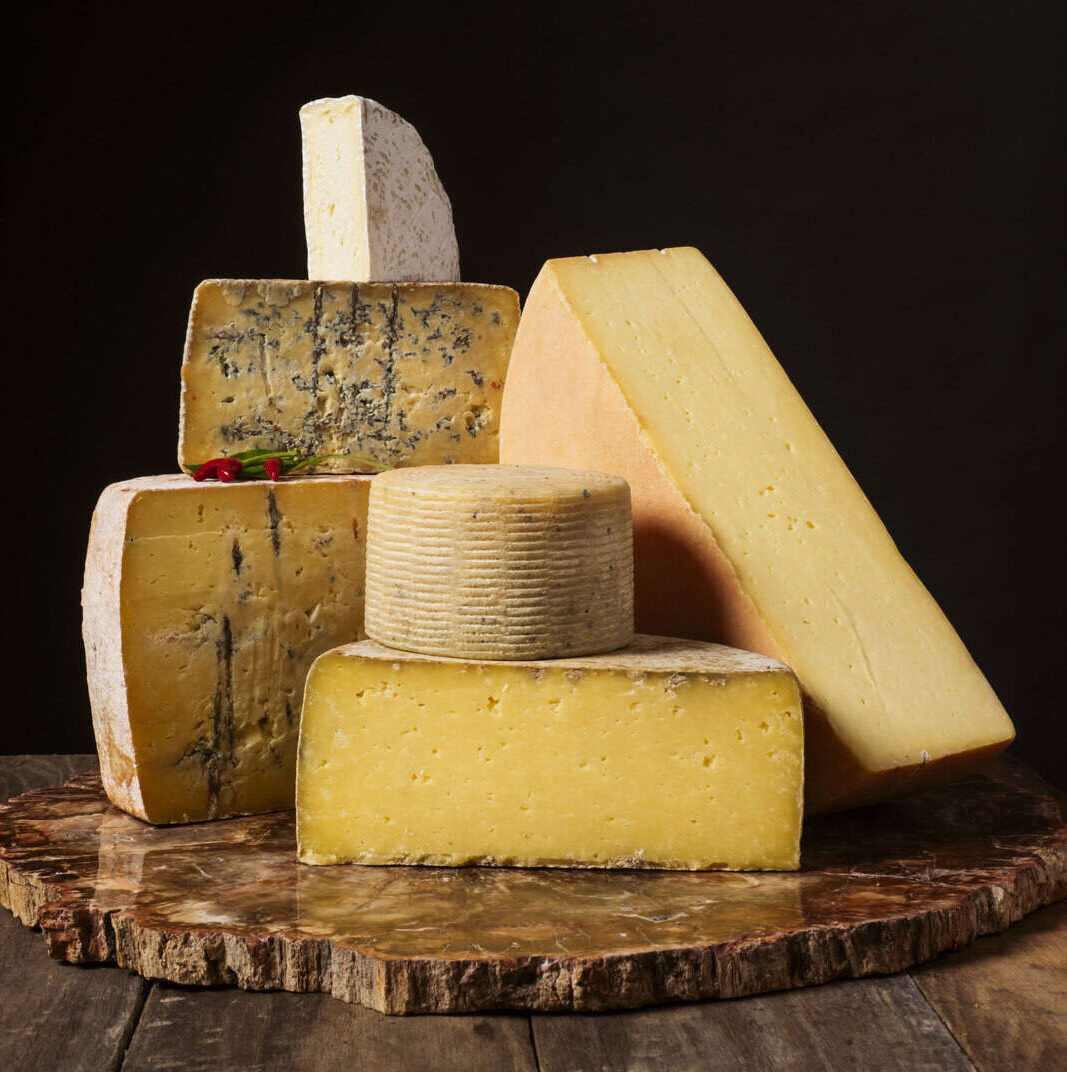
While cave-aged cheese is certainly its calling card, Blue Ridge Mountain Creamery is equally well-known for award-winning blues. To carefully monitor the development of his blue cheeses, Chiarizia constructed The Blue Room, a custom-built temperature- and humidity-controlled aging space that sits between the make room and Chiarizia’s workshop and can hold up to 500 pounds of blue cheese. The creamery’s legendary Ridge Blue is a 5-pound wheel with piercing blue veins that’s aged for at least three months.
Blue Ridge Mountain Creamery’s cheeses are sold at the Black Mountain Tailgate Market, North Asheville Tailgate Market, and at select local businesses, but the lineup is always shifting to include Chiarizia’s latest experiments.
The Storm and Its Aftermath
On September 27, 2024, Chiarizia’s handcrafted oasis met Hurricane Helene. Chiarizia and his partner had been home when the storm struck in full force; they climbed out of a window to find higher ground. Neighbors were consumed by the flooding, some barely escaping, and many falling victim.
Weeks and months of sifting through debris and destruction set the stage for a solemn year of recovery for Chiarizia and the surrounding community. “The PTSD is real,” he says. “A lot of people won’t be returning to the area now that it holds these memories.” His home, workshop, beloved Blue Room, and acreage were demolished in a matter of hours, but surprisingly, his cheese cave withstood the storm.
“I remember thinking we’d really lost everything. But I cleared the doorway, and all was OK,” Chiarizia says.
With a generator and drains, nearly 1,000 pounds of cheese survived the catastrophic impact and was sold at markets the following spring. Salvaging glass-blown vases caked with mud and rubbing intact mold on cave-aging wheels offered small glimmers of hope during an immeasurably difficult period.
As time progressed in and around Western North Carolina, communities continued to regain their footing. Chiarizia laughs that he’s now officially “been tested by fire, pestilence, and flood” and maintains an outlook that moving forward is the only option. “My new job is cleaning, rebuilding, and still finding time to create. Some of us are handier than others, so I plan to put my hands to good use and help neighbors rebuild,” he says. And, when Victor Chiarizia puts his hands to work, it’s certain the outcome will be something remarkable.
Traverse the Western North Carolina Cheese Trail
Spanning from Andrews to Charlotte, the Western North Carolina Cheese Trail connects locals and tourists to the bounty of artisan cheese available in the region. The trail includes creameries, wineries, cideries, restaurants, shops, and farms where visitors can support and enjoy locally crafted cheeses. Plot out a full road trip, steal away for a pit stop, or attend the annual Carolina Mountain Cheese Fest for the ultimate taste of North Carolina cheese.
For more information, visit nccheesetrail.com.

Amber Chase
Amber Chase brings a breadth of food knowledge, a hearty work ethic, and a very high gluten tolerance to her journalism career. Her years have been shared between Charleston, South Carolina, and Winston-Salem, North Carolina. In a past life, she co-owned a bakery, starting her mornings at dawn and returning home covered in flour and coffee grounds. Her other full-time gig is parenting her daughter, Nova, who will no doubt grow to be her superior.