
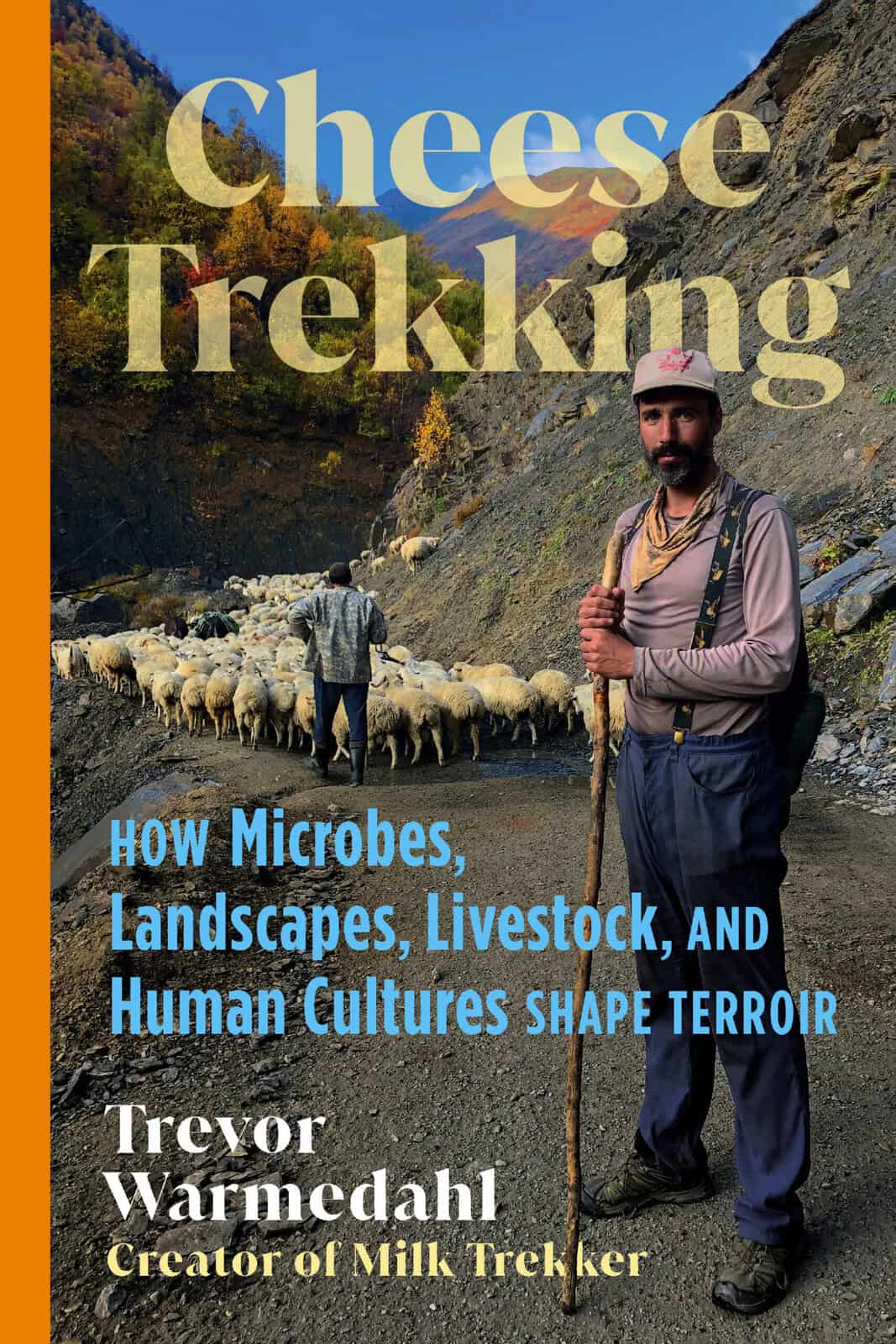
In his latest book, Cheese Trekking (out March 3), Warmedahl dives into dairy traditions from around the world
Editor’s Note: At culture, we celebrate the traditions, history, and stories behind the people and places that shape our food systems. We also believe in evidence-based food safety and science. Consuming raw liquid milk can lead to serious health risks, according to the CDC and decades of peer-reviewed research and public health data. We also recognize that the safe production of cheese—whether made with raw or pasteurized milk—depends on rigorous sanitation, regulatory oversight, and adherence to established food safety practices. The views expressed in this interview are those of Trevor Warmedahl and do not necessarily reflect those of culture media. We remain committed to fostering thoughtful conversation.
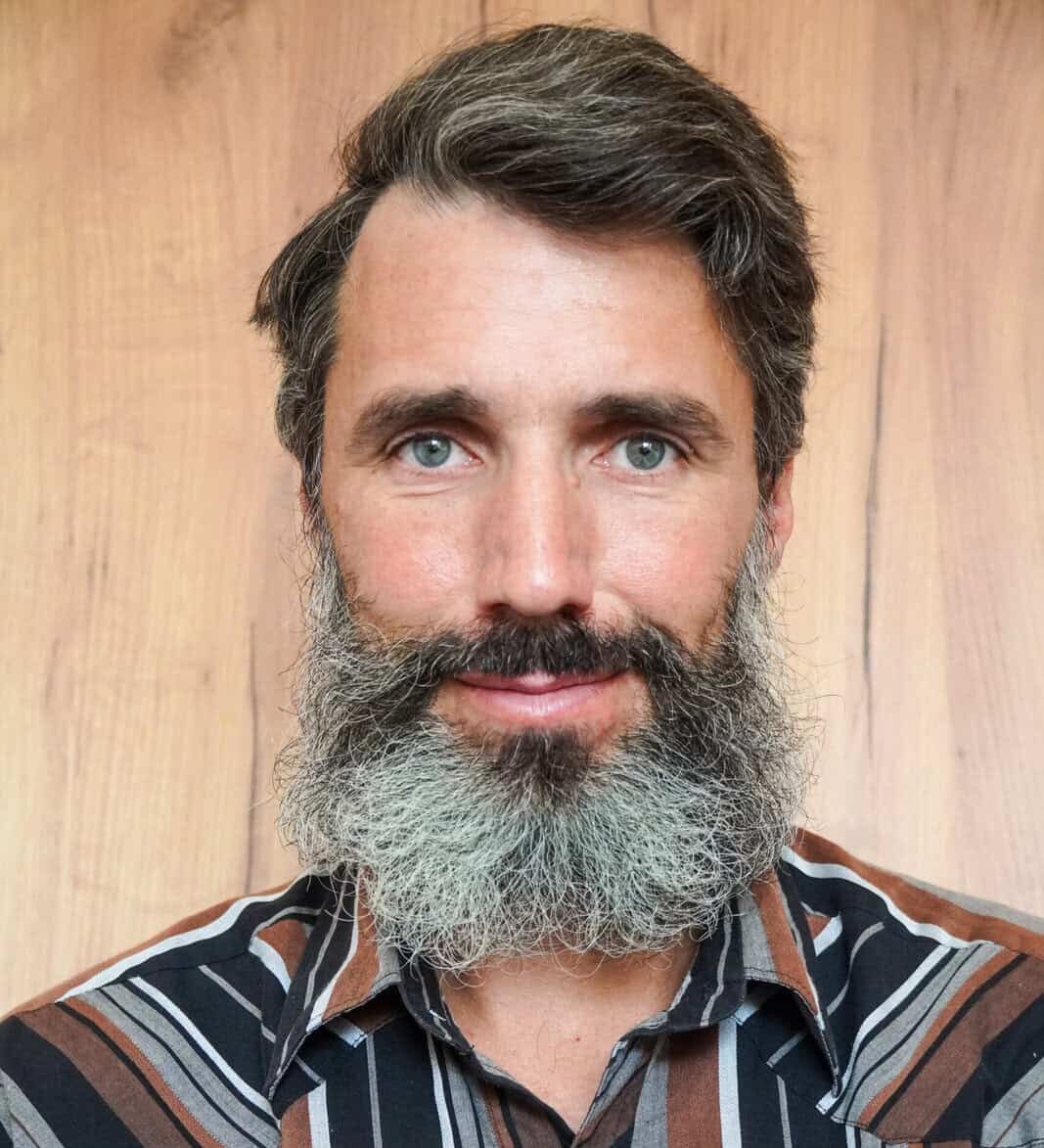
Trevor Warmedahl, a cheesemaker and culture contributor known as the “Milk Trekker,” trots the globe visiting pastoral communities. His purpose? Investigating how milk is treated and transformed by indigenous microbes and the human touch.
It’s not a glamorous lifestyle, per se. In order to be the Milk Trekker, Warmedahl has to be comfortable navigating countries solo and communicating his intent to observe and understand niche dairy practices in spite of language barriers. He also travels light—and on a budget.
Cheese Trekking is as much a travelogue as it is a reflection on the links between terroir, cheesemaking, slow-food pathways, and heritage. We were lucky enough to catch up with Warmedahl, who was staying at a yurt in between his travels. Read on to learn about the experiences that shaped his writing, plus his views on the role of old-world food systems in a modern climate with high demand for all things quick and processed.
Culture Media (CM): What drives you to cover the terroir of milk and cheese so closely and personally?
Trevor Warmedahl (TW): I’m driven by the fact that the awareness of cheese as a fermented food—and the depth of the relationships that can be involved—has been lost. It’s a really mystified food, and there’s a lot of fear and heated emotions around milk as a food. I’m always trying to look at cheese as a function of what milk biologically is designed to do—to feed a baby animal, where the milk coagulates in the stomach and essentially becomes cheese.
I’m always trying to remove cheese from this elitist category of something that is inherently unsafe or has all these requirements for rigorous sanitation and expertise and show that it actually can be like a craft. It can be on the level of making sourdough bread or sauerkraut. I’m trying to frame cheese within the general discussion that’s happening around fermentation microbes and then tying that back to the ecological impacts that producing these foods has on a landscape and show that this can be done in a way that is also the opposite of industrial agriculture. All of these things can be shifted from being detrimental to beneficial to our bodies and to the health of the land.
CM: Why pursue this work through a nomadic lifestyle?
TW: I’ve always been drawn to mobile lifestyles. Learning that these systems have evolved in places over time—like the movement of animals in a country like Mongolia, or the transhumance happening in the Italian and Swiss Alps—and these strategies just make so much sense. It’s like the most practical and sustainable way to work with dairy animals and it creates this lifestyle that just really appealed to me.
I started traveling and documenting out of a sense of urgency because I felt that this stuff was endangered and going extinct. I was compelled without really having much of a plan of how that was going to work. I just wanted to see it while it existed. I started sharing [my travels] on Instagram and I quickly realized that there was a lot of interest in it and that it was something that I could pursue as a path in life. And then it became my full-time gig combined with teaching and writing.
CM: What was the first cheese that truly changed your perspective?
TW: [My perspective changed] in 2019 after I went to Bra, Italy, for the first time and tasted all these amazing cheeses in terms of what cheese could be when it was made without commercial starter cultures. Suddenly, I could taste what commercial starter cultures tasted like in the cheeses I was familiar with from America and there was a new bar raised to this whole other level. And immediately after that, I visited a cheesemaker south of Bra, but still in Piedmont in the Long Hills, where there’s a tradition of making sheep cheeses. It was the first time I visited a cheesemaker who said they didn’t use any starter culture. At milking time, he just kept pointing at the udders of the sheep and saying that’s where the culture was.
When you start milking, oftentimes people will discard the first bit of milk that comes out of an animal because it’s known for being high in bacterial counts. And he was like, “No, you want to keep that. That’s the good stuff. That’s what’s going to help this milk ferment.” This was the first cheese that I experienced real, tangible terroir. He took me out into his fields to meet the sheep and there were certain aromas like wet soil and grass and rotting leaves and the smell of sheep like lanolin, you know. Then, we went into this creamery and he showed me his cheeses and I smelled them and it smelled like it was a direct parallel to what I had smelled outside. There was this incredible depth and kind of idiosyncratic or individual flavor this cheese had because of how it was made and because of the fact that it was working with microbes indigenous to the milk.
That’s the idea of cheese trekking: visiting cheesemakers, tasting the cheeses in the place they’re made, and trying to understand the web of relationships that makes the cheese what it is.
CM: How did you connect with indigenous cheesemakers despite language barriers?
TW: It took a lot of emailing people out of the blue and learning about a cheese, learning about who was making it, and just knocking on as many doors as possible until I found someone who was willing to have me visit. Or sometimes it came down to a single person in a country or region, or associated with a certain cheese, or who’s working to promote, protect, and revitalize those cheeses. When I told them what I was trying to do, they offered to help. Or, I’d stay in guesthouses and just walk until I started to see what I was looking for.
The language barriers, I think, are a really intimidating part of travel. And it’s something that can be overcome when people are patient and willing to take the time to either work with Google Translate or just be accommodating. That’s how I’ve been able to do it: relying on the kindness and strong sense of hospitality among pastoral communities.
CM: What has being involved in the cheese world taught you about yourself?
TW: There’s a reason why I became a cheesemaker and then there’s a reason why it’s a good craft for me. It made me realize my strong suits as far as attention to detail: ability to perceive fermentation and changes in food, sensory evaluation. And [it made me realize] my ability to work alone, and that I had found a craft that I could dedicate myself to. It showed me that there are options out there where people can still participate in larger, destructive, capitalist economies but with good intentions, and work to bring people back in contact with life through food.
CM: What are Americans missing when it comes to cheese and fermentation?
TW: Sometimes it appears that what’s missing is the lack of tradition and the lack of established farming systems.
I also think that this lack of tradition can be an incentive to experiment. I think America is probably the most exciting country to be a cheesemaker because we’re not tied to tradition.
CM: Where do you still want to trek for cheese?
TW: I really want to go to Turkey. I like to visit countries that haven’t been featured as much by the cheese world and that are kind of less known for their cheese. Turkey has this vast history of dairying and pastoralism. There’s huge diversity of cuisines around Turkey and there’s a living, contemporary, strong diversity of communities of ethnic groups who are still mobile pastoralists. I know that there’s just so much that exists there that I could spend years exploring. I’m especially interested in these cheeses that are aged inside of goat skins. I really want to learn more about those cheeses—they’re like these emblems of a complete other approach to food safety. And the fact that you can safely do this, I think says a lot.
CM: What practical advice do you have for people who want to follow your path?
TW: I think volunteering is one of the best ways to learn about this stuff and to do it cheaply. There’s WWOOF and Workaway. I’ve found and stayed with families and cheesemakers that I connected with through Workaway. As far as trying to find places where older ways of making cheese and raising dairy animals still exist: pick a region, research it, try to connect with the people there before you go. You don’t need a full plan. I think that so often it’s better to just go and figure it out when you get there. Have some faith that things will work out when you do end up on the ground.
Also, carve out enough time to travel somewhat extensively for a few weeks in one place. Try to see less places and spend longer time in each place. Ask others who have done this sort of work how they do it. Asking a lot of questions and knocking on a lot of doors is the best way to make this stuff work. Luckily with cheese—and a lot of other fermented foods or traditional foodways—people who are doing it are excited when other people are interested in it.
CM: What do you want the future of dairy to look like?
TW: I want to see the basic ingredients of cheesemaking relocalized as much as possible. I want to see a shift away from anonymous rennet produced on other continents. I want to see rennet made in America, experimentation with blending rennets. … Moving back toward working with the indigenous microbes of raw milk and increasing the amount of dairy sovereignty, where instead of relying on large national corporations for this stuff, it’s done in a different way.
I’m trying to encourage asking the questions: Where do ingredients come from? How do they impact our cheese? How can we craft cheeses that really are specific to where we are and that have something to say that aren’t nameless commodities made to be consistent and appeal to everyone?
Let’s not be scared to make cheeses that have some bold character and some living essence to them. Let’s not be scared of inconsistency or obsessed with consistency, and let’s maybe embrace the ups and downs and the seasonality.

Alana Pedalino
Alana Pedalino serves as Managing Editor of culture. Her work has been featured in Bon Appétit, Chicken Soup for the Soul, and more. She loves to write, cook, and kayak. Find her bylines at alanapedalino.com.