
The New York Office of the Italian Trade Agency (ITA) promotes the Made in Italy Food, Wine & Spirits industries throughout the US market, supporting the growth of Italian companies and contributing to the attraction of foreign investments in Italy.
To increase awareness, strengthen the perceived value of Italian dairy products in the United States, and reinforce the market positioning of authentic Italian cheeses among American industry professionals, the ITA launched the Real Italian Cheese, Please digital campaign together with Assolatte, the Italian Milk & Dairy Association.
The promotional campaign includes informative, educational content for both consumer and trade audiences. In addition to a rich portfolio of social media content creators from across the United States highlighting Italian cheese as an ingredient in both authentic Italian recipes and classic American dishes, the ITA partnered with culture to produce an in-person technical masterclass for cheesemongers and culinary professionals in Los Angeles, California.
This guide to authentic Italian cheeses is a way to share insights from the masterclass with trade professionals across the country, highlighting authentic Made in Italy cheeses.
Whether sourcing new products or shopping at the store, DOP and PGI labels are guarantees of authenticity, and the Made in Italy label gives you the confidence to ask for Real Italian Cheese, Please. c
For more information about the Real Italian Cheese, Please campaign, please visit www.realitaliancheese.com. To learn more about the Italian Trade Agency of New York, please visit www.ice.it/en
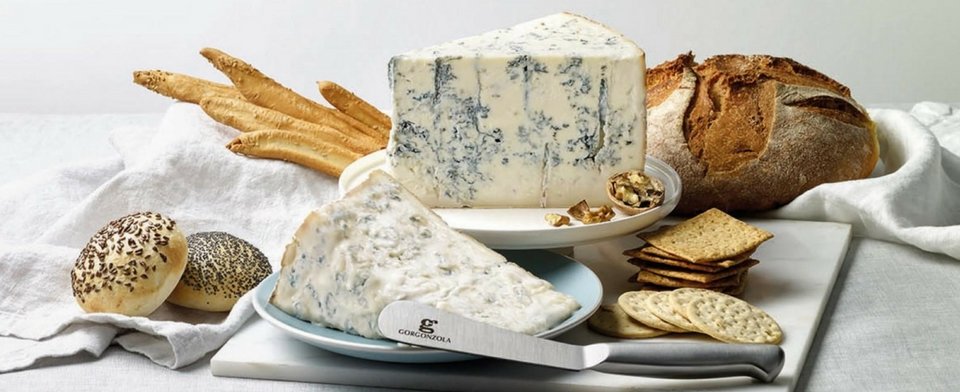
Gorgonzola DOP
Gorgonzola DOP is a soft, full fat, raw blue cheese made from pasteurized whole milk in Lombardia and Piemonte.
Traditionally the cheese is prepared in layers with cooled curds and dry salted after a few days. Aging can extend over two to three months, and during maturation the cheese is perforated several times to encourage the development of Penicillium mold responsible for its iconic marbling.
Gorgonzola is produced in two styles: Dolce, or sweet, which is younger and more mild, and Piccante, or sharp, which is aged longer with a stronger character.
Gorgonzola Dolce is rich and buttery with a velvety texture and notes of cultured cream, fresh milk, sweet butter, mushrooms, and a gentle tang. The blue mold contributes subtle earthy and peppery notes without overwhelming the palate. The finish is mellow and slightly sweet.
Gorgonzola Piccante is bold and savory with a firmer texture and robust, savory character featuring notes of toasted nuts, earth, black pepper, cellar mushrooms, and a pleasant minerality. The extended aging brings a sharper tang and lingering spicy, peppery finish balanced by a rich creaminess.
Enjoy paired with grapes, honey and rustic bread, or in recipes like polenta, risotto and stuffed dates wrapped in bacon.
Taleggio DOP
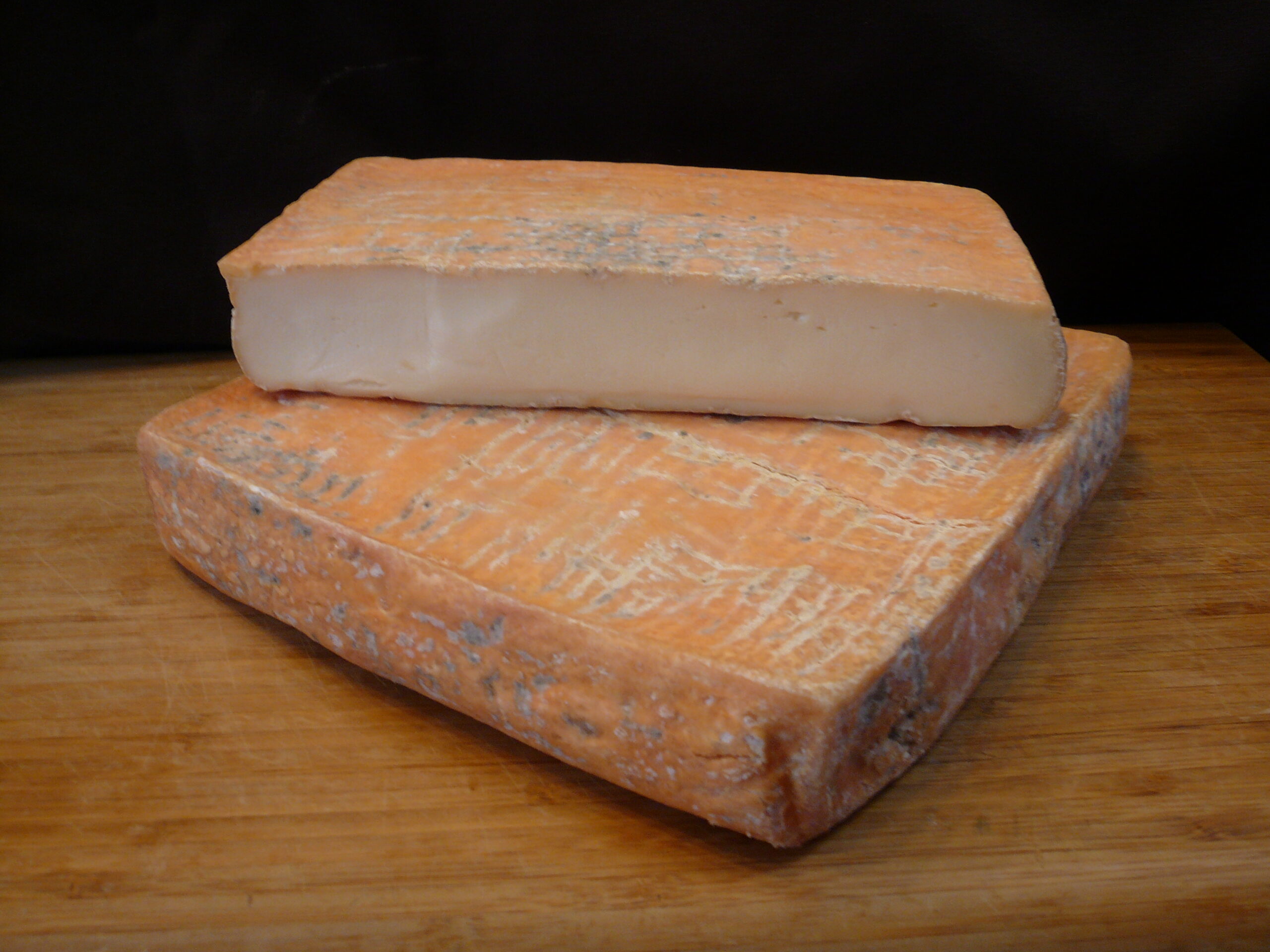
Taleggio DOP is a soft, raw table cheese with a distinctive square shape and pinkish washed rind. Today Taleggio PDO is made in Lombardia, Piemonte and Veneto, with origins stretching back over a thousand years to Val Taleggio.
Made from whole cows’ milk, which can be pasteurized, Taleggio DOP is brined or dry-salted, and curds are shaped and matured for at least 35 days with no treatment of the rind allowed.
The paste of the cheese is an even color ranging from white to pale straw yellow, and while the aromatic rind may hint at bold flavors the cheese is mildly buttery and tangy with notes of cultured cream, yogurt, sweet butter, and toasted nuts. The washed rind contributes earthy, meaty, and mushroomy nuances, while the finish is savory with a gentle fruity tang.
Enjoy on a cheeseboard and paired with walnuts and pears, or use in recipes like risotto, polenta, grilled cheese and macaroni & cheese.
Pecorino Romano DOP
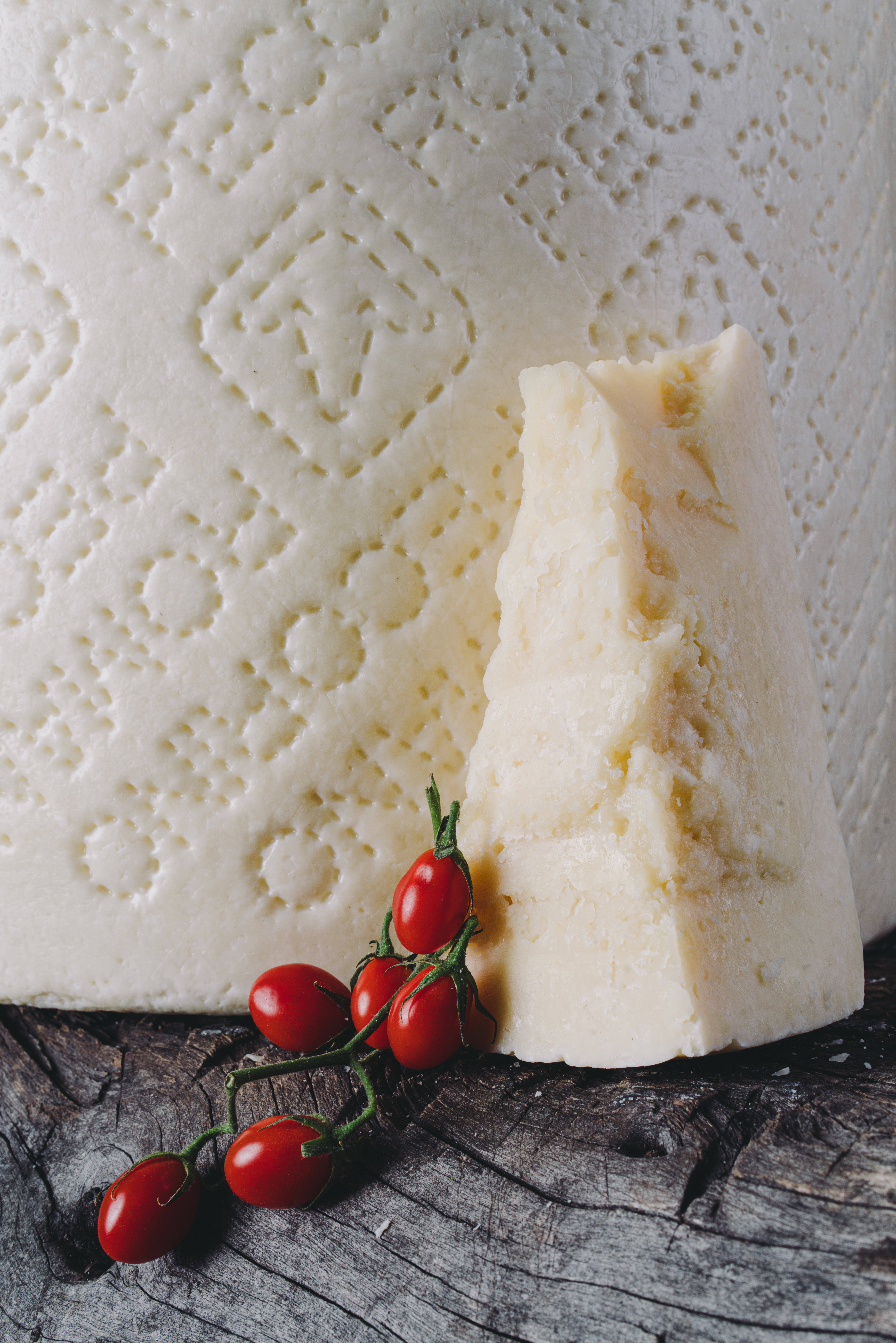
Pecorino Romano DOP is a hard, cooked cheese made exclusively from whole sheeps’ milk throughout the regions of Lazio and Sardegna, as well as a part of Toscana.
This cheese is produced according to tradition from October to July with whole sheeps’ milk, indigenous lactic acid cultures from the production area, and lambs’ rennet from animals bred in the same area. Salting may be done dry and/or in brine, and the cheese is aged for at least five months when used as a table cheese and at least eight months when used for grating.
The outer rind is thin, with an ivory or light straw color, and is occasionally covered with a special protective coating in a neutral color or black, while the paste may vary from white to shades of straw yellow depending on the conditions of production. Famously bold and assertively salty, table varieties are aromatic and slightly sharp while grating cheeses are sharp and intense. The finish is long, savory, and pleasantly piquant.
Pecorino Romano DOP is famously known as a key component of classic Roman pasta recipes like cacio e pepe, carbonara, and amatriciana, but it can also be enjoyed with pears, honey, prosciutto, and arugula.
Pecorino Toscano DOP
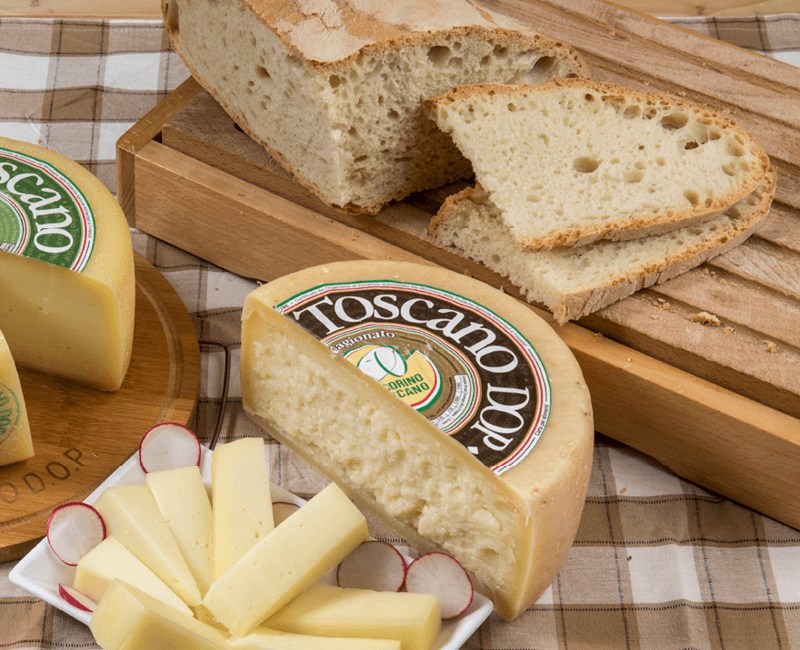
Pecorino Toscano DOP is made exclusively from sheep’s milk in Toscana and some boroughs of Lazio and Umbria.
This cheese is crafted in both fresco (fresh) and stagionato (aged) styles, each highlighting the naturally sweet, delicate character of the milk. The rind is various shades of yellow, and younger styles tend to have a more intense color. The paste of the fresh cheese is white or a light straw color, while the aged versions are a deeper straw color.
Young wheels are supple and buttery with a fresh, milky finish, while extended aging brings a firmer texture and deeper notes of toasted nuts and browned butter. The sheep’s milk lends a gentle lanolin richness, while the finish is smooth, savory, and nutty.
Enjoy paired with roasted artichokes or a classic Tuscan red wine, bake it with honey and walnuts, or use in recipes like bean soup.
Grana Padano DOP
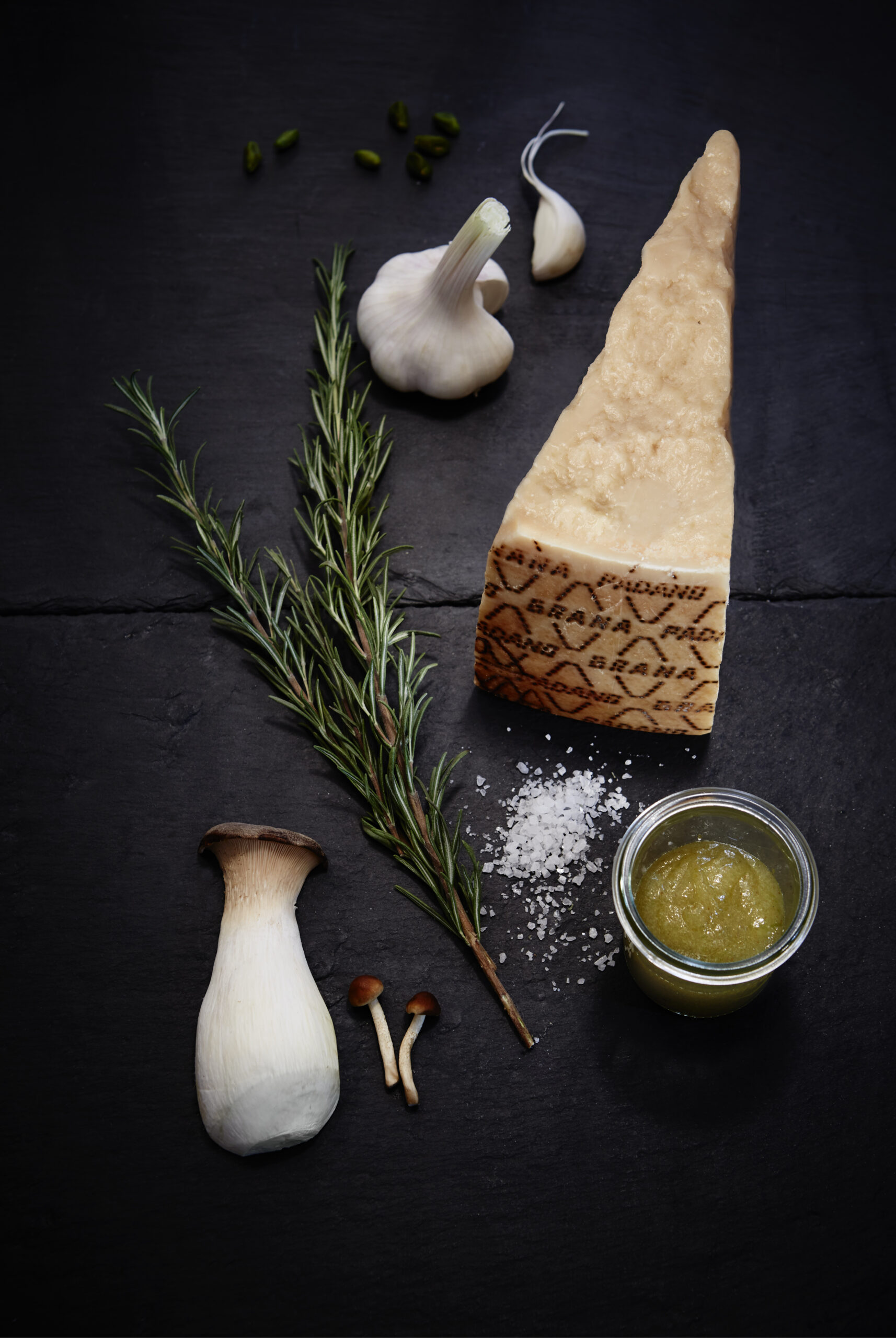
Grana Padano DOP is an aged, half-fat, hard, cooked cheese made from cows’ milk in Emilia-Romagna, Lombardia, Piemonte, Trentino, and Veneto. The name refers to its granular texture and origins in the Po River Valley.
The cheese is produced year-round using milk from two daily milkings of cows fed on fresh or dried grasses. Rounds are matured naturally in one to two years’ time, though after six months in aging rooms, each cheese is checked. When experts consider them at their very best, they are fire-branded with the Grana Padano logo as a symbol of authenticity.
The rind is four to eight mm thick and is a natural golden yellow color. The paste is white or a light straw yellow color with a finely granular texture that breaks away in flakes. As it ages, the cheese becomes drier and more crumbly, revealing layers of toasted nuts, browned butter, and subtle fruit flavors. Delicate protein crystals provide a pleasant crunch, while the finish is nutty, brothy and subtly sweet.
Enjoy as a table cheese, paired with pears and honey, used in a hearty soup or risotto, or grated over pasta and salads.
Parmigiano Reggiano DOP
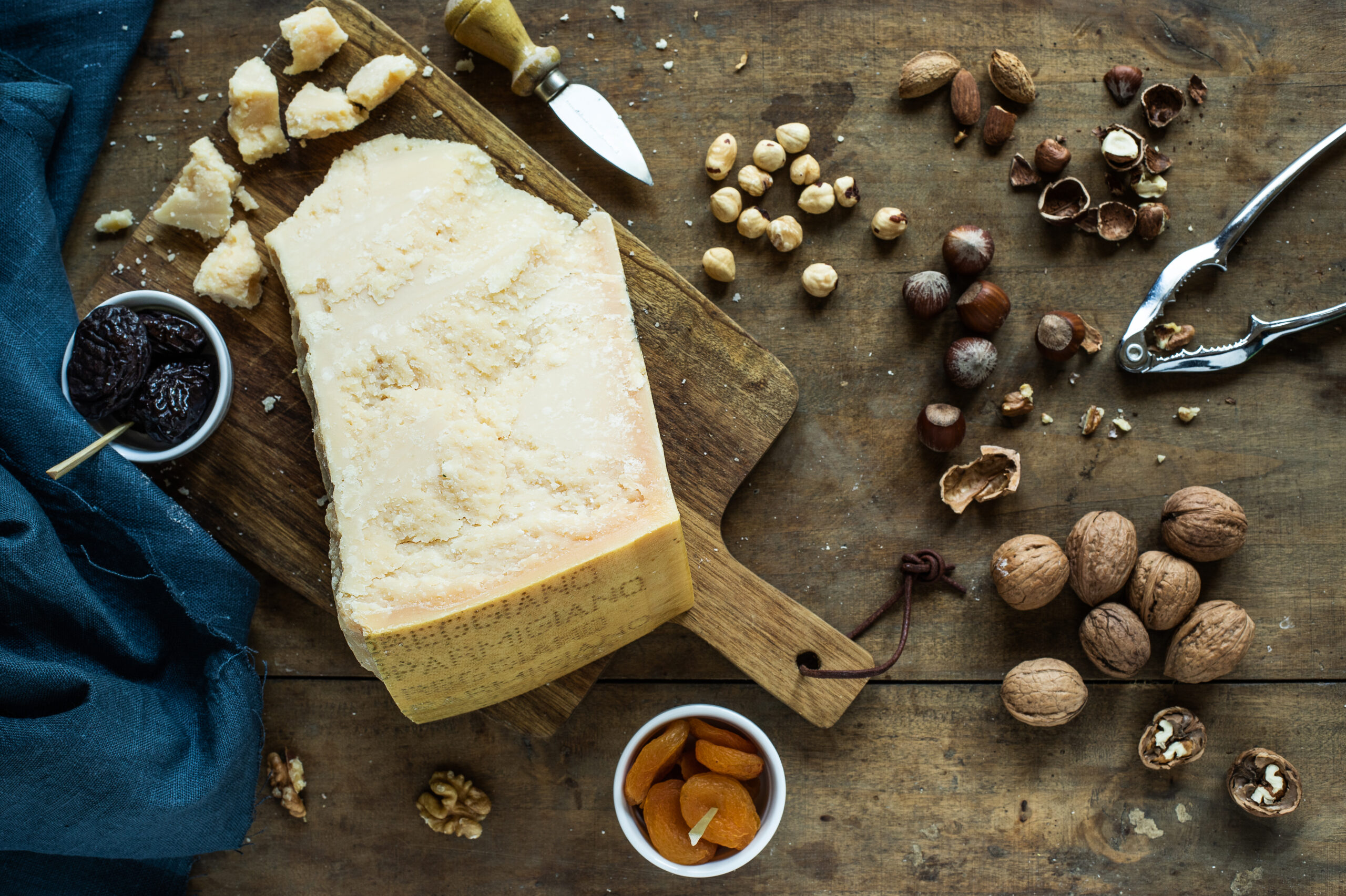
Parmigiano Reggiano DOP is an aged, hard, semi-fat cooked-curd cheese made from unpasteurized cows’ milk in Emilia-Romagna and Lombardia.
Milk is sourced exclusively from cows fed in accordance to precise feeding regulations tied strictly to the area of origin, and additives are not allowed in the cheesemaking process. Forms are salted in a period of 20 to 25 days and the natural aging process must last for at least 12 months, though the structural and organoleptic characteristics derived from the lactic bacteria are most completely realized when the cheese reaches 20 to 24 months.
The natural rind is a light straw color, stamped with the Parmigiano-Reggiano logo as well as production information. This guarantees authenticity. The interior color ranges from light straw to a deeper straw yellow with a texture that is minutely granular, breaking into large flakes when cut. Younger Parmigiano Reggiano DOP will have sweet and milky flavors that evolve towards savory, toasted nut flavors and the characteristic umami quality as the cheese matures.
Enjoy paired with aged balsamic, walnuts and figs, or in recipes like salads, risotto, and baked pasta.
Provolone
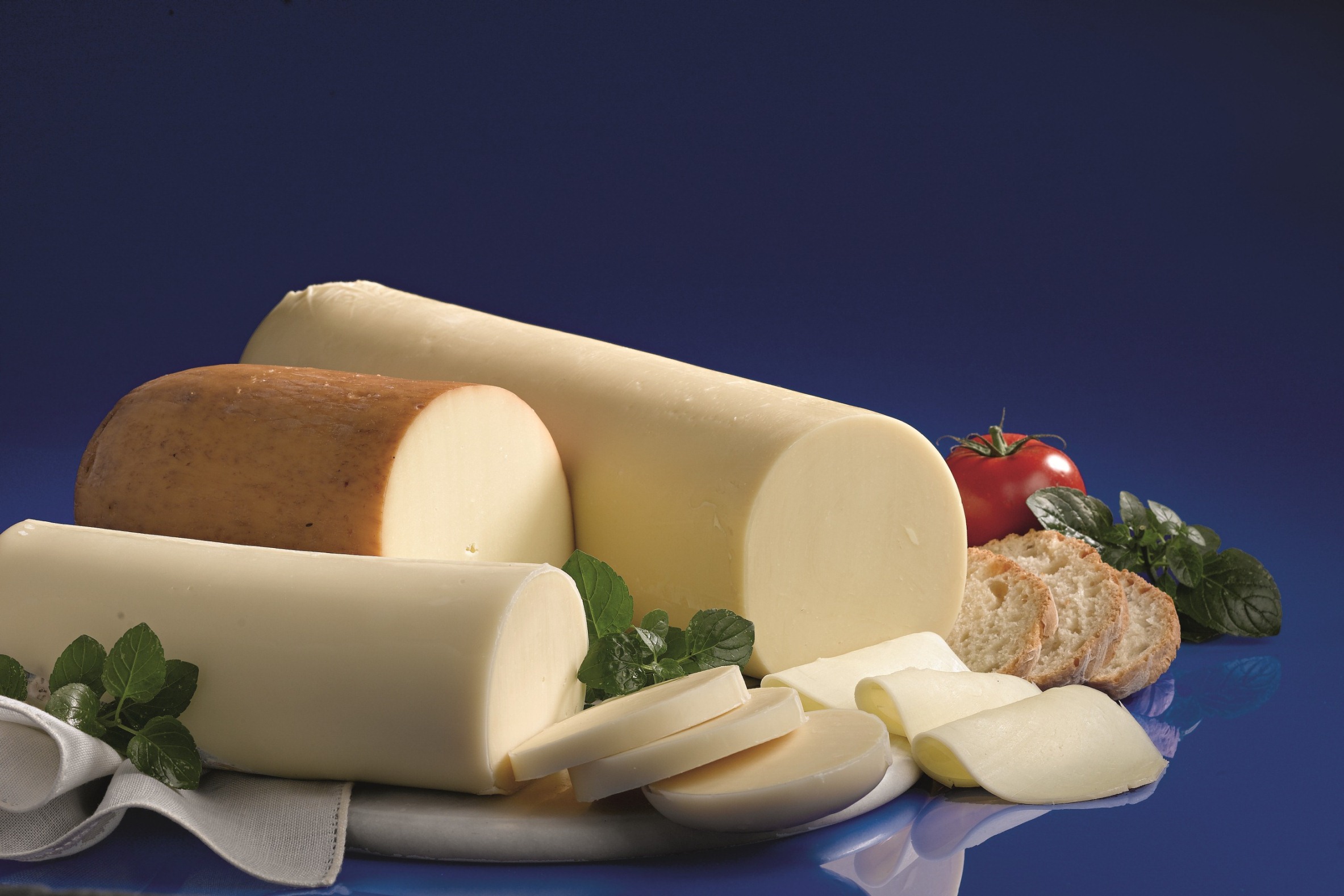
Provolone is a semi-hard, pasta filata cheese made from whole cows’ milk with historic origins in Campania, however it is produced all throughout Italy today. Provolone del Monaco DOP is made in Campania, and Provolone Valpadana DOP is made in Emilia-Romagna, Lombardia, Trentino, and Veneto.
Provolone is made in a variety of shapes, from long tubes called salumi, to round melons, and shapes in between like pears. Provolone is created in the pasta filata method and typically salted in brine for a period ranging from as little as a few hours to nearly a month. The cheeses are shaped manually or with special molds, then hung with strings to age.
Provolone Dolce, or mild, is aged for three months or less with smooth, buttery and delicately milky qualities and notes of cultured cream, toasted almonds, sweet grass and warm bread.
Provolone Piccante, or sharp, is aged for more than three months, developing deeper flavors of roasted nuts, dried herbs, and a pleasant tang that lingers on the palate.
Enjoy on a cheeseboard, individually or paired with salumi and pickled peppers, or in recipes with melty cheese like cheesesteaks or panini.
Caviocavallo DOP
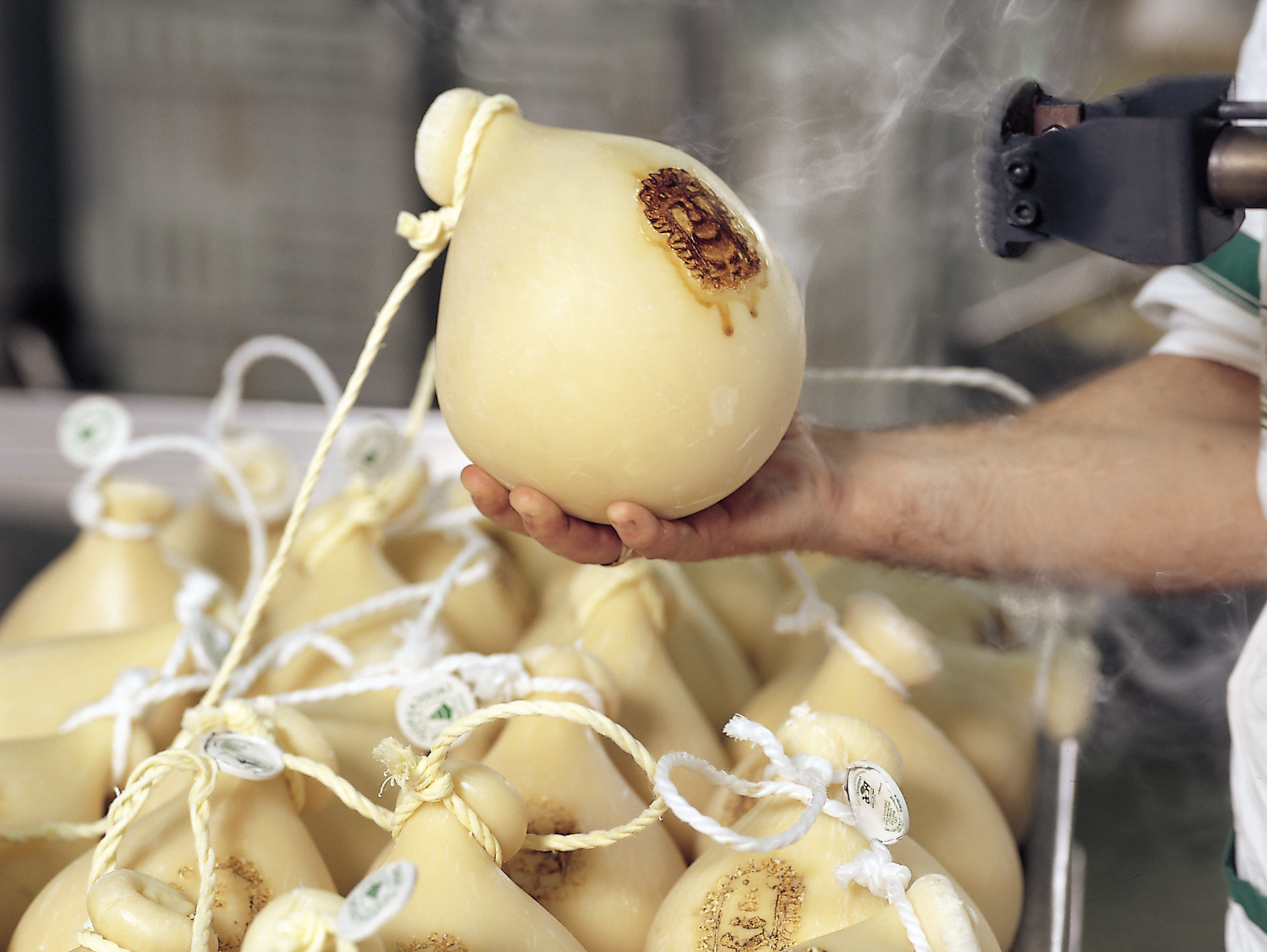
Caciocavallo is a semi-hard, pasta filata cheese made throughout Italy with sheep’s or cows’ milk cheese. The name Caciocavallo, which translates to horse cheese, comes from the production method of using string to tie cheeses in pairs to age while straddling a pole, as though on horseback, leading to the iconic teardrop shape.
Caciocavallo Silano DOP is produced only with cow’s milk in the Southern Italian regions of Basilicata, Calabria, Campania, Molise and Puglia and carries the appropriate stamp of authenticity.
Rinds are thin, smooth, and have a marked straw color, while the interior is even and compact and white or pale yellow in color.
Fresco, or Fresh, styles are aged two to three months and have mild, milky, buttery, and smooth qualities. Semi-Stagionato, or Semi-Aged, styles are aged four to eight months and are more aromatic, savory, and slightly tangy. Stagionato, or Aged, styles are aged over one year and are firm, crumbly, and sharp.
Enjoy on a cheeseboard paired with fig jam or apples, or use in recipes that require a melty cheese like baked pasta or grilled cheese.
Mascarpone
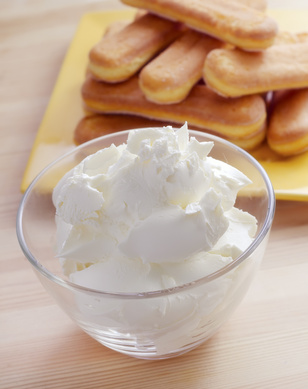
Mascarpone is a fresh, soft, spreadable cheese traditionally made from buttermilk, often with a small amount of milk added, giving it its signature rich, creamy texture. With origins in Lombardia, this lush cheese is now made throughout Italy.
Its simple production method involves heating buttermilk for 15 minutes then adding an acidifying agent such as citric or acetic acid. The heat and acidity induces coagulation and whey separation.
Mascarpone is a characteristically creamy cheese and is soft and compact with a spreadable consistency. The flavor is delicate with notes of fresh cream, sweet milk, and vanilla bean. The finish is silky, clean, and lightly tangy, with a subtle sweetness that complements both savory and sweet preparations.
Enjoy paired with fresh fruits or toasted bread, and use in recipes from cream-based sauces to dips to a classic Tiramisu.
Ricotta
Ricotta is a well known dairy product made throughout Italy, and there are many different types and production methods reflecting various local traditions. The main ingredient, however, is always whey obtained by cheesemaking processes.
Ricotta can be made with whey from the milk of cows, sheep, goats, or buffalo, which is then heated with an acidifying agent and often additional milk or cream. The name literally means recooked, reflecting the method of reheating nutrient-rich whey.
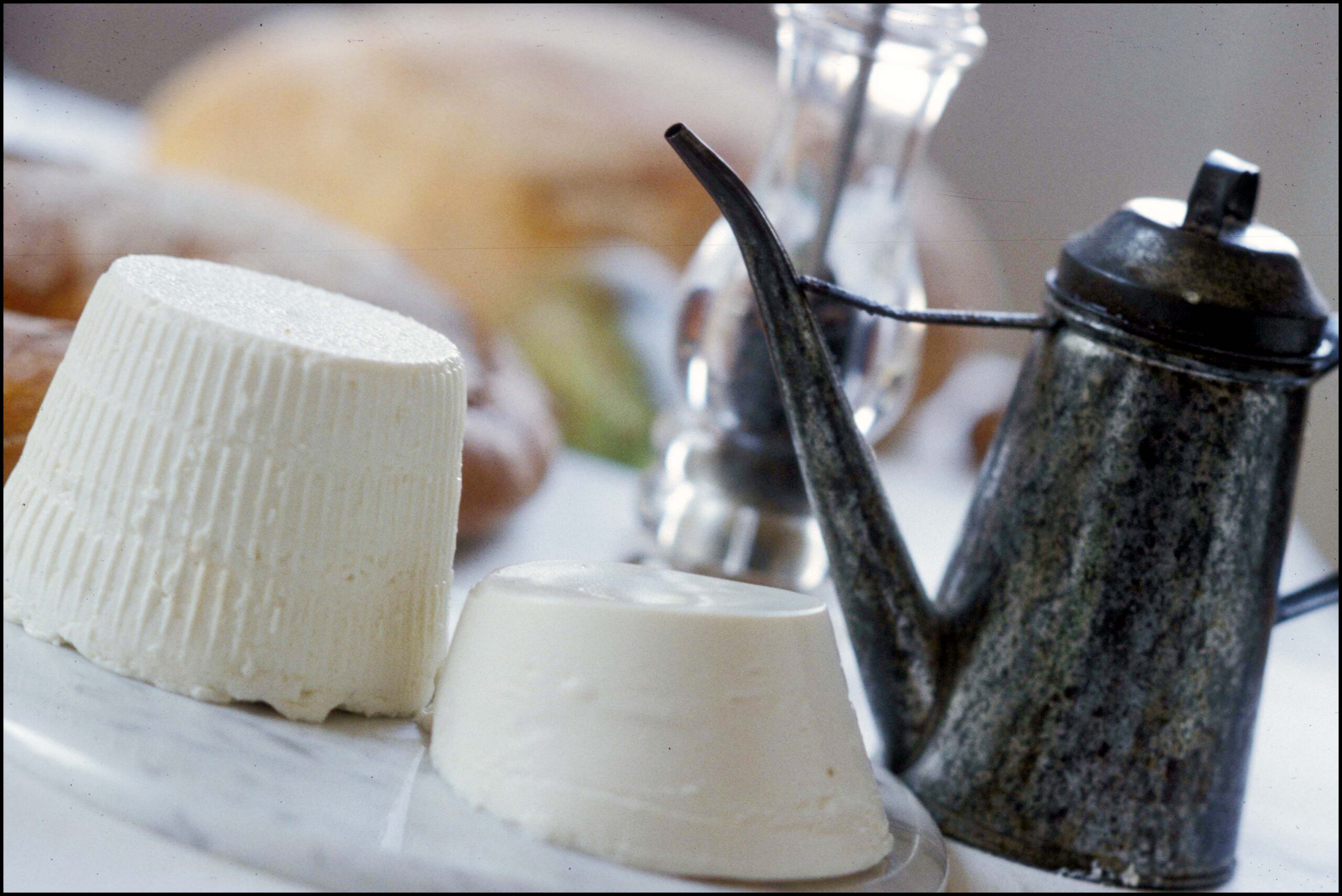
Shapes vary according to local customs, but the appearance is rindless and solid. The texture is slightly grainy, yet soft and spreadable, with a delicate, slightly sweet, milky taste and a subtle tang that leaves the palate refreshed.
Enjoy Ricotta paired with honey, fresh berries, or pistachios, and in recipes like crostini, breakfast toast, cheesecake or panzerotti.
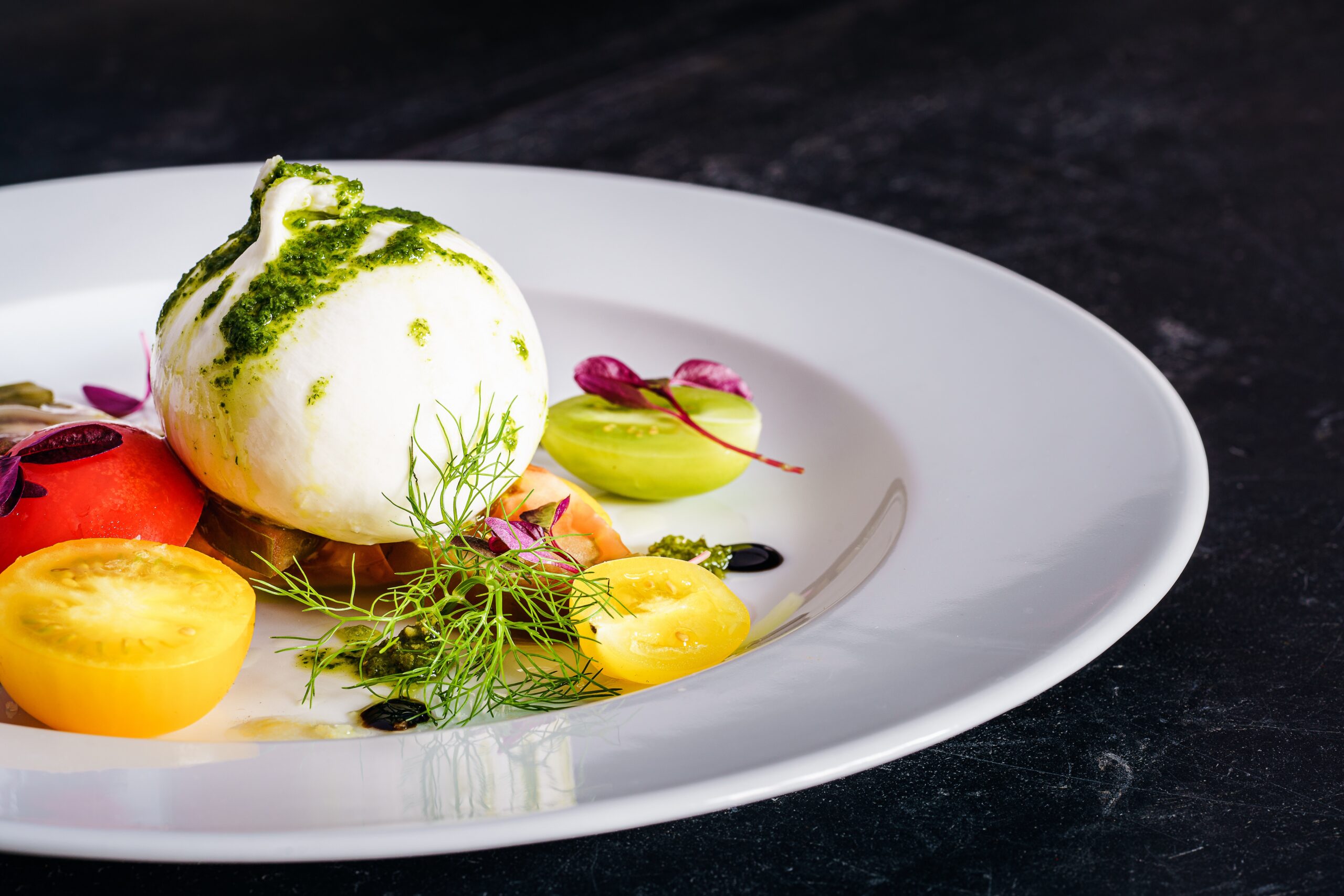
Burrata
Burrata is a fresh cheese with origins in the early 20th century in Puglia. It is now produced all over Italy using milk from cows and occasionally buffalo.
The cheese was originally produced by cheesemakers in Andria, Puglia, using components left over from mozzarella production, and this original production method is preserved with Burrata di Andria PGI. Strands of mozzarella are combined with cream to fill a delicate outer skin of stretched curd which is then pinched at the top.
Burrata has a soft, smooth exterior like mozzarella, but gives way to a soft, rich, creamy interior that spills onto the plate. Textures are luxurious and silky with flavor notes of fresh milk and yogurt. The luscious center coats the palate with a smooth richness, while the finish remains clean, slightly buttery, and gently tangy.
Enjoy paired with fresh herbs, bright seasonal vegetables and olive oil, or use to finish recipes from salads to pastas to pizzas.
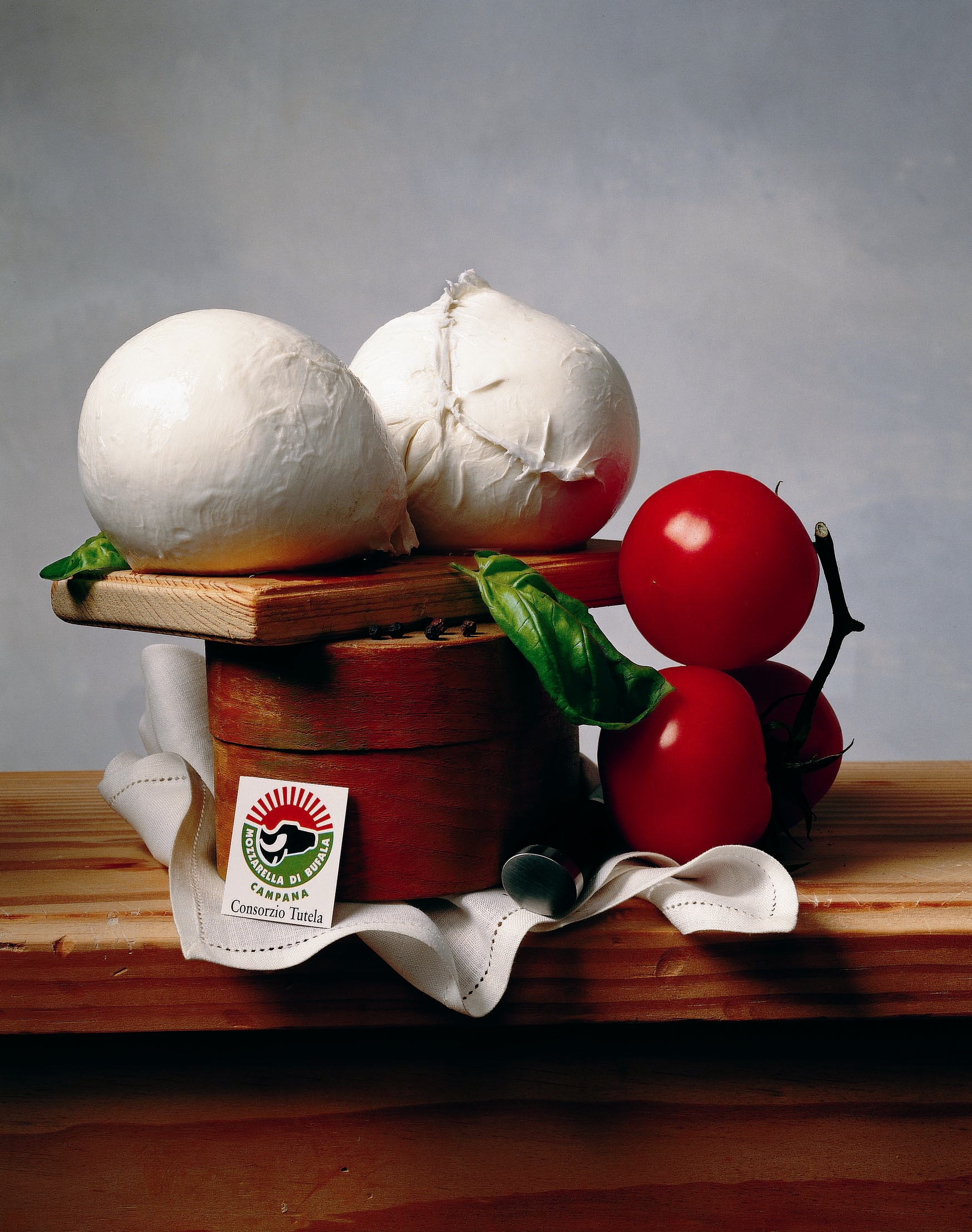
Mozzarella di Bufala Campana DOP
Mozzarella di Bufala Campana DOP is a fresh, stringy, textured cheese made from the whole milk of indigenous Mediterranean buffalo breeds in Campania and some parts of Lazio by farms managed according to local traditions.
Milk with a minimum 7% fat content must be delivered to the dairy within 16 hours of milking, and is then coagulated with rennet and lactic cultures from previous make processes. Curds are cut, soaked in whey for 5 hours, then stretched and “chopped” in hot water. Then, the cheese is placed in cold water, salted in brine, and packaged. No preservatives or colorings are used.
Most often found in round shapes, the fine 1mm rind is porcelain white in color with a smooth surface that is never slimy or flaky. The interior of the cheese is made up of fine layers, and when cut will exude a few drops of buttermilk. The flavor is bright and lactic with notes of fresh milk and sweet grass. A delicate salinity enhances its clean, buttery character, while the supple interior leaves the palate with a pleasantly tangy, refreshing finish.
Enjoy at room temperature on its own, with fresh peaches, or in a caprese salad.
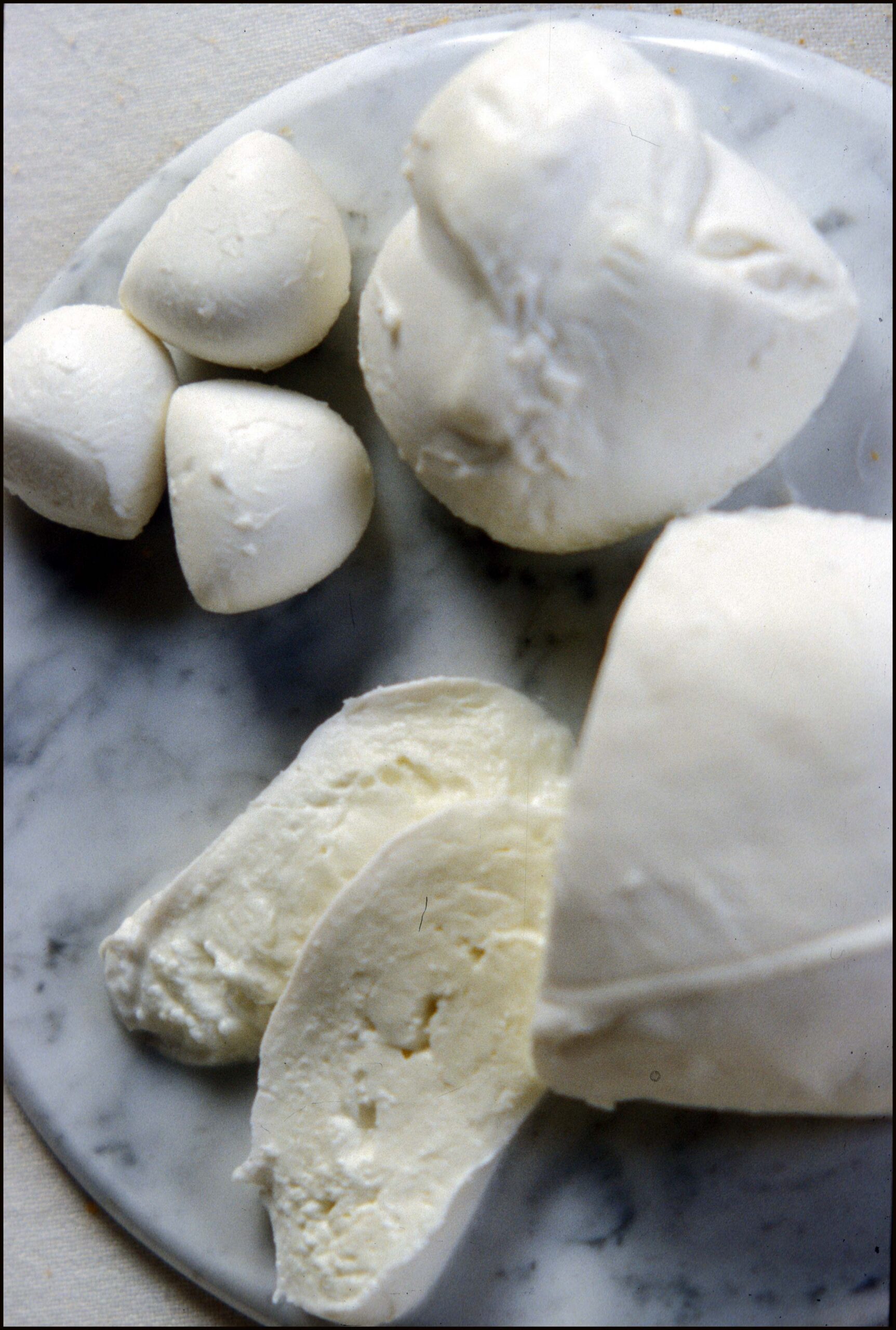
Mozzarella Vaccina DOP
Mozzarella Vaccina is a traditional fresh pasta filata cheese made throughout Italy from cow’s milk and fermented with lactic acid bacteria.
This traditional Mozzarella starts with pasteurized, full cream cows’ milk, a natural lactic culture, and calf ’s rennet. After the cultures and rennet are added to the vat, the milk begins to curdle. Whey is then removed and the ripe curd is “spun” or stretched with hot water. The cheese is then shaped, firmed in cold water, and packaged in a protective wrapping.
Mozzarella Vaccina is classically spherical, though occasionally pear-shaped. It is rindless with a soft, smooth, and shiny exterior. The cheese has a fibrous structure with overlapping layers that release a milky liquid when cut or compressed, and has a soft and slightly elastic bite. The flavor is mild yet expressive with notes of fresh grass, sweet cream, young almonds, and warm whey. The finish is light, supple, and subtly mineral.
Enjoy at room temperature paired with roasted peppers or sliced bread, and use in recipes like pizzas, sandwiches, and fried mozzarella in carrozza.


culture: the word on cheese
Culture is America's first and best magazine devoted to the love of cheese. Explore our website for stunning photos, cheesemaker profiles, recipes, wine, beer, and a community of readers always willing to help and chat.