
Two scholarships support American cheese professionals at different points in their careers.
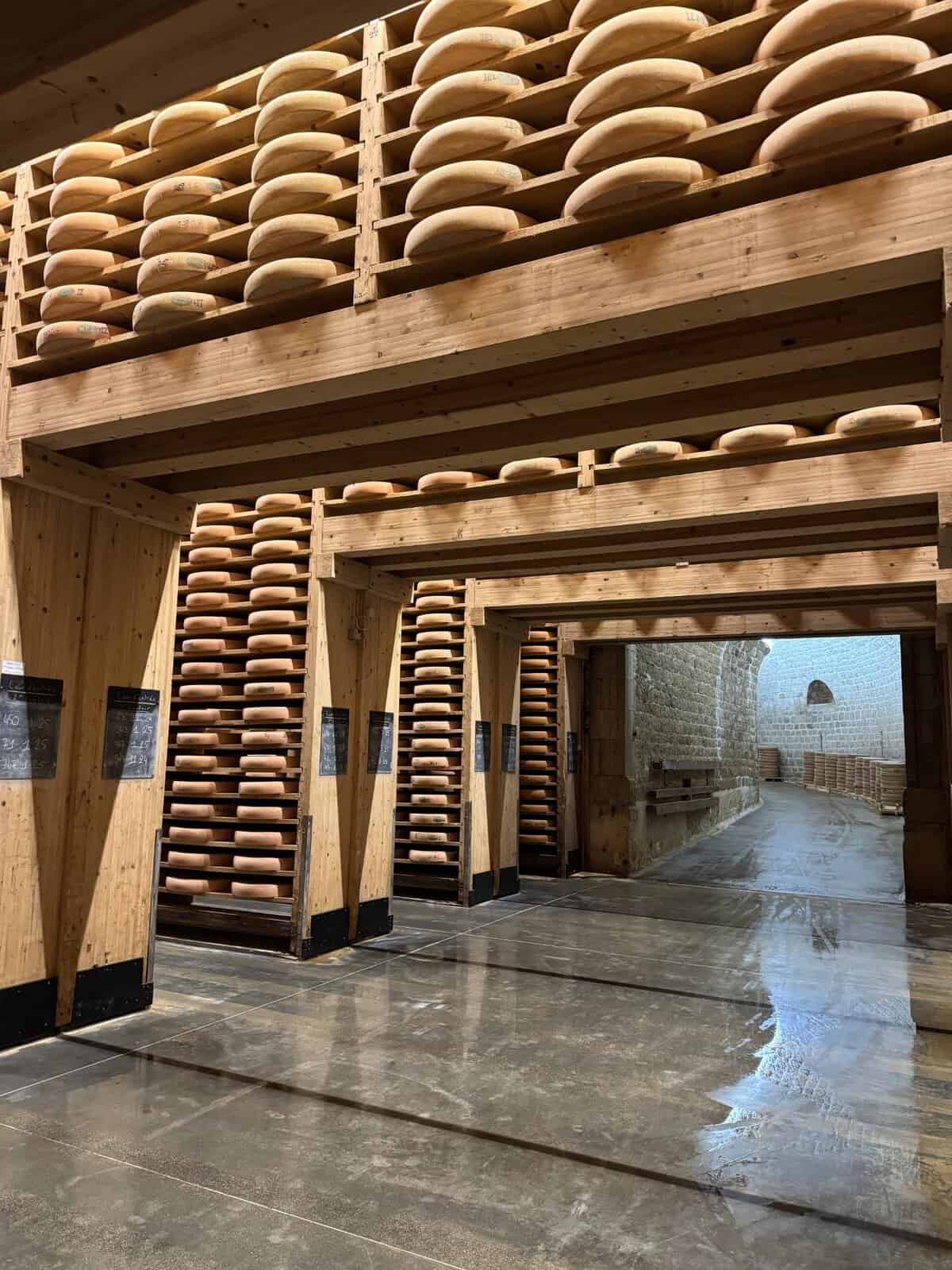
Stacks of Comté inside the aging caves at Fort de Saint-Antoine—Cave d’affinage Fromageries Marcel Petite. Photographed by Mallory Scyphers.
For cheesemongers, education rarely happens in a classroom alone. It happens behind the counter, tasting alongside colleagues, visiting producers, attending conferences, and asking a seemingly endless series of questions: How was this cheese made? Why does it taste this way? What does its place of origin have to do with its flavor?
Those opportunities can also require time, travel, and money—resources that aren’t always readily available. Scholarships help close that gap, giving cheese professionals access to experiences that deepen their expertise and, ultimately, the knowledge they pass along to customers.
For more than a decade, the Comté Cheese Association (CIGC) has invested in that idea through educational programs for American cheese professionals. Today, two scholarships support mongers at distinct points in their careers: the Comté Association Conference Fund, for professionals working toward becoming American Cheese Society Certified Cheese Professionals (ACS CCPs), and the Comté Scholarship for ACS CCPs, which sends the recipient to France’s Jura region to experience Comté production firsthand.
At the 2026 American Cheese Society Conference in Louisville, Kentucky, Zaski Blazek, a cheesemonger with Minnesota-based Lunds & Byerlys, was announced as this year’s Comté Association Conference Fund recipient. Blazek had been studying for the CCP exam for two years before sitting for it in the summer.
View this post on Instagram
The credential had been in Blazek’s sights almost since the beginning of their cheese career. As an apprentice, they worked with a CCP-certified mentor whose enthusiasm for the industry introduced Blazek to a professional community they hadn’t experienced before.
“The next three years I immersed myself in cheese, and I could feel my confidence and love for it growing the more I studied, the more events I showed up to and the more people I met,” Blazek says. By the time of the exam, earning the credential had taken on a different meaning. “Getting the title no longer felt like a condition for acceptance, but rather like a celebration that I’d made it that far on my own.”
Established in 2019 and administered through the American Cheese Education Foundation, the fund is open to applicants who have been accepted to take that year’s CCP exam and want to attend the ACS Conference. Financial need is a key consideration. For one recipient, the scholarship removes many of the costs associated with pursuing certification, covering conference registration, hotel and travel, an individual ACS membership, and the CCP exam fee.
For Blazek, that financial support made the difference between simply sitting for the exam and fully participating in the conference. “When I found out I’d gotten the scholarship, I didn’t know what to do with myself,” they say. “Everything was covered, I could attend the conference in person, and I could take the exam on time.”
Once in Louisville, Blazek met cheesemakers and mongers from across the country, attended educational sessions, and experienced the larger cheese community they had spent years working toward joining. Those encounters now follow them back to the counter.
“These moments I carry with me when I approach my counter every morning,” Blazek says. “They keep me excited about the products in my case and the people behind them.” Customers, they add, sometimes remark that they “weren’t expecting to learn something” when a conversation about a cheese turns into a lesson on salt, tyrosine crystals, or the formation of a bloomy rind’s creamline.
For the Comté Cheese Association, supporting those professionals is an investment not only in individual careers, but in the larger market for artisan cheese.
“We strongly believe that the growing number of certified mongers will help grow the interest in fine cheese among a larger public,” says Jean-Louis Carbonnier, US representative for the Comté Cheese Association. The hope, he says, is also to keep Comté “top of mind” throughout a monger’s professional journey, while helping build a broader foundation of cheese knowledge.
That journey can eventually lead all the way to the Jura.
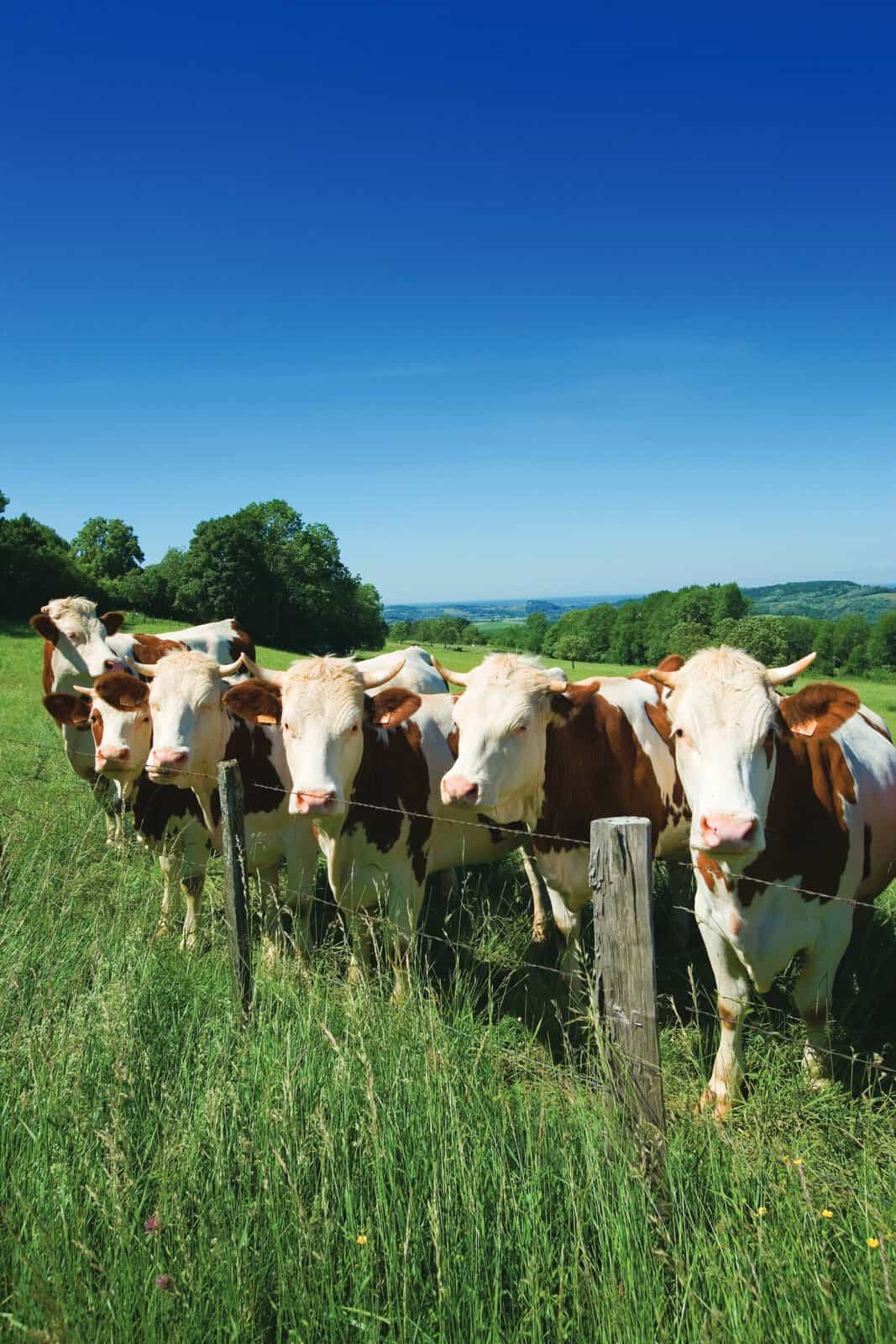
According to the Comté PDO, cows are milked twice per day, with the first squirt of milk drawn by hand. Photograph courtesy of the Comté Cheese Association.
Created more than 13 years ago, the Comté Scholarship for ACS CCPs is open to cheese professionals who have already earned their certification. Unlike the Conference Fund, this scholarship takes the form of an essay contest held each fall, inviting CCPs to demonstrate their knowledge and enthusiasm for Comté. The winner receives a trip to France’s Jura region, along with a $750 stipend.
There is a longer runway between winning and traveling. Michael Oliver, who was named the 2025 scholarship recipient this past January, traveled to the Jura with the Comté Association’s media group in September. There, he had the opportunity to experience the region’s interconnected system of dairy farms, village fruitières, and aging cellars firsthand.
For Oliver, that distinction between knowing about a place and actually experiencing it is central to the opportunity.
“You can learn a lot about a cheese from behind the counter, but you can’t learn what a place feels like until you stand in it,” he says. “I can study the landscape, the fruitières, the affineurs and the traditions behind Comté, but that’s different from walking through the cellars, meeting the people and seeing how the cheese fits into everyday life in the Jura.”
The next scholarship competition is currently open, with the 2026 recipient expected to be announced in early 2027.
“The trip to the Jura is an opportunity to show what a PDO represents by connecting Comté to its human, geographical, historical, social and economic context,” Carbonnier says.
That context can be difficult to fully grasp from the other side of an American cheese counter. Comté’s production system is deeply cooperative, connecting farmers, cheesemakers, and affineurs through shared rules and responsibilities. According to Carbonnier, the PDO supports approximately 14,000 jobs and 2,400 farms in a largely mountainous region of France.
For visitors, he says, the degree of collaboration can be surprising. “Everything is very integrated and thought through to ensure that the Comté ecosystem works in the best interest of all involved.”

A cheesemaker gauges the texture and firmness of the curd. When it feels like grains of rice, the cheese is ready to hoop. Photograph courtesy of the Comté Cheese Association.
Oliver is particularly interested in the less tangible pieces of that ecosystem: “the smells, the sounds, a conversation with someone, the way a place feels in a certain moment.” Those details, he says, are what allow a cheesemonger to turn information into a story.
“When I come home, I’ll be able to share Comté from a much more personal place, with real people, places and memories behind the story,” Oliver says. “If I can make someone a little more curious, a little more adventurous, or just make them stop for a second and really feel something when they taste it, that means a lot to me.”
That ripple effect may be the strongest argument for programs like these. One scholarship removes financial barriers for a professional pursuing certification; the other takes education beyond textbooks and tasting notes and places a cheese professional directly inside the agricultural system they’ve spent years learning about.
Past recipients have found their own ways to extend those opportunities. Last year’s Conference Fund recipient, Lissa Knudsen, organized public screenings of the French film Holy Cow in New Mexico, accompanied by samples of Comté. Jura scholarship recipients have returned to organize tastings and talk with customers about Comté using what they witnessed firsthand.
“For us, the scholarships are also a way to feed the enthusiasm, expertise and passion of the mongers,” Carbonnier says. “We hope they share their greater understanding and knowledge of Comté and PDOs with their customers, colleagues, and their community.”
For Blazek, the Conference Fund has already done exactly that. The experience gave them not only access to the exam and conference, but stories, relationships, and knowledge that now surface in everyday conversations across the cheese counter.
For Oliver, that process is about to begin on the other side of the Atlantic. “What I’m most hoping to bring home isn’t just more knowledge,” he says. “I want to bring home a feeling.”
Mallory Scyphers
Mallory Scyphers is culture's Executive Content Director and has been with the company since 2018. She lives on Mobile Bay with her husband, two young daughters, one rambunctious golden retriever, and two loyal cats. Her favorite cheeses are alpine styles and mineral-y blues.