
This interview is part of culture’s 2026 Hot List. Click here to learn more about our selection process and to see the latest Hot List class.
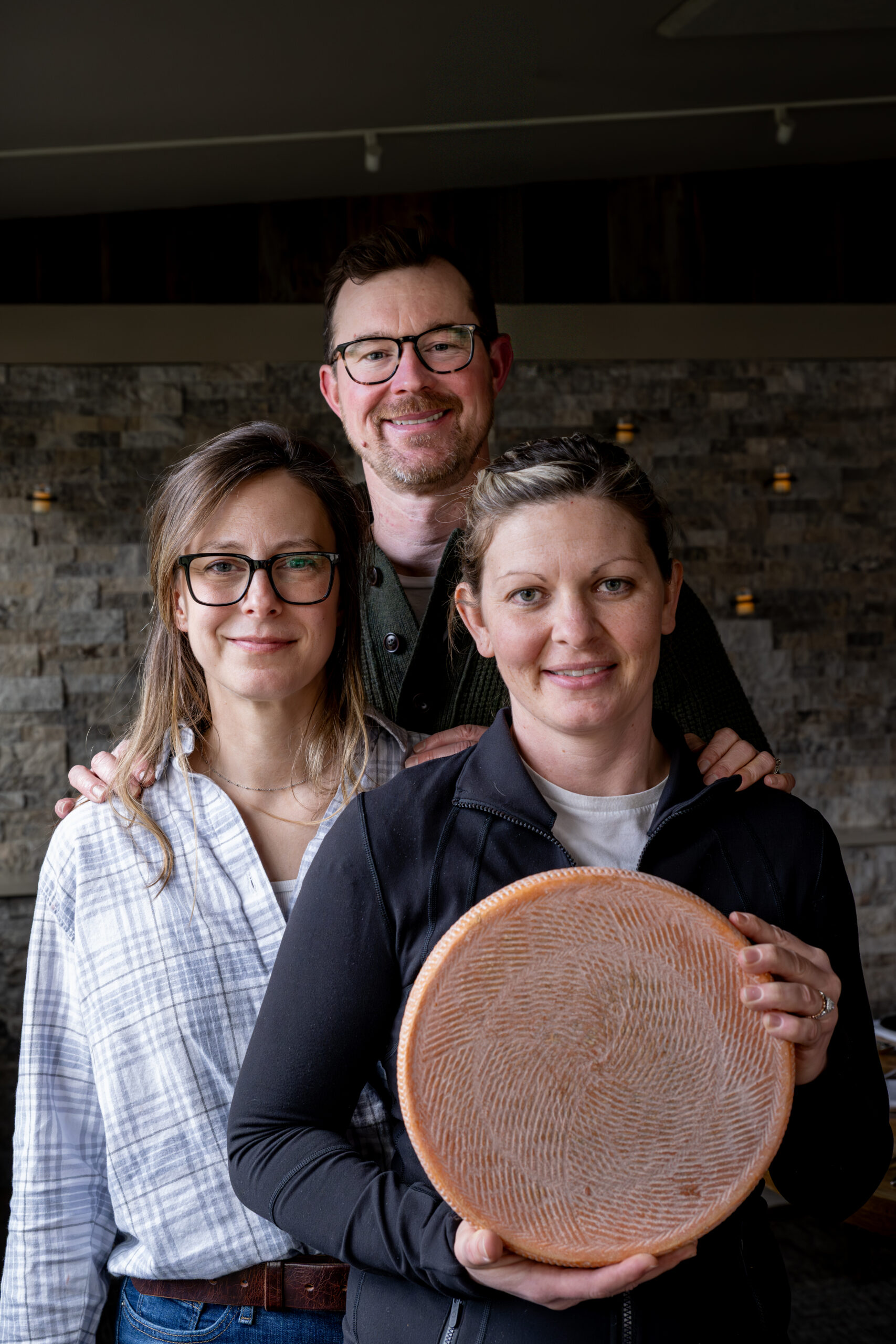
Leslie Tyminski, Kate Leach, & Seth Leach
Woodlawn Creamery
Vermont
At Woodlawn Creamery, great cheese begins long before it reaches the vat. It starts in the pasture, with the milk and people who know how to bring it to life.
That philosophy is at the core of the partnership between head cheesemaker Leslie Tyminski, farmer Seth Leach, and owner Kate Leach. Together, they have built a system where each piece informs the next: milk shaped by land and herd, cheese shaped by experience and craft, and a business structured to support both.
Tyminski began making cheese as a teenager; she then spent nearly 15 years refining iconic Vermont cheeses such as Pawlet and Rupert. She continues that work with renewed purpose today, bringing those cheeses into a new chapter.
With Seth Leach’s multigenerational stewardship of the land and Kate Leach acting as the connective force between farm and creamery, Woodlawn represents a model for what American artisan cheese can be when collaboration leads the way.
Did you always think you’d return to the farm?
Seth Leach (SL): I’ve always loved the farm and its history, but it was important to me that taking it over felt like a choice.
There was a time when I could have seen myself teaching or coaching, but deep down I knew I’d come back. When I took over in 2015, I wanted to make sure we were building something sustainable—not just continuing what had always been done.
What led you to expand beyond traditional dairy into cheesemaking?
SL: It came down to control. Commodity milk puts farmers in a position where they’re at the mercy of global pricing, while feed costs continue to rise. That’s a tough place to be.
By growing our own feed and working directly with artisan cheesemakers—including our own creamery—we’ve been able to create a more stable, sustainable system. It gives us the chance to build something that reflects our values and the quality of our milk.
How did you first find your way into cheesemaking?
Leslie Tyminski (LT): I started working on a farm at 15 to earn money, mostly with the goats. When winter came and that work dried up, I moved into the cheese caves and started working with Peter Dixon [of Parish Hill Creamery].
That’s when everything changed. I fell in love with the process—how you can take raw milk and, in a few hours, create something beautiful, then spend months tending it into something even better.
What has it been like to return to cheeses like Pawlet and Rupert?
LT: It’s been incredible. Those cheeses are a huge part of who I am. When I wasn’t making them, I felt like something was missing.
To have the opportunity to bring them back—and continue refining them—is something I’m really grateful for.
How do you see your role within the creamery?
Kate Leach (KL): I think of myself as the bridge. Seth and Leslie are both incredibly talented at what they do, and my job is to make sure they have the space to do it well.
That means communication, problem-solving, and a lot of trust. We rely on each other’s knowledge, and that’s what makes the whole thing work.
How does that partnership shape the direction of the business?
KL: The quality of our milk determines what cheeses we can make, and the fact that we work with other cheesemakers gives us flexibility in how we grow.
Success for us isn’t about scale—it’s about making great cheese with great milk and building something that lasts. We’d love to see the farm reach its 200th anniversary.
What does it mean to carry on cheeses with such a strong sense of place?
KL: Those cheeses—Pawlet and Rupert—are tied directly to this region. Keeping those names is a way of honoring that history and the farming community here.
There are fewer dairy farms than there used to be, which makes that connection to place even more important now.
What’s the biggest challenge facing cheesemakers today?
LT: I see a lot of cheesemakers getting older and not necessarily having someone to hand their cheeses down to. Our cheeses are often more personal, and I hate to see them disappear when someone stops making. I want to teach someone to make these cheeses so they last.
SL: Access to the right kind of milk is one of the biggest challenges. Building systems that support high-quality milk and cheesemaking is essential if we want to keep producing great cheese.
What’s your favorite cheese from your lineup?
KL: It’s definitely Pawlet. We love them all, but Pawlet is home—it’s beautiful, vibrant, and up for anything.
LT: It changes depending on the day, but for me it always comes back to cheeses that reflect the land and the milk—they’re the ones that mean the most.
SL: It’s hard to pick just one, but I’m always drawn to cheeses that really show what our milk can do and where it comes from.

culture: the word on cheese
Culture is America's first and best magazine devoted to the love of cheese. Explore our website for stunning photos, cheesemaker profiles, recipes, wine, beer, and a community of readers always willing to help and chat.