
With no replacement, David Ducharme may be the last American artisan in his field.
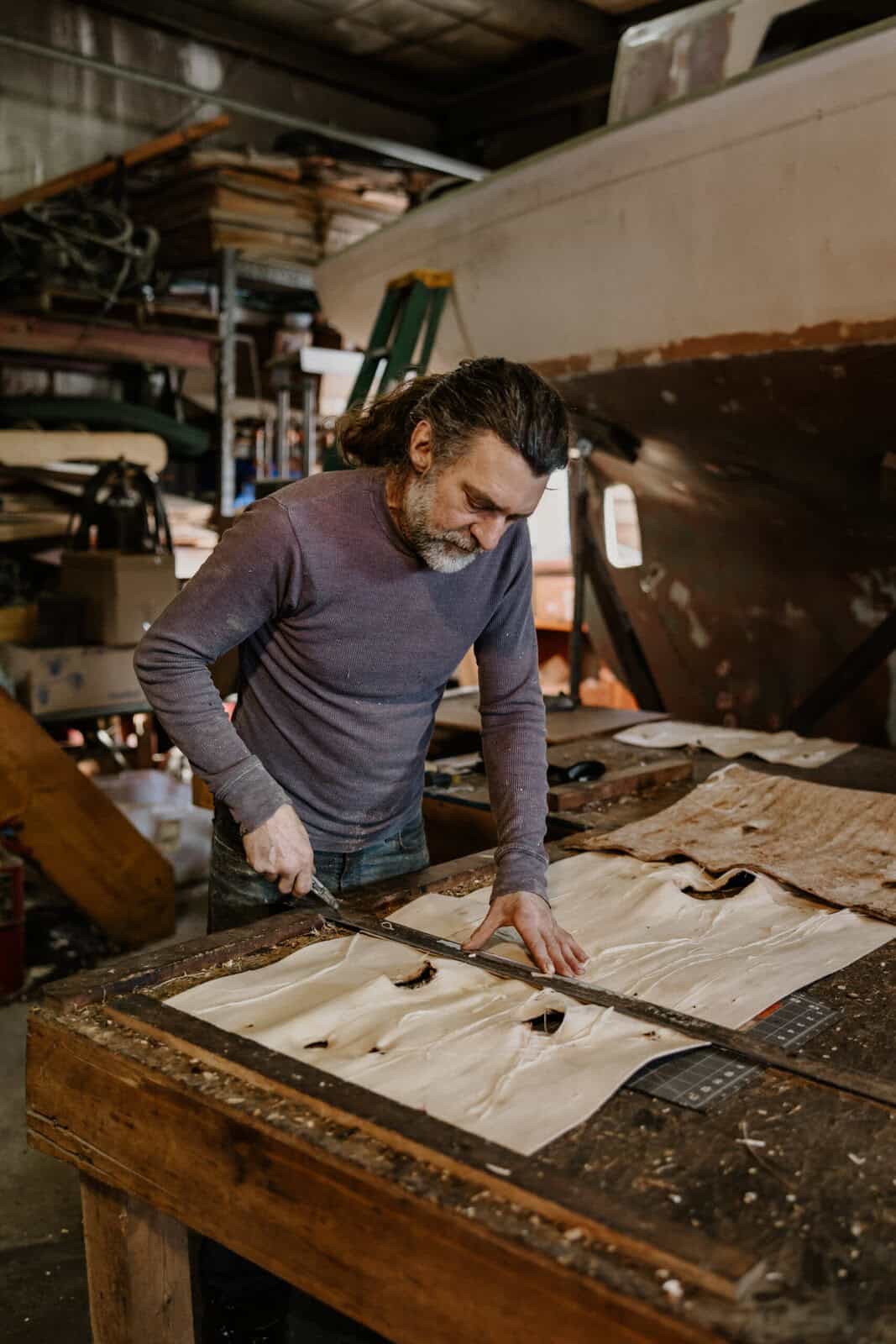
David Ducharme measuring and cutting spruce sheets. Photographed by Hannah Kirchiro.
There are some cheeses that are perfect scooped from the wheel with a spoon, and Winnimere is one of them. Made at Jasper Hill Farm and aged in the Cellars at Jasper Hill in Greensboro, Vermont, the washed-rind rounds have a lush, pudding-like texture and taste like cream sipped by a campfire in a forest of conifers. Winnimere won Best of Show at the 2026 American Cheese Society Judging & Competition—its second time in the top spot after receiving the same honor in 2013.
For Mateo Kehler, who owns Jasper Hill with his brother, Andy, one of the most wonderful things about Winnimere, made from rich, raw winter milk and modeled on Swiss and French cheeses such as Försterkäse and Mont d’Or, is the way it reflects the hilly pastures and forests of Vermont’s Northeast Kingdom. “Our working landscape is a marriage of the farm and the forest,” Kehler says. “Bringing together a beautiful raw-milk soft cheese with the living essence of spruce,” he continues, “[creates] a cheese that is truly reflective of this place, this landscape.”
However, once he finishes this fall’s production, Greensboro’s David Ducharme, who has made spruce cambium strips for Jasper Hill for the last decade, is retiring. Unless the cheesemaker can find another producer who can log spruce, delicately peel off its inner bark, and spend long hours perfecting the skill of eking out as many strips as possible per tree, future batches of Winnimere might be cinched with bark imported from France, rather than from down the road.
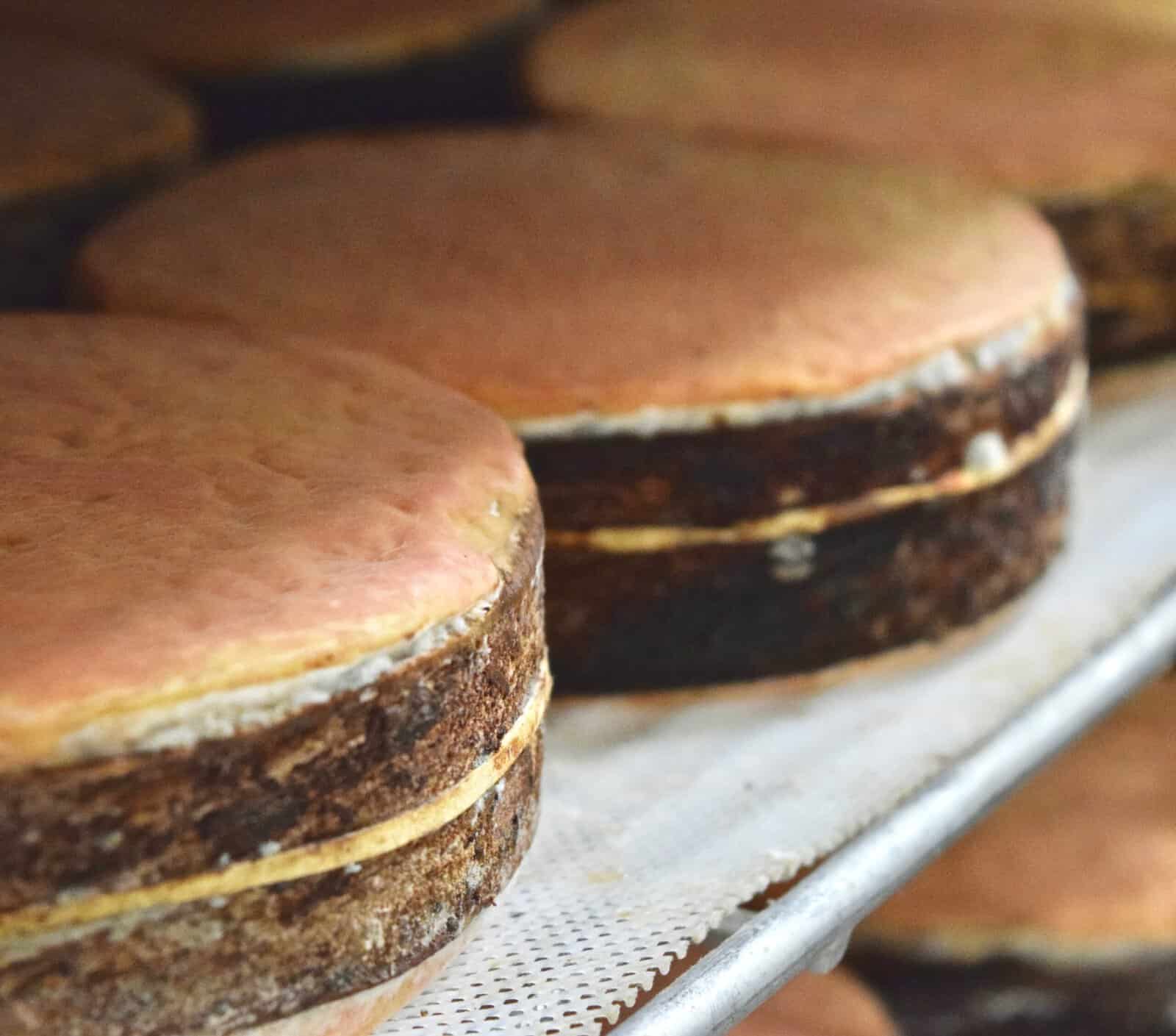
Winnimere on the rack. Photographed by Bob Montgomery.
Between a tree’s exterior and its core lies a thin layer of cells called cambium. As these cells divide—quickly in spring and more slowly in the heat of summer—they become either wood or bark, and the tree grows wider. Strips made from a portion of the inner bark, plus the cambium, are sometimes used to wrap cheeses. The bands keep the cheese from oozing as it ages, contributing aroma and flavor.
In the Jura region of France and Switzerland, specialists known as sanglières follow loggers around the forest wielding specialized cutting tools and strip the bark from fallen trees. Because of insects, there’s a short window between when a tree is felled and when the cambium must be removed.
Thanks to a process that he invented, Ducharme can cut spruce in fall and early winter, then stockpile it at his mill in Greensboro. Once he has enough, Ducharme uses a drawknife to remove the rough outer tree bark, a laborious, physically demanding process, and steams the logs in a custom-built pressure cooker of his own design. The steam bath softens the lignin in the wood, allowing him to peel off the inner bark in a single sheet. He then cuts the sheet into 1-inch strips. The Ducharme’s clever process stunned French sanglières when they visited Vermont, Kehler recalls.
At Uplands Cheese in Dodgeville, Wisconsin, co-owner and head cheesemaker Andy Hatch wraps Rush Creek Reserve cheese with cambium strips inoculated with ripening cultures. While in France studying Comté production, Hatch noticed that some of the cheesemakers he worked with made Vacherin Mont d’Or with their winter milk.
Back home, he spent years tinkering with the Mont d’Or recipe to fit the 60-day aging requirement for raw-milk cheeses in the US and working with the US Department of Agriculture Forest Service Forest Products Laboratory to get his hands on Wisconsin-made cambium. “We just couldn’t find the right trees, the right people, the right equipment to produce it locally. We decided to bring it in from France,” he explains. The French product, made by famed sanglière Marie Faivre, is “wonderful bark,” he says. However, recent tariffs have driven up its price, which makes the cheese more costly to produce.
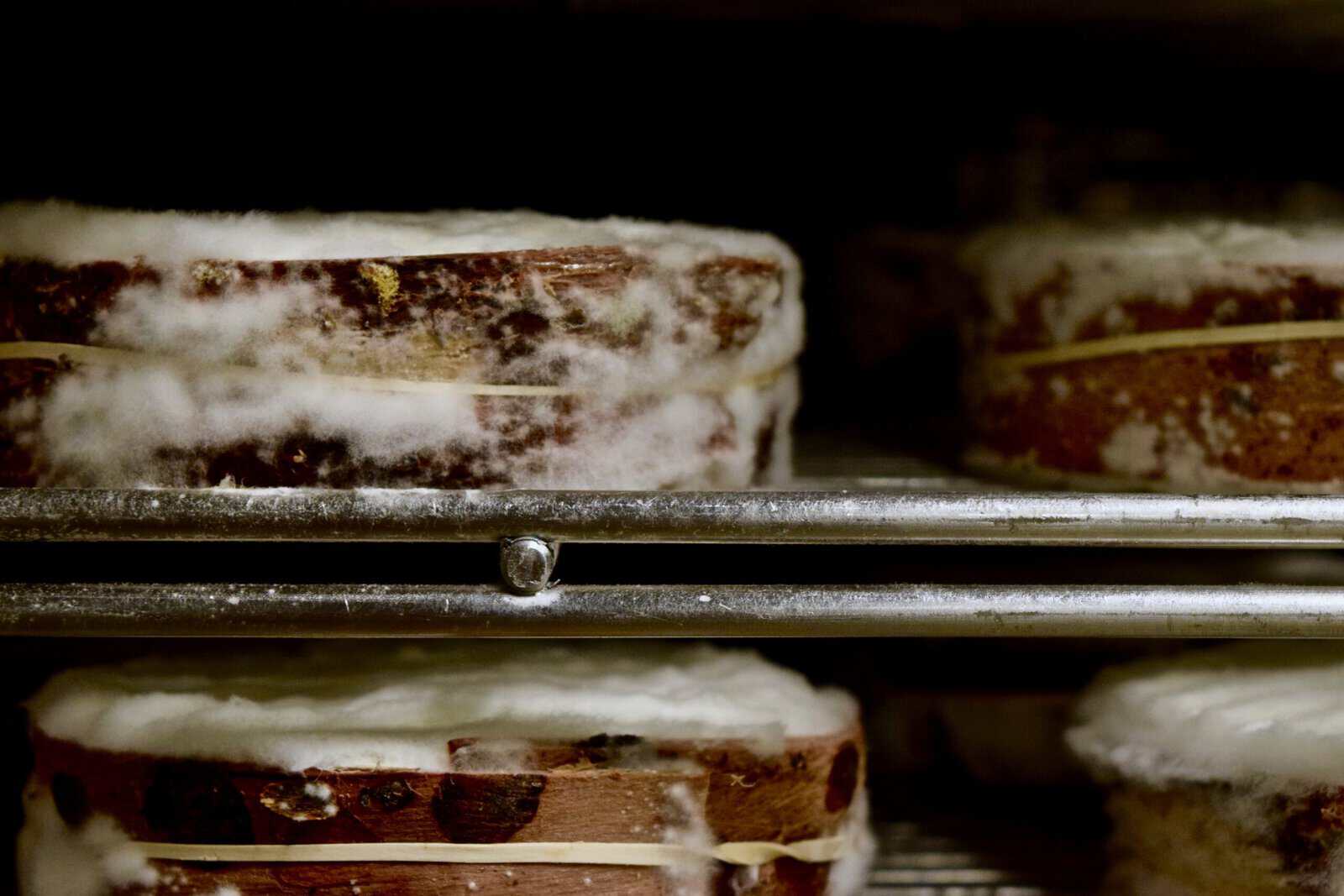
Harbison is a soft cheese that’s wrapped in thin strips of spruce cambium. Photographed by Bob Montgomery.
Since they need more strips than Ducharme alone could produce, Jasper Hill also imports French cambium to fill the gap. Now, they’re stockpiling as many of Ducharme’s spruce cambium strips as “he can possibly cut,” says Kehler, in hopes of finding someone to take over the operation before they run out.
Thus far, nobody has emerged to continue Ducharme’s operation. Although the job is strenuous, and sometimes lonely, he’s hoping that somebody will come along who has a “love of the working landscape and appreciation for … the small things,” and who is willing to learn the art of “reading the log” as they work.
Ducharme believes that using cambium from France, rather than from Greensboro, will change Winnimere’s flavor. Perhaps even more crucially, it will change the cheese’s story. “The goal has always been to build a resilient local economy,” Kehler says. “Forces far beyond our control, and federal trade policy … [have] decimated our working forests. The mills are all gone.”
The struggle to find a successor for Ducharme is a symptom of this loss. Kehler adds: “There’s a certain nostalgia, or maybe grief. That may be the main ingredient in our cheese.”

Suzanne Podhaizer
When not hunting for wild leeks or eating Harbison with a spoon, Suzanne Podhaizer is probably experimenting with a new ferment or teaching people to make stock and roll pasta in the kitchen of her timber-framed cabin. She develops seasonal recipes using a mix of wild and cultivated ingredients—many of which come from her heirloom vegetable patch—with a focus on helping home cooks embrace playfulness and improvisation. For two decades, she’s covered Vermont agriculture, restaurants, and specialty foods, writing for newspapers, magazines, a travel guide, and the web. She earned the University of Vermont’s Artisan Cheese & Sensory Fundamentals certificate in 2024.