
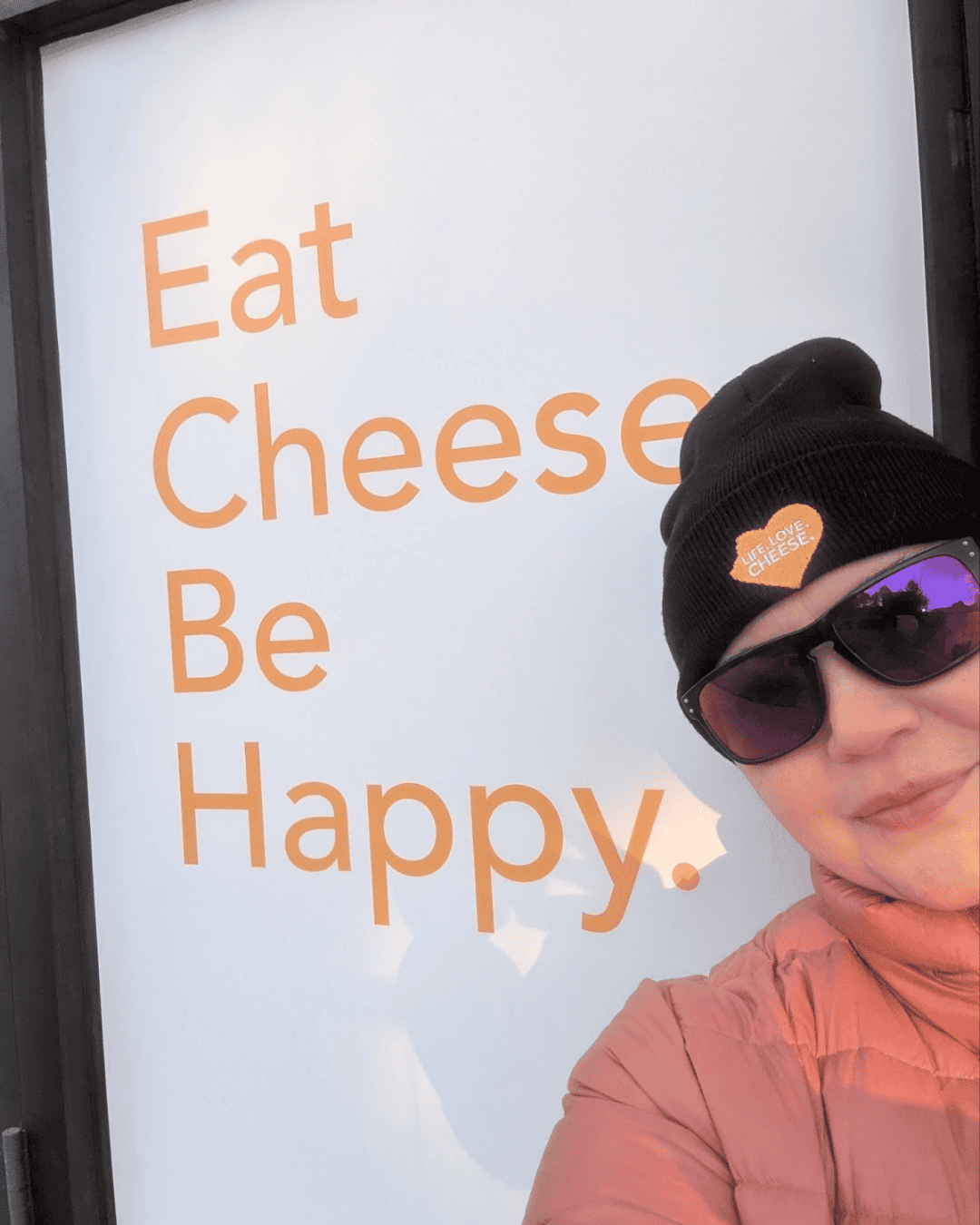
Eat Cheese. Be Happy: The value of a mission statement and more
In a cheese shop, we spend a lot of time talking about terroir—the specific environment of soil, air, and water that shapes the character of a cheese. But lately, the social and political terroir has felt more turbulent than ever. Like many small business owners, I found myself standing behind my counter wondering: Can I just sell brie, or do I have to talk about the world outside my door?
There is a lot going on in the world right now. Everyone from Olympians to musicians to local shopkeepers is trying to navigate a landscape where staying true to personal values feels like walking a tightrope. The fear of backlash is real, but for many of us, the urge to speak out feels existential.
As I watched other companies issue public statements, I hesitated. Questions swirled: What should this company actually stand for? What if I lose customers by making a stand? Who really cares what a tiny business thinks?
Ultimately, I did some soul-searching and realized I already had the answers. I didn’t need to tie myself in knots to figure out how to represent my company in a time of turmoil. I had figured it out years ago, during those late nights dreaming about opening my own store, when I wrote my mission statement and company values.
Why a Company Should Make a Stand
It is tempting to believe a food business can remain apolitical—a neutral space away from the fray. But as the late Anthony Bourdain once said, “There is nothing more political than food.” He recognized that ingredients, culinary traditions, and access to a meal reflect deep, sometimes painful histories and power structures. Author Michael Pollan put it even more succinctly: “Eating is a political act.”
Every link in the cheese supply chain—from land use policies and agricultural subsidies that dictate what cows eat, to labor laws for cheesemakers and the carbon footprints of distributors—is influenced by government and policy. By simply existing in this global food ecosystem, we are a piece of those politics. To pretend otherwise isn’t being neutral; it’s being naive.
The Mission: Our Rind
A business plan template makes a mission statement sound like a dry chore: “A short, formal summary of why an organization exists.” Early on, I thought the answer was obvious: I wanted to sell cheese. I saw it as marketing meant to make customers feel good.
I’ve since learned that the mission statement is actually the rind of the business. Just as a rind protects the cheese and gives it its initial identity, the mission statement is the external layer that defines our purpose to the world. It isn’t just a catchy phrase—it’s a protective barrier that keeps the business focused when external pressures get salty.
The Values: Our Paste
If the mission is the rind, the company values are the paste. They are the “how” behind the “why.” They dictate how the company behaves, how it makes decisions, and how it treats every person who walks through the door. While the surface of the business is selling cheese, the interior is where the existential work happens:
- Who do we do it for? (Who do we embrace? Who do we serve? Who are our partners?)
- How do we do it? (What is the vibe of our space? How do we choose our vendors? Are we a force for good, and what does that good actually look like?)
When your paste is solid, the flavor of your business is consistent. You don’t have to guess how to react to a crisis because your values have already set the recipe.
You Can’t Be Neutral on a Moving Train
While my mission statement and values aren’t explicitly partisan—they don’t name candidates or political parties—they define the human values that Life Love Cheese stands for. Implicit in our mission is a stand for equity, sustainability, and community.
I realized I didn’t need to come out and explain myself with a new, frantic statement. My company has been making a statement every day through the vendors we support and the way we treat our neighbors.
It is tempting to believe we can appeal to everyone by staying in our lane, but you can’t be neutral on a moving train (as historian Howard Zinn famously titled his memoir). I’m not here to tell you which values to build into your business. But I am here to say that a clear mission and a strong set of values will help you navigate the most complex dilemmas. When the world feels like it’s boiling over, your values are what keep your business from curdling. After all, the best cheeses—and the best businesses—are the ones that aren’t afraid to show their true character.