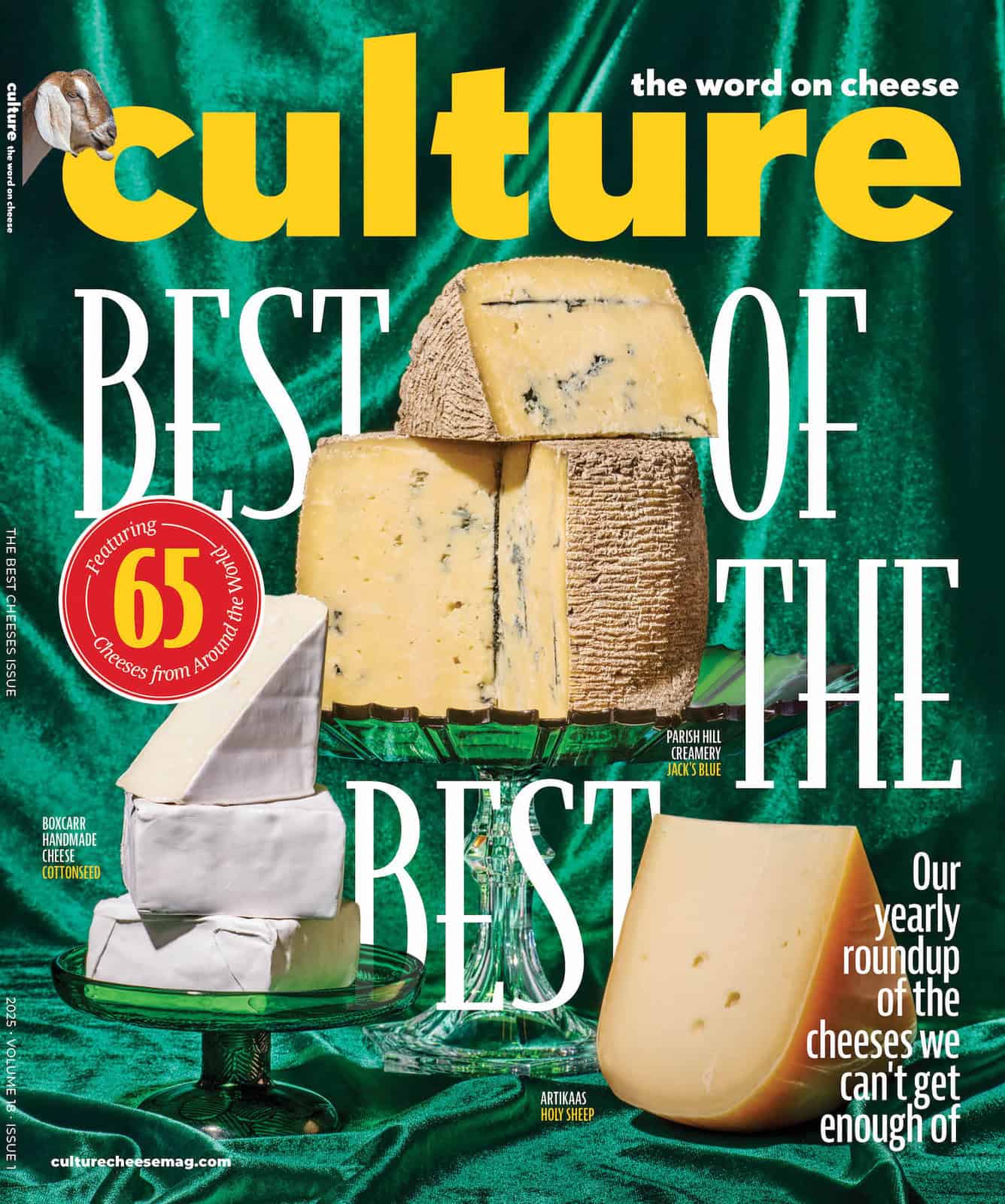

Murray’s Cheese’s Josh Windsor breaks down the distinctions.
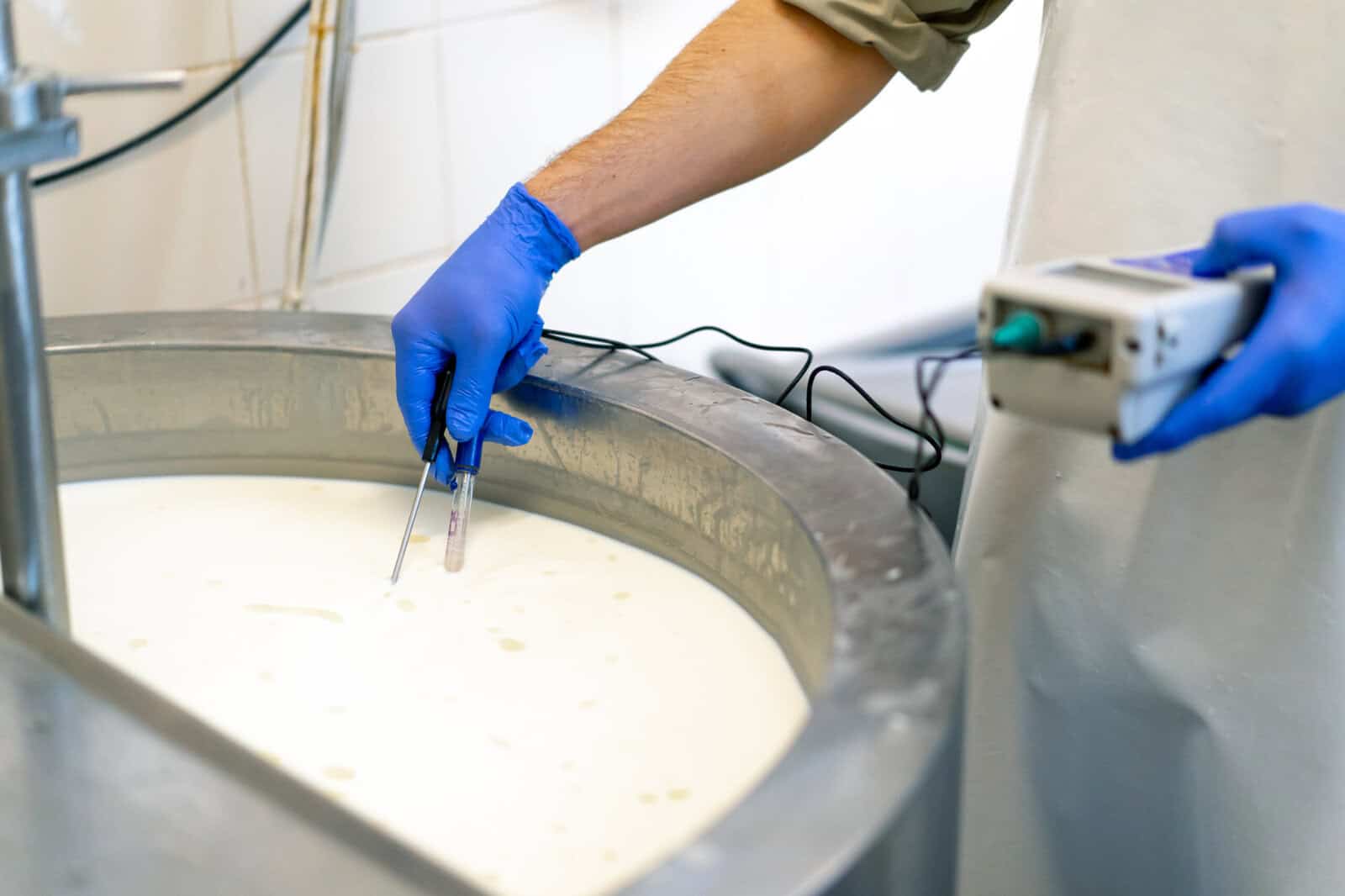
Photography by Adobe Stock_Guys Who Shoot.
Microbes play a crucial role in creating the flavors, aromas, and textures of the cheeses we eat. It is the specific diversity of the microbiota inhabiting the milk that gives cheese its identity and determines its safety. Milking and cheesemaking create conditions that shape the microbial populations, with each stage of the process producing an ecological niche that certain species can and cannot survive in. With each transformation, the microbial diversity and subsequent character of the dairy progresses.
During milking, a portion of the udder biome, including many of the technically functional (i.e. useful in cheesemaking) Lactobacilli, is transferred to the milk. To understand this community, we have to start at the surface of the udder; like our own skin, it hosts a range of microbes that are both present at birth and acquired over time. For a ruminant, newcomers arrive from anywhere: bedding, feed, manure, dust, soil, and other animals. If the conditions (time and temperature) are right, new microbes can survive and multiply on the teat, setting the stage for the biggest changes in the microbial life of milk.
Milk begins to cool as soon as it leaves the udder. Modern practice further cools it through refrigeration to reduce spoilage, but longer storage times and colder temperatures increase the amount of psychrotrophic (cool-loving) bacteria; most of the functional bacteria survive but become dormant. From here, the milk can be heat-treated to alter the microflora.
The US legally recognizes two types of milk depending on the heat treatment: raw or pasteurized. Pasteurization is the process of heating milk to a specific temperature and keeping it there for a period of time to destroy any large populations of microorganisms—this includes both pathogens and technically functional microbes. Raw milk, however, is any milk that has not met pasteurization requirements.
Heating milk at varying temperatures and lengths can foster other microbial communities; warming to temperatures below pasteurization standards favors functional bacteria while destroying some dangerous strains like E. Coli. Thermized milk, which is considered raw milk in the US, relies on this process, but thermization is not hot enough to kill Listeria.
After pasteurization, the mostly sterile milk is repopulated by bacteria present in the environment—starter cultures added by the cheesemaker and microorganisms in the creamery. As the cheese is made, the makeup of the milk changes again, favoring one microbe population over another. This process continues through the life of the cheese.
When we consider the impact of microbial diversity on quality, aesthetics, and safety, it’s clear that no single thing is solely responsible for the outcome of a cheese. This interconnected system shapes the biome of cheese every step of the way. While pasteurization significantly alters the microbial composition of milk, it is not the only factor that influences it: refrigeration, storage time, farming practices, milking techniques, and creamery sanitation are equally important in determining a cheese’s character.
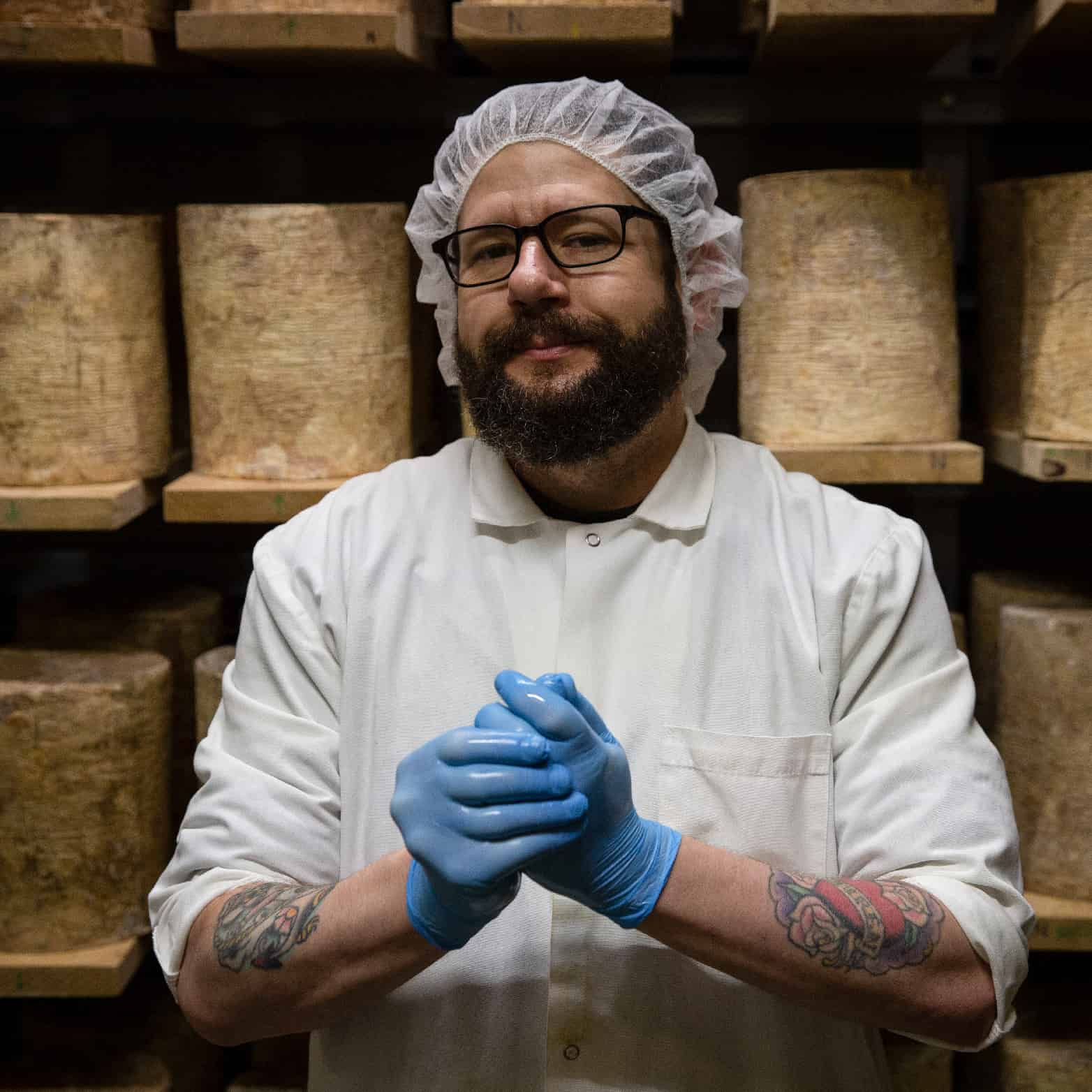
Josh Windsor
Josh Windsor is an affineur and the Senior Caves Manager at Murray’s Cheese in New York City, where he actively nurtures and ages the Cave Aged line of specialty cheeses including the 2019 American Cheese Society (ACS) “Best in Show” winner Stockinghall Clothbound Cheddar and the 2022 World Cheese Awards “Best American Cheese” winner Greensward. Always curious about how cheese ages, Josh is an active member of the community biology lab, Genspace, where he explores the microbial world of cheese rinds. Josh shares his love of all things dairy by teaching cheese appreciation, science, and history at Murray’s Cheese and sensory evaluation at Cornell University’s cheese short courses.