
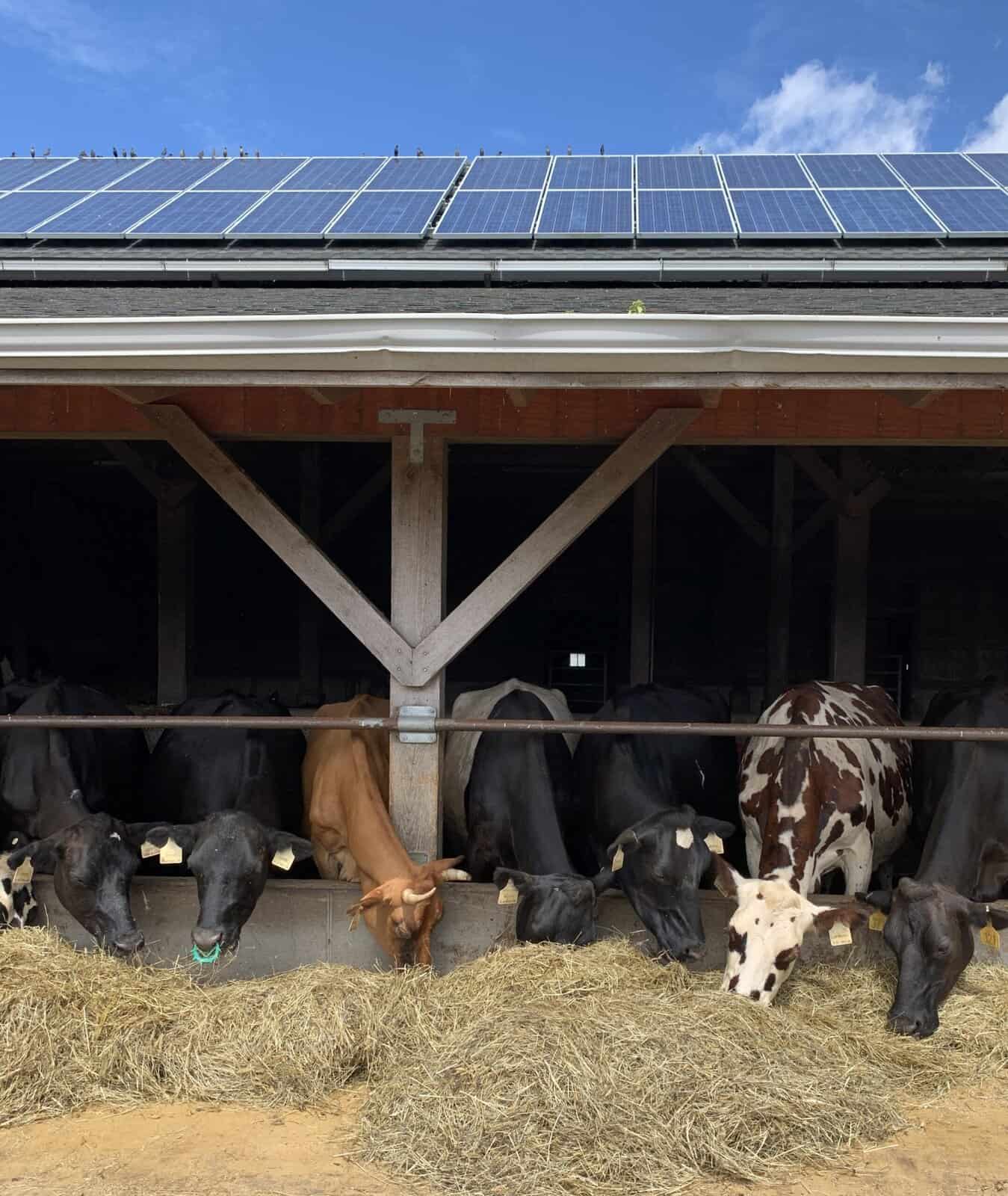
For many herds of sheep, goats, and cows, shorter days and colder winter temperatures hinder the ability to graze on foliage. When fresh vegetation is no longer available, our milk-giving ruminant friends are fed dry hay or silage (a type of compacted and fermented fodder). It is a general conceit of the cheese lover that this change in diet impacts the milk and can be seen and tasted in the cheese. After all, the cheese-adoring gourmand Jean Anthelme Brillat-Savarin observed, “Tell me what you eat, and I will tell you what you are.” Certainly, this must hold true for all mammals and their dairy-derived delicacies?
The science supporting this claim, however, is a bit inconclusive. The path from plant to milk is complicated. Fiber-rich foliage needs to be broken down and its nutrients absorbed into the bloodstream, where they travel to the mammary gland and are then converted into the proteins, fats, and minerals that make up milk. Ruminants have a four-chambered stomach to perform this sophisticated digestion. The first chamber, the rumen, is home to thousands of species of microbes (bacteria, fungi, and even protozoa) that break down the carbohydrates in the plants being consumed. In a process called rumination, foliage is chewed, passed to the rumen, fermented, formed into a ball (called a bolus), regurgitated as cud, and chewed some more. It then passes into the omasum, which absorbs the water and available water-soluble nutrients. Finally, it lands in the abomasum, which is most like our stomachs. It is here that digestive enzymes further break down the plant matter before the slow absorption of nutrients happens in the intestines.
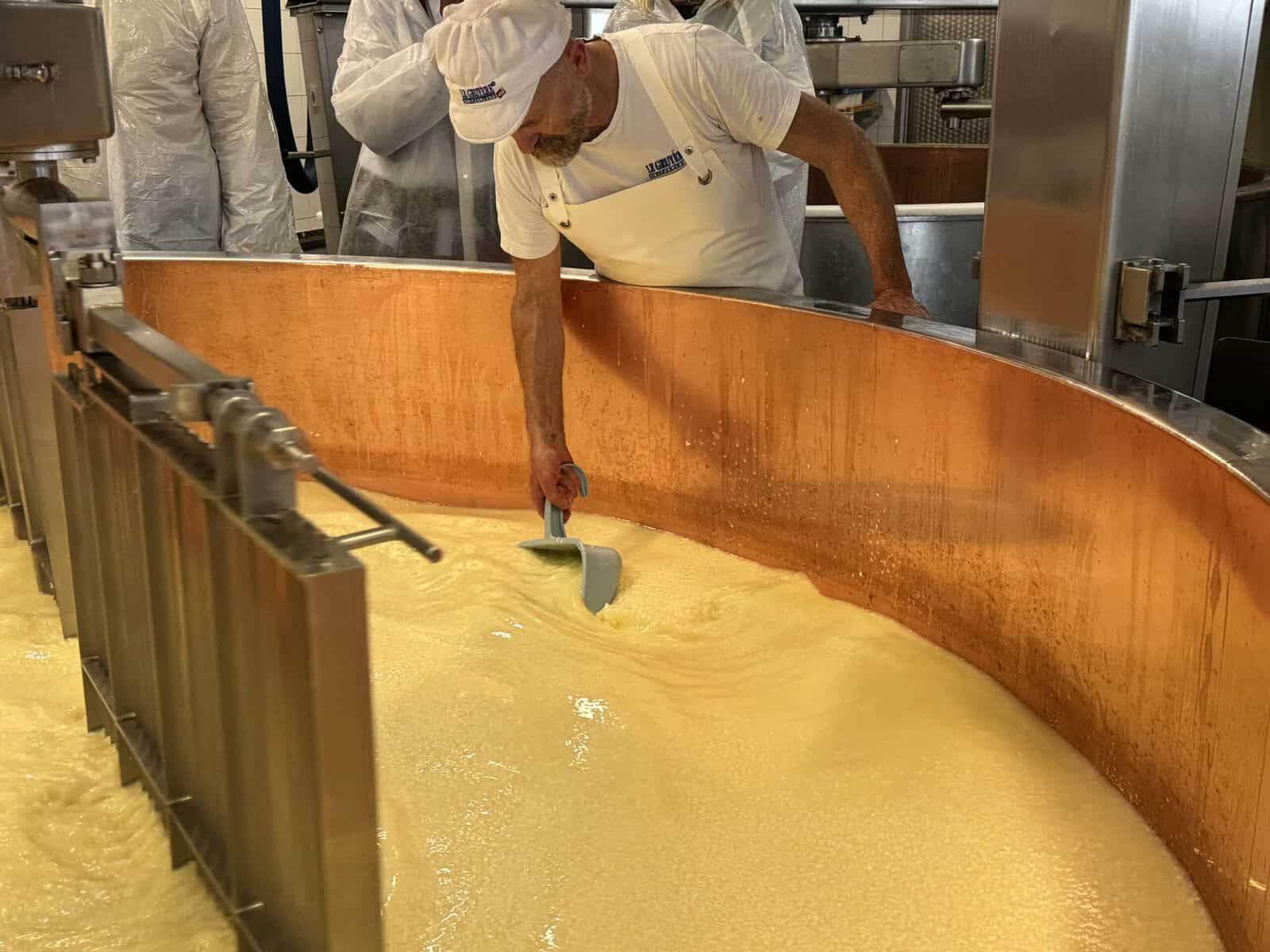
A small number of volatile compounds pass unchanged from plant to milk, but most are transformed multiple times by digestive enzymes and through fermentation. Moreover, there are myriad transformations that occur during cheesemaking and aging. For example, one study demonstrated that Cantal wheels are more influenced by changes in feed than Saint-Nectaire. Needless to say, it is a daunting task to point to a chemical compound in a plant and show how it influences the flavor of a finished cheese. Most studies have asked whether feed influences cheese rather than investigating how feed influences cheese.
The evidence strongly supports that there is a visual impact on cheese: Pasture-fed animals produce cheese with a more intensely yellow paste. This is attributed to increased levels of Beta-carotene (the chemical that makes carrots orange) in green foliage. Beta-carotene is less prevalent in dry hay because it’s extremely sensitive to heat, light, and oxidation, but a good deal of it can pass unadulterated into milk—assuming the animal doesn’t metabolize it for other purposes (e.g. goats convert Beta-carotene into Vitamin A). This is the phenomenon behind the striking difference in color between many winter milk (hay-fed) and summer milk (pasture-fed) Alpine-style cheeses.
The impact on flavor is more indeterminate. Certain aromas pop up in one study and go unmentioned in another—grassiness, dried fruits, garlic, and so forth. But one aroma, familiar to cheese lovers, is present in all the literature. It is, of course, barnyard—that quintessential and polarizing flavor of artisan cheese. It is clear that pasture-fed animals produce more barnyard-y cheese. And Beta-carotene may be the reason again. One of the key compounds to the barnyard aroma is p-cresol, which can be synthesized from the Beta-carotene carotenoid.
When it comes to the intense discussions of how feed influences the flavor of cheese, science can support arguments of a golden hue and rustic whiff of barnyard, but the finer details are still left to the distinguishing connoisseur.
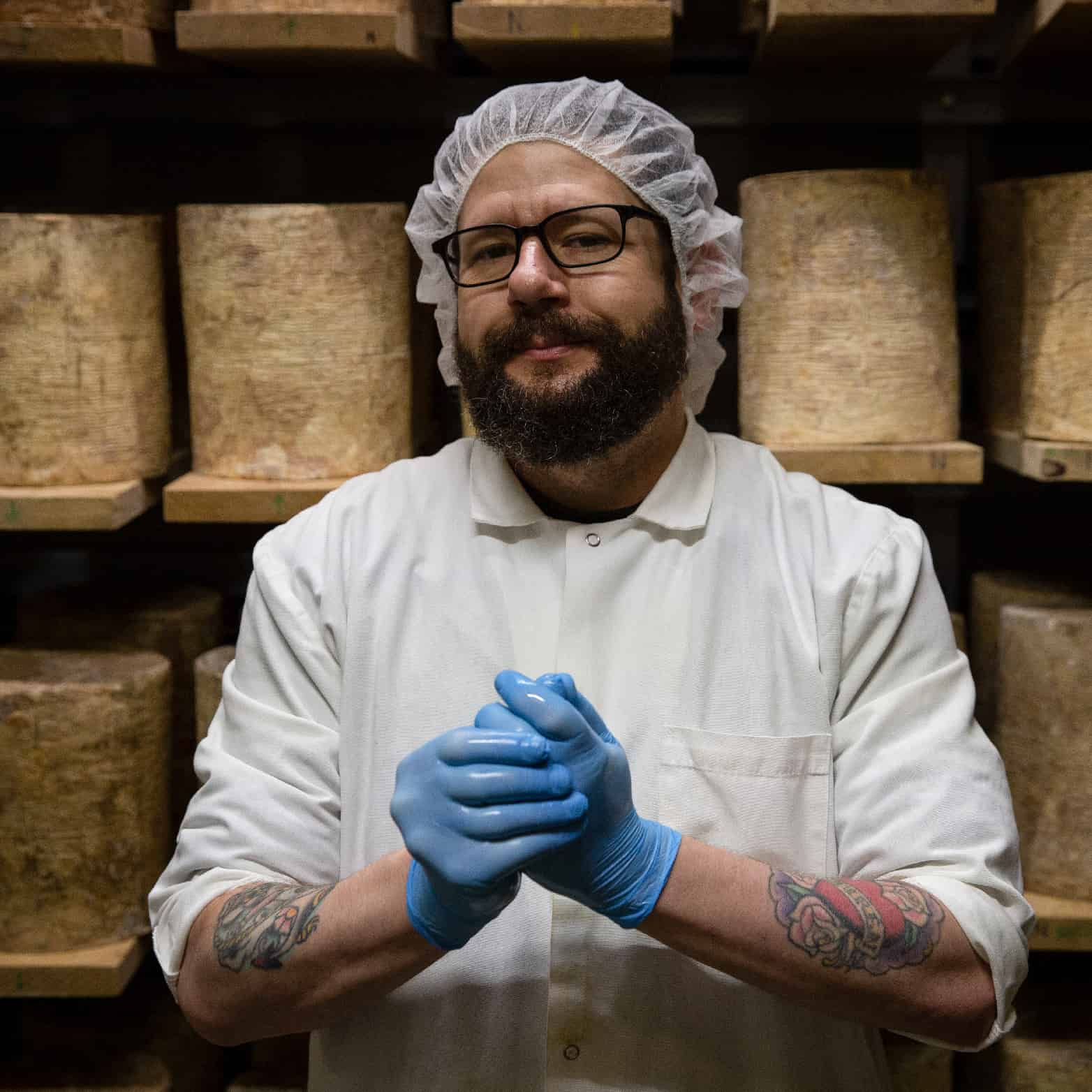
Josh Windsor
Josh Windsor is an affineur and the Senior Caves Manager at Murray’s Cheese in New York City, where he actively nurtures and ages the Cave Aged line of specialty cheeses including the 2019 American Cheese Society (ACS) “Best in Show” winner Stockinghall Clothbound Cheddar and the 2022 World Cheese Awards “Best American Cheese” winner Greensward. Always curious about how cheese ages, Josh is an active member of the community biology lab, Genspace, where he explores the microbial world of cheese rinds. Josh shares his love of all things dairy by teaching cheese appreciation, science, and history at Murray’s Cheese and sensory evaluation at Cornell University’s cheese short courses.