
Josh Windsor of Murray’s Cheese makes cheese science digestible in his latest column
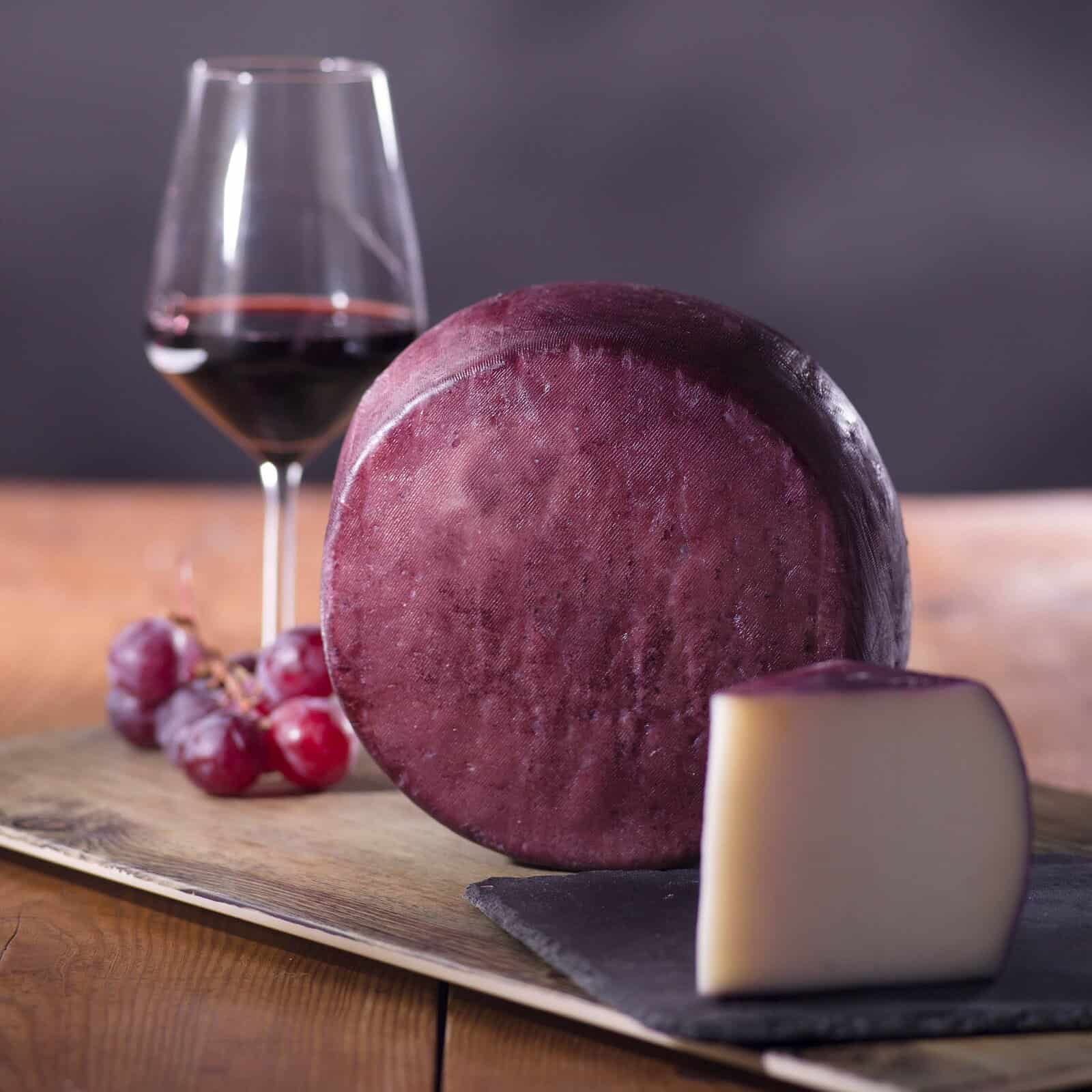
F. Scott Fitzgerald’s second novel, The Beautiful and the Damned, follows the steady decline of Anthony and his wife Gloria as they dance, carouse, and drink their lives away, hoping for an inheritance that never materializes. As Fitzgerald writes, “Wine gave a sort of gallantry to their own failure.” Although he was referring to the inability of their passion to sustain them through their financial futility, Fitzgerald could have just as easily been remarking upon a specific style of cheese maturation that’s suitable for the Jazz Age: soaking cheese in wine.
I reluctantly admit that my greatest professional failures have involved this ancient technique. I prefer to think of these failures as gallant attempts to produce amazing cheese, despite the missteps. Unless meticulously planned, a bath in wine will spell certain ruin for a wheel. A callous removal from the vinous treatment can lead to gaping fissures in the surface of the cheese. The physiochemical circumstance that leads to this catastrophic cracking is quite complex.
At the root of the problem is a phenomenon known as osmosis. When two liquids are separated by a semipermeable membrane, the side with less dissolved material naturally moves to the side with more dissolved material and higher density. In this case, the rind is the membrane.
Water in cheese has a lot of dissolved minerals—mainly calcium—and water and alcohol in wine have far less. This creates a difference in pressure from one side to the other, forcing the water to move until an equilibrium is reached. If this were the only effect, the cheese would absorb the water and alcohol and evenly swell across its rind.
But as the water migrates, it brings all the minerals in the cheese with it, which then accumulate in various pockets under the surface. To make things even more complicated, the minerals are ionic, meaning they have an electric charge. These pockets of minerals act like magnets, attracting all the charged particles in the wine toward the cheese.
The density of the solution becomes uneven across the rind, and the osmotic effect causes water to move into the cheese in some areas and out in others. In a short amount of time, a chaotic flow of water, minerals, and electric charges moves across the rind.
When the cheese is removed from its wine bath, the areas that have demineralized lack the structural integrity to hold together, and the rind splits. For single-celled organisms like bacteria that live their whole lives in water, this is a big problem. Over time, cell membranes have developed ionic pumps to help alleviate this effect.
The easiest way to reach equilibrium is to dissolve minerals in the wine that slow down the osmotic process, eliminating the need to transfer ions from one side of the membrane to the other.
For the makers of Weinkäse Lagrein, in the Alto Adige region of Italy, ionic pumps have not evolved in their cheese since its creation in 1997. Since this impeccably soaked cheese highlights and utilizes the unadulterated, local lagrein wine, the make is specifically tuned to create a texture that can withstand the chaos of the osmotic effect.
The recipe is formulated to produce a semi-firm cheese that is soft enough to absorb the wine and add flavor, but hard enough that the osmosis is slow and takes time—two weeks to be exact. Firmness, water content, and mineralization are interconnected in cheesemaking.
As Markus Weber, research and development dairy technologist at Mila, who produces Weinkäse Lagrein, explains, “Standard consistency is the hardest part. The cheese can’t be too soft. Osmosis will disequilibrate the cheese, changing the structure and changing the sensory.”
And although there may be something gallant in failure, in this specific case, there is something delicious in success.
Josh Windsor
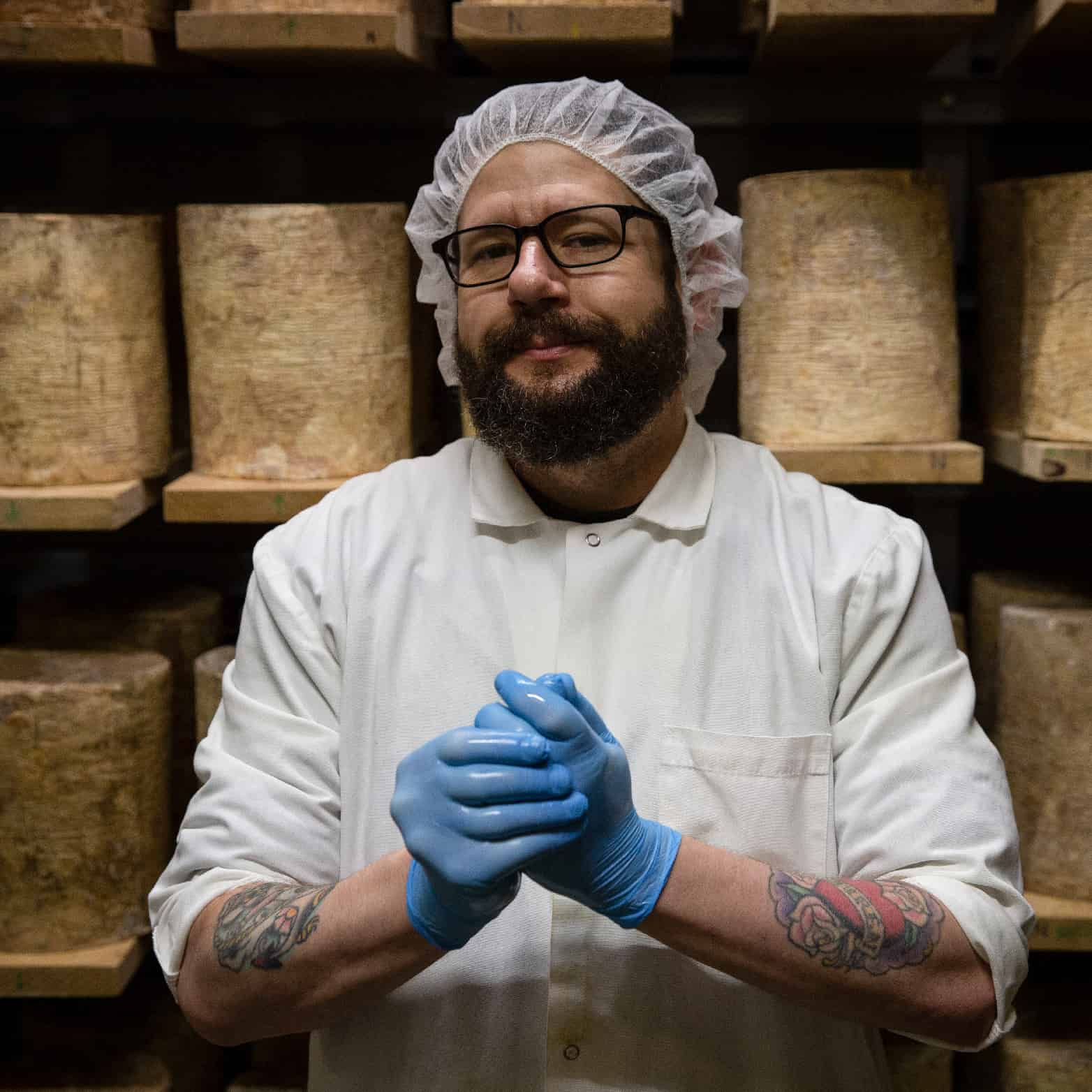
Josh Windsor is an affineur and the Senior Caves Manager at Murray’s Cheese in New York City, where he actively nurtures and ages the Cave Aged line of specialty cheeses including the 2019 American Cheese Society (ACS) “Best in Show” winner Stockinghall Clothbound Cheddar and the 2022 World Cheese Awards “Best American Cheese” winner Greensward. Always curious about how cheese ages, Josh is an active member of the community biology lab, Genspace, where he explores the microbial world of cheese rinds. Josh shares his love of all things dairy by teaching cheese appreciation, science, and history at Murray’s Cheese and sensory evaluation at Cornell University’s cheese short courses.