
Why Canadian cheese dominates at American competitions
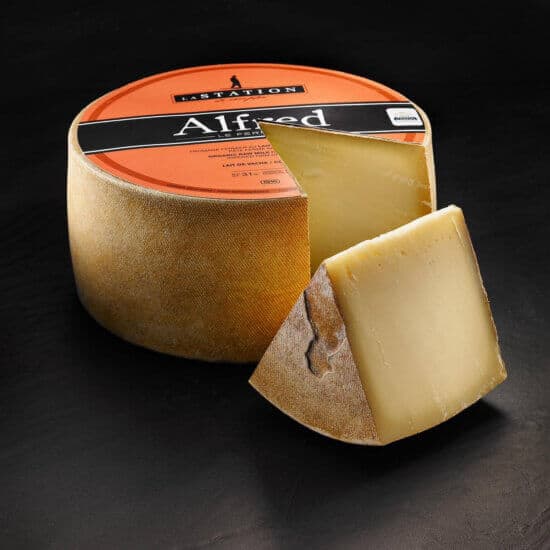
At the 2025 American Cheese Society Annual Judging & Competition, a hush fell over the ballroom full of cheese professionals. Who would win Best of Show? It turned out that Quebec-based Fromagerie La Station’s raw-milk farmstead cheese won First—for the second year in a row—with Vermont’s Jasper Hill Farm placing Second Best of Show, and Ontario’s Stonetown Artisan Cheese taking Third. The results mirrored those from 2024, when the top three winners hailed from two Canadian makers and one American maker. So the new question on everyone’s mind is: What’s up with Canadian cheese?
Historically, Canadians have a good 20 years of cheesemaking practice on Americans. Plus, the country was settled by the French, who brought their ancestral techniques across the pond. According to an article written by Kiri Endicott, a former cheesemonger at the now-closed Cheese Shop of Salem, French-style soft-ripened cheeses were produced in Canada starting in the early 1600s. In comparison, a Cheese Grotto blog post citing the Oxford Companion to Cheese states that the US began making cheese around 1629, with the establishment of Massachusetts Bay Colony.
Jumping to the 1990s and 2000s, James Adams, business development manager at Canadian cheese distributor Aux Terroirs, says that Canadian cheesemakers reconnected with their heritage, crafting artisanal cheese that could rival Europe’s. “We started to see people striving for excellence and not just simple production,” he says. “This led cheesemakers in Canada to travel across Europe to hone their trade, with cultural exchanges really accelerating the knowledge pool.” Cheesemakers at Fromagerie La Station and Stonetown Artisan Cheese have benefitted from studying abroad, confirming the trend. “While it’s important to use exceptional-quality milk when making really excellent cheese, the cheese must also be made by makers who have mastered the art of their craft,” says Erin Harris, co-founder of the Canadian Cheese Collective.
In terms of farming, Alberta Milk—an organization representing the region’s dairy farmers—says that herd sizes are traditionally smaller in Canada. This gives farmers tighter control over their cows, explains Harris. Restrictions on the maximum somatic cell count are a contributing factor, too. “Canadian dairy is regarded internationally for being of the highest quality,” says Harris. “A reduced count of somatic cells is associated with better-quality, cleaner milk.” Furthermore, the bovine growth hormone rBST is illegal in Canada, but not in the US.
There’s also climate. Canada’s long winters mean cheese is culturally ingrained as it was a vital food source that could outlast the cold season, says Adams. Canada also has different animal grazing schedules than other parts of the world. For example, Fromagerie La Station’s cows graze rotationally in the farm’s meadow—full of nutritious grass, clover, alfalfa, and more—starting May 15 until the end of growing season. After that, its cows eat dried hay and grasses grown exclusively on the farm, Harris says. The milk used for its award-winning cheeses is certified organic under Canadian standards.
When peak farming regulations come together with craftsmanship, passion, and unique geography, it’s no wonder Canada’s created lightning in a cheese mold—and everyone wants a taste. “Canadians are endlessly proud of the cheese we produce here,” Harris says. “It’s a thrill to watch the world discover just how remarkable our cheese is.”

Alana Pedalino
Alana Pedalino serves as Managing Editor of culture. Her work has been featured in Bon Appétit, Chicken Soup for the Soul, and more. She loves to write, cook, and kayak. Find her bylines at alanapedalino.com.