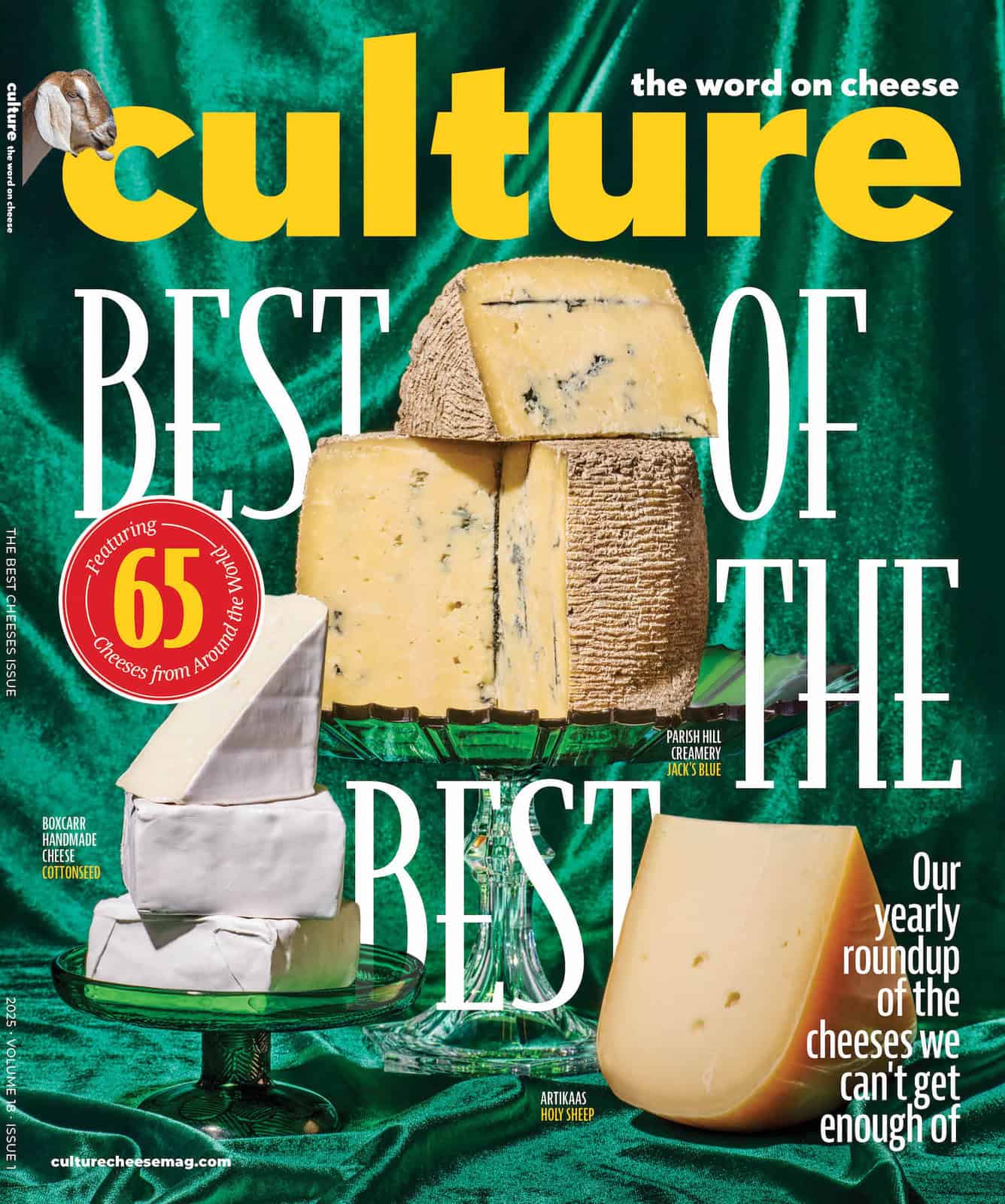

Cheese was always more than just food to our ancestors.
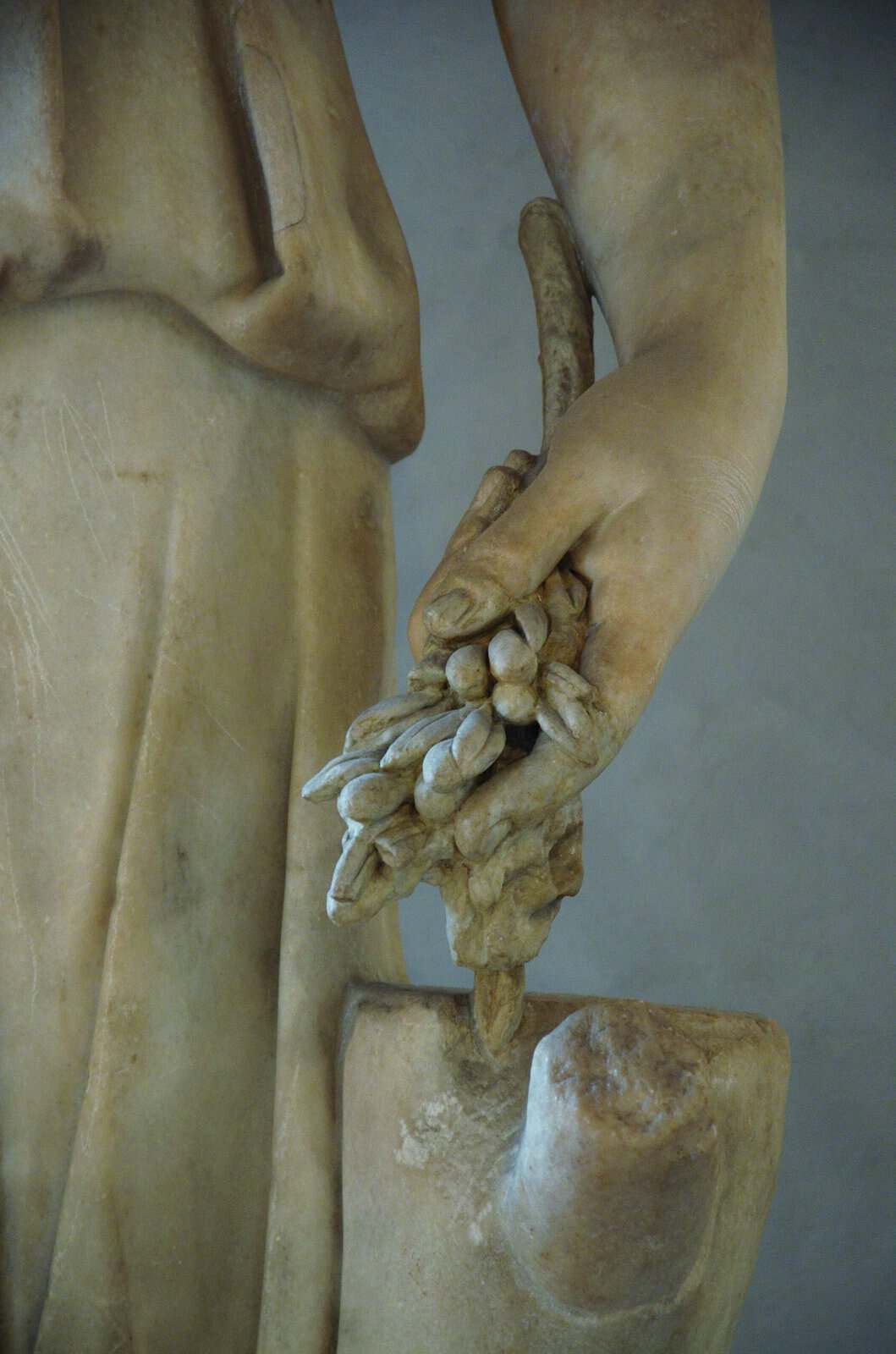
Few foods inspire as much ceremony as cheese. In recent years, couples have even eschewed traditional wedding cakes in favor of multi-tiered towers of beribboned, stacked wheels adorned with roses and greenery like their sweeter counterparts. Or take the modern cheese board. A glass or two of wine with a friend is just a well-spent Friday night, but add a cheese board, and it’s a spread worthy of a toast to welcome news like a promotion or an engagement.
For a large gathering, one could take hours draping ribbons of prosciutto, or layering salami slices to form a single rosette. But these efforts—as time-consuming as they might be—are only accompaniment. It’s the clothbound cheddar, triple cream, or ash-veined chèvre, that serve as the true centerpiece. Even before cheese became synonymous with celebration, it was something cultures carefully tended.
Cheesemaking is a 10,000-year-old practice dating from the time sheep were first domesticated. According to Greek mythology, it was Aristaeus, the god of shepherds, beekeepers, and other rural artisans who gifted humans with the transformative craft. He was especially popular in the Greek region of Boeotia, where citizens held cheesemaking competitions in his name (which translates to “the best”).

Lucas van Leyden “The Milkmaid” offers a glimpse of dairying as daily ritual, long before cheese became a centerpiece of celebration and ceremony. Image courtesy of The National Gallery/Wikimedia Commons.
It comes as no surprise that we still treat cheese with such reverence—making cheese is ritual. For most of history, cheesemakers had little knowledge of bacteria or microbiology. They relied on keen observation, the muscle memory that comes with decades of repetition, and a bit of blind trust in the process.
In some cultures, the ritualization of cheese was so prevalent that it was incorporated into customs to ward against ill fortune or foretell the future; from proper milk temperature to accidental bacteria contamination, much could go awry. Superstitious Scottish dairy maids tied branches of the lucky rowan tree to barn rafters in hope of safeguarding their herd’s health and yielding adequate milk supply. In the Middle Ages, those pining for romance would carve the names of their prospects into wedges of cheese; whichever piece molded the fastest would signal true love. (You would think it would be the other way around, but there’s no arguing with tradition.)
For some, cheese serves as a symbolic roadmap of how to live a benevolent life. The monks at Tamié Abbey in the French Alps stamp their soft, Reblochon-like wheels with the emblem of the Maltese cross, each point representing one of the eight chivalric virtues: charity, fidelity, piety, faith, truth, sacrifice, bravery, and repentance.
In England, expectant couples commissioned a wheel to be aged for nine months for a tradition known as “groaning cheese,” aptly named for the noises laboring women emitted during childbirth. The cheese ripened alongside the infant growing in the womb and was consumed from the center outward upon birth. Only the father could slice the cheese; it was said that if he should cut himself, the baby would die in its first year. To ensure a long life for the child, parents passed the child through the rind on the day of baptism.
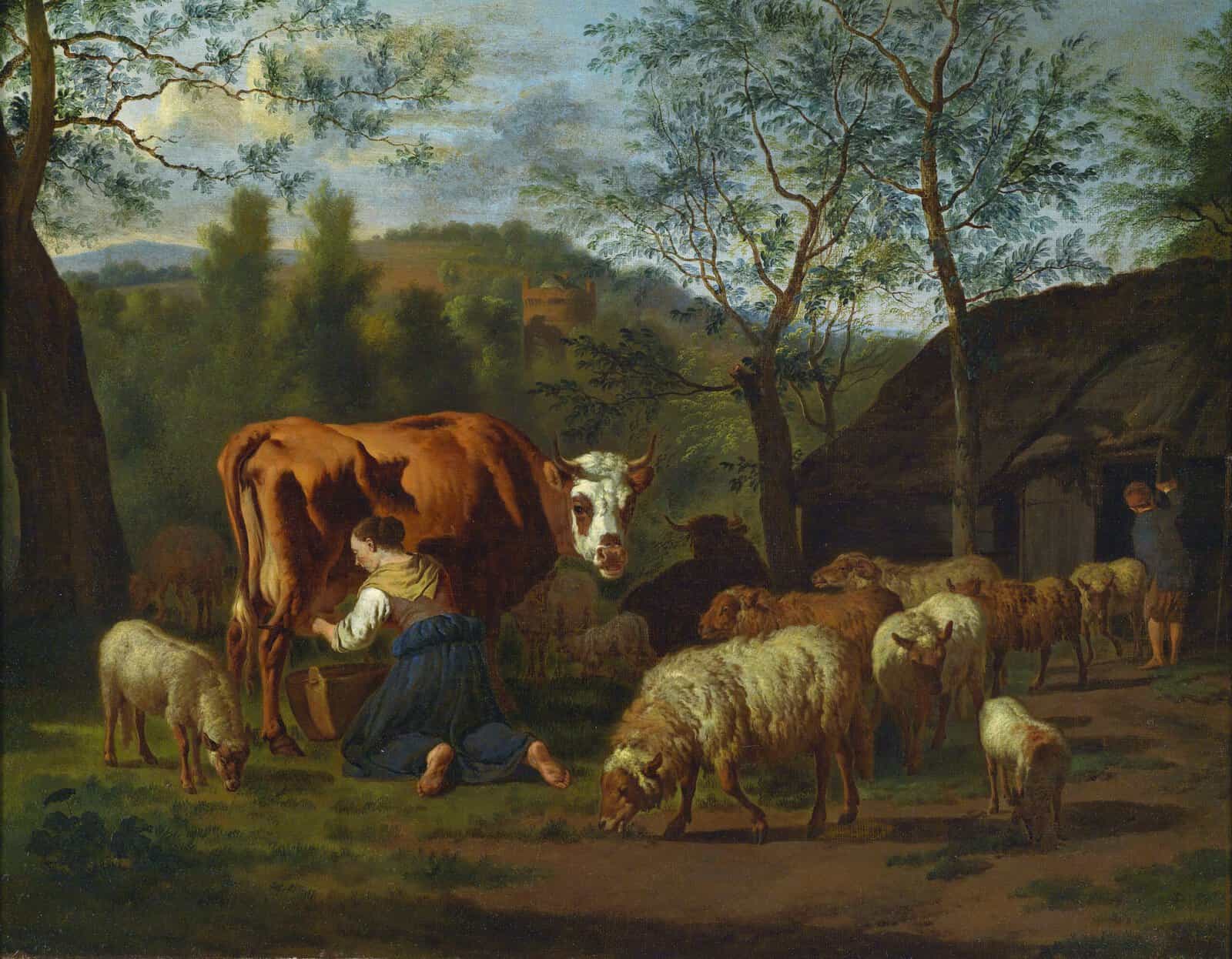
Adriaen van de Velde’s “Maid Milking a Cow, Surrounded by Sheep” captures the pastoral rhythms behind cheesemaking, when tending herds and collecting milk were daily rituals guided by season, tradition, and practice. Image courtesy of Wikimedia Commons.
Some say cheese is life (and we at culture agree), but might it also be death? Saint Uguzo, the patron saint of cheesemakers (also known as Saint Lucio), might have an opinion. Uguzo was a twelfth century shepherd from Cavargna, near the Italian-Swiss border. He discovered a heating method that increases the yield of a cheese’s recipe. He distributed excess cheese among the poor, angering the man he worked for. He became a martyr when he died at the hands of this employer. In art, he is often depicted holding a cheese knife and cradling a wheel of cheese, symbols of his sacrifice.
Today, cheese still arrives tableside with ceremony—and well it should. It is not a food that can be made quickly; it is rarely consumed alone, although a burrata, prosciutto, and arugula salad makes an exceptional girl dinner. Its origins are humble, but in the rite hands, it becomes legen-dairy.

Amanda Gibson
Amanda Gibson, one of culture’s copy editors and an unapologetic cheese fanatic, has been obsessed with dairy since her glory days as New England’s 1999 Teen Milk Ambassador. An advertising copywriter and former college English instructor, she loves crafting compelling food narratives and released her debut novel, In the Absence of Serpents, in 2021. Gibson has profiled James Beard Award–nominated chefs, covered the unearthing of Rosa Parks’ pancake recipe, and earned accolades for her Game of Thrones–inspired cocktails. Follow her birding and travel adventures on Instagram at @amoveablefeaster.