
Discover why this oil-marinated Czech cheese has become the country’s ultimate beer snack.
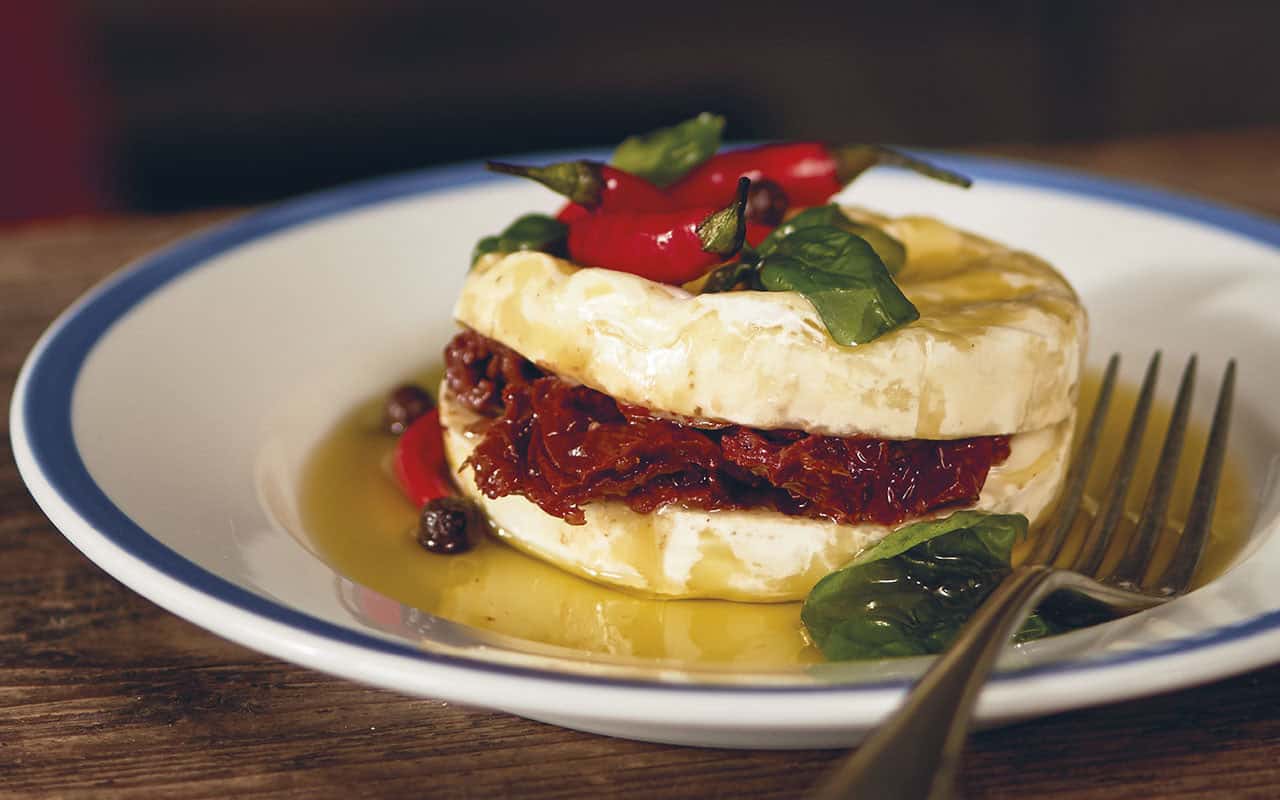
Czechs drink more beer per person than any other country, and surveys say Czechia has held this distinction for decades. In fact, pilsner beer was first brewed in Plzeň, a city about 50 miles from Prague, in 1842. And the bar snack of choice to pair with all of that beer is, indisputably, nakládaný hermelín—a dish made by marinating mild, buttery, camembert-like hermelín cheese in sunflower oil for three to five days, typically with onions, garlic, peppercorns, herbs, and spices such as bay leaf and allspice berries, and red chile peppers.
Made from pasteurized cow’s milk, Czech farmers first crafted hermelín after World War I to mimic French camembert. They named the dish nakládaný hermelín, or “pickled ermine,” because the cheese resembles the small white weasel whose fur adorned the cloaks of royalty and was often seen in paintings of European royalty.
The longer hermelín steeps, the more flavorful it becomes. Before serving, the cheese is sliced in half—like a round of bread—and served with onion rings and chiles.
I first ate this staple during a Prague beer tour with Eating Europe. It was served with homemade malt bread at Loď Pivovar, a boat-brewpub moored on the Vltava River in Old Town boasting a prime view of Prague Castle. “Marinated cheese became an indispensable staple in taprooms and Czech households,” says Eva Brejlová, a senior tour guide at Eating Europe. She and a group of foodies once tried 15 different cheeses during a blind tasting, some with flavors like Indian-style with curry or honey and walnuts.
Throughout my tour, I tasted nakládaný hermelín everywhere—from upscale eateries to workingmen’s bars—and encountered a variety of takes on the snack. “While France boasts hundreds of varieties of cheese,” Brejlová says, “we took one specific style, polished it to perfection, and built an entire culture around it.”
Sharon McDonnell
Sharon McDonnell is a San Francisco–based food, drink, and travel writer whose work has appeared in Food & Wine, National Geographic, Condé Nast Traveler, and Travel + Leisure. Her reporting is shaped by cooking classes and culinary experiences across Europe, Asia, North Africa, and the American South. Visit sharonmcdonnell.contently.com to read more of her work.