
Queijo Minas Artesanal transformed from daily necessity into one of Brazil’s most enduring culinary traditions.
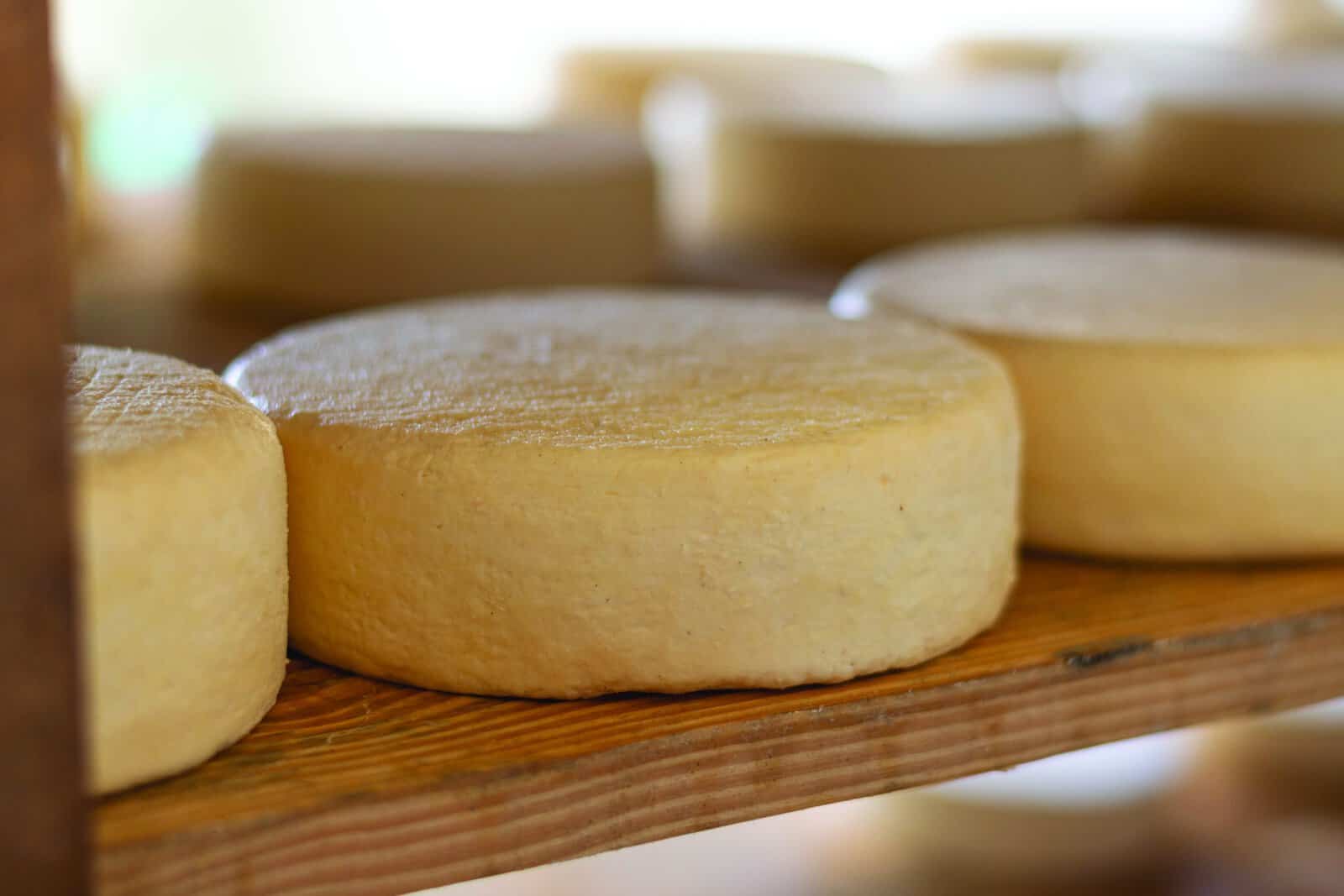
Queijo Minas Artesanal is made with raw milk and pingo, a natural starter traditionally carried from one day’s cheesemaking to the next. Photo courtesy of Filippo/AdobeStock.
Long before the Brazilian state of Minas Gerais became synonymous with cheese, it was synonymous with gold. In the eighteenth century, Brazil stood at the center of global gold production. Thousands of adventurers were drawn to Brazil’s sparsely populated interior by hoping to strike it rich in what became known as the first Brazilian gold rush, turning remote settlements into bustling mining towns almost overnight.
But gold alone could not feed a growing population, and investment in agriculture and food production lagged, resulting in recurring food shortages. Brazilian and Portuguese settlers living in the regions of Serro and Serra da Canastra faced a challenge: miners spent long days underground and food often traveled for weeks before reaching them. Food not only needed to sustain them over long shifts underground but endure weeks of travel through tropical heat and difficult terrain.
The answer, it turned out, came in the form of cheese. Makers adapted a traditional European recipe believed to have been inspired by Portugal’s Queijo Serra da Estrela. They used fresh milk from local cows and mixed it with a natural starter culture called “pingo,” which translates to “drip” in Portuguese. Each batch carried a small imprint of the landscape in which it was made, shaped by local climate and vegetation.
Over time, the cheese evolved into what we know today. Back then, fresh cheese was placed in wicker baskets and transported by horseback up to 10 days across rugged routes to mining centers. When it arrived at the settlements, the journey had become part of the recipe. The rounds had dried, developed a golden rind, and acquired a deeper, more concentrated flavor, defining Queijo Minas Artesanal’s signature appearance and flavor.
Like many gold rushes before and after, the boom did not last forever. The cheese, however, endured. By the second half of the eighteenth century, the richest deposits were beginning to run dry. What began as a practical solution for feeding miners slowly outlived the mines themselves, passing from generation to generation as both craft and livelihood. Today, the traditional methods of producing Queijo Minas Artesanal are recognized by UNESCO as an Intangible Cultural Heritage of Humanity, a legacy still shaped by the same land that once drew fortune seekers inland centuries ago.
Sharon McDonnell
Sharon McDonnell is a San Francisco–based food, drink, and travel writer whose work has appeared in Food & Wine, National Geographic, Condé Nast Traveler, and Travel + Leisure. Her reporting is shaped by cooking classes and culinary experiences across Europe, Asia, North Africa, and the American South. Visit sharonmcdonnell.contently.com to read more of her work.