
When it comes to Vermont Creamery’s French farmstead-style cheeses, there’s a fungus among us—and that fungus is the creamery’s flagship organism: Geotrichum candidum. This yeast-like filamentous fungus acts as the stylist of Vermont Creamery’s cheeses, shaping their signature wrinkly rinds and giving them character.
But what exactly is Geotrichum candidum?
“[Geotrichum candidum]’s on that boundary between a yeast and a mold,” says Austen Czymmek, Vermont Creamery’s Product Development and Innovation Lead. “It’s somewhat more evolved than a regular mold. But … it’s intermediate. It’s smack dab in the middle between the two.” Czymmek recalls this article stating that Geotrichum candidum is like a yeast that’s “holding onto its moldy past.”
While Geotrichum candidum plays a starring role in the creamery’s aging process, it doesn’t work alone. It gets support from enzymes produced by other microorganisms living on the cheese’s surface, including lactic acid bacteria—the same helpful microbes found in sourdough, kombucha, and yogurt. The activity of the microorganisms on the outside of these cheeses raises pH levels enough for Geotrichum candidum to grow and thrive, along with yeast. Wondering how to tell when Geotrichum candidum has shown up? Trust your nose. “You really do smell the yeast,” says Czymmek. Sometimes it’s a bready aroma; other times, more like hard cider—depending on the cheese.
Plus, there’s naturally occurring microorganisms that are present in an aging facility or cave, as well as a few added by Vermont Creamery cheesemakers. Together, they work to transform the cheeses over time. Different microbes step in at different stages of the process, so not all of them remain until the cheese is finished. Czymmek says they’re part of the “rich, diverse biology” of the cheeses.
“In terms of how the cheeses are actually changing, it’s this tug of war between organisms. And that’s what’s going to determine the final effect in the cheese,” Czymmek says. It’s survival of the fittest, in a way—the microorganisms that successfully colonize the cheese will ultimately affect everything from aroma and flavor to moisture and texture. These effects are a spectrum, too. Younger cheeses taste clean and milky, developing a complex umami flavor as they age.


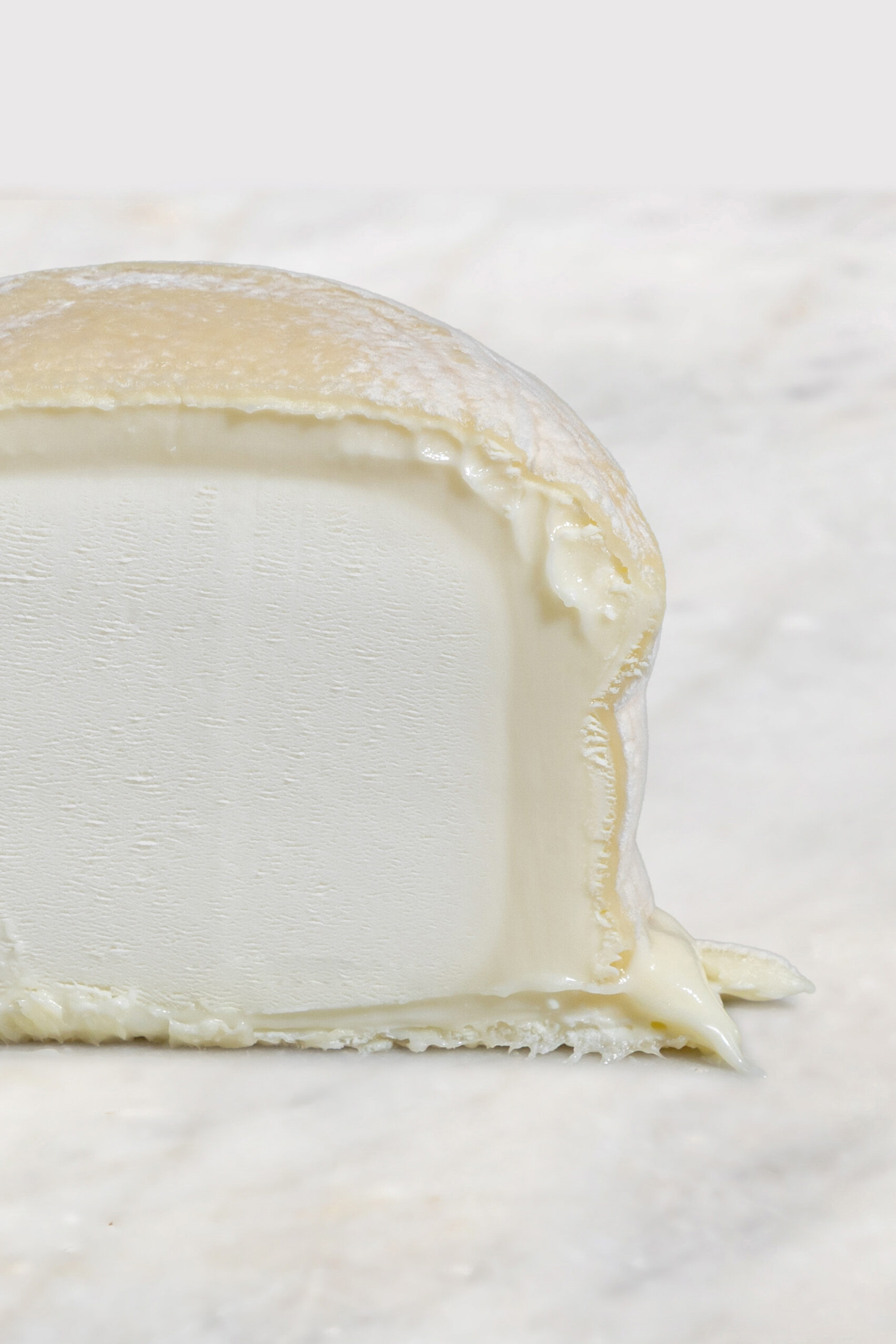
Inside, cream lines soften and become oozy; outside, riper cheeses can take on what Czymmek describes as the look of “an old man eating sour candy” and develop a whiff of ammonia. A touch of that aroma can be part of ripening, but full ammoniation—when bacteria have broken down the cheese’s proteins and fats as much as possible—signals that it’s past its prime.
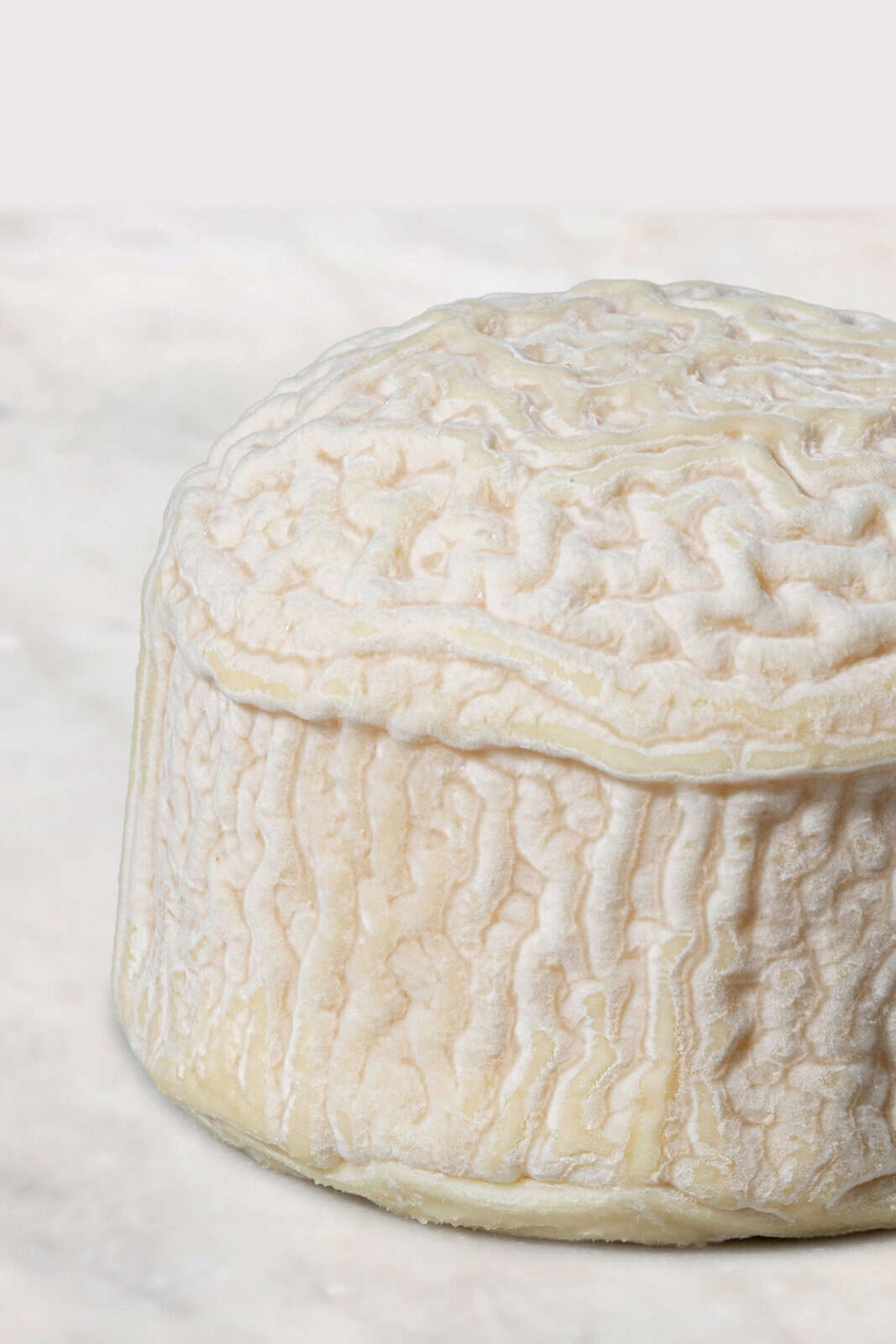
With Geotrichum candidum in the mix, Vermont Creamery achieves a delicate, well-balanced lactic style cheese—decadent and complex, but with understated flair. “Kind of like elegantly stinky cheese,” says Czymmek. Flavors can range from mildly pungent and mushroomy to fruity and floral, like apples. Visually, the rinds are pale, brainy, and wavy—a signature wrinkle pattern shaped by Geotrichum candidum.
“You have this filament structure that the Geotrichum candidum is producing, due to their protein interactions and the microbe interactions. … and this slight dehydration at the surface creates these cool little ridges and valleys,” Czymmek says. Without it, the cheeses would lack their distinctive texture, appearing smooth and bare.
At the end of the day, Geotrichum candidum is a powerhouse—but it’s the way Vermont Creamery works with it that makes their cheeses unique. “The nature of making an artisan product is that it’s always evolving, always changing,” says Czymmek. “And the team is really the pivotal influence to guide it where it needs to go.

Vermont Creamery
Consciously crafted in Vermont’s green mountains, Vermont Creamery’s line of fresh and aged goat cheeses, cultured butter, and crème fraîche have hundreds of national and international awards. In their 34th year of business, Vermont Creamery supports a network of more than 17 family farms, promoting sustainable agriculture in the region. B Corp Certified in 2014, Vermont Creamery has been ranked one of “The Best Places to Work in Vermont,” by Vermont Business Magazine. Vermont Creamery is an independently operated subsidiary of Minnesota-based Land ‘O Lakes, Inc., one of America’s premier agribusiness and food companies. For more information, visit vermontcreamery.com.

culture: the word on cheese
Culture is America's first and best magazine devoted to the love of cheese. Explore our website for stunning photos, cheesemaker profiles, recipes, wine, beer, and a community of readers always willing to help and chat.