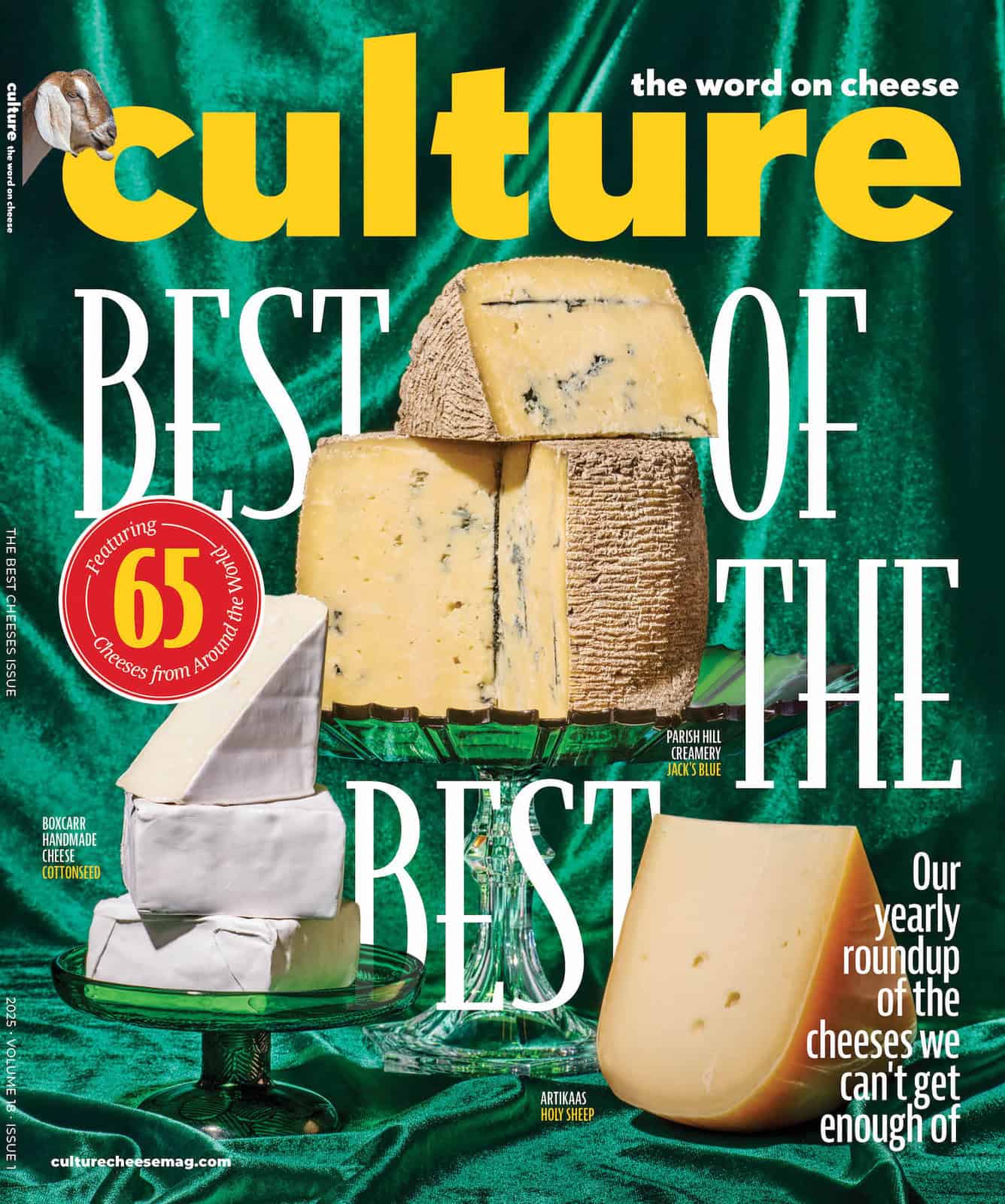

A short trip from Paris lands you in the realm of France’s King of Cheeses.
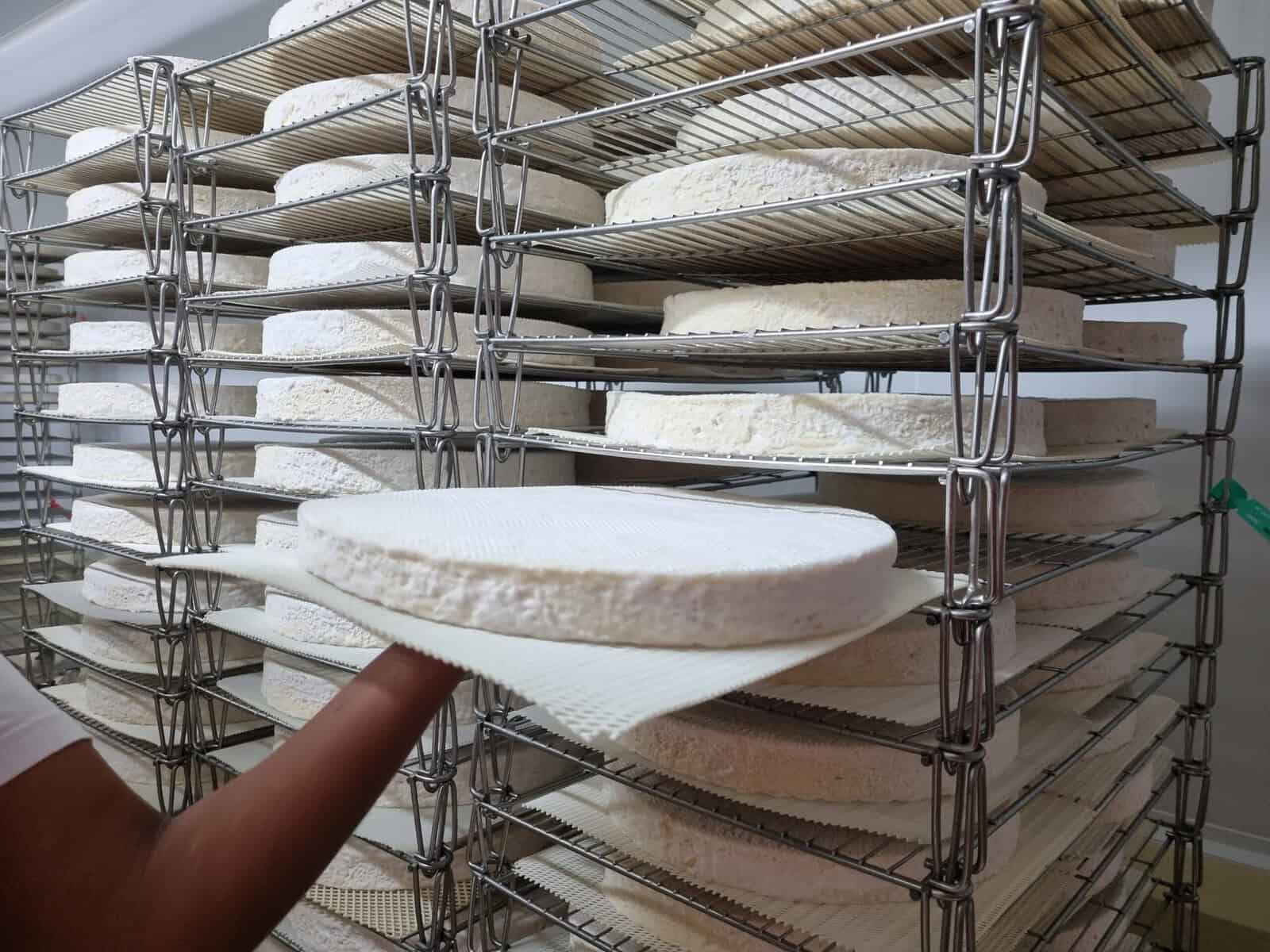
Wheels of Brie de Meaux during the production process. Photographed by Mellie Jumelle.
When you ask folks to rattle off the types of cheeses they know, brie is usually top of the list. It’s perceived as an upgrade that feels indulgent without trying too hard. Its luxe-yet-approachable flavor profile makes it an easy before or after dinner treat that says, “I’m into food but not too snobbish about it.” It’s versatile. Pairings can swing sweet or savory; guests are routinely wowed when you wrap a wheel in dough, top it with sweet fruit, and bake until bubbly.
The king of brie is Brie de Meaux. Originally crafted by monks in the Middle Ages, unconfirmed sources claim this cheese was beloved by Charlemagne and was a regular delivery at Versailles under King Louis XIV’s rule. In 1815, French diplomat Charles Maurice de Talleyrand-Périgord held a competition honoring Europe’s best cheeses and Brie de Meaux was officially labeled Le Roi des Fromages, “The King of Cheeses.” Parmigiano Reggiano who?
What better way to enjoy Brie de Meaux than at the source? A 50-minute drive (25-minute train ride) just east of Paris, the city of Meaux is worth a day trip—and not just for the cheese.
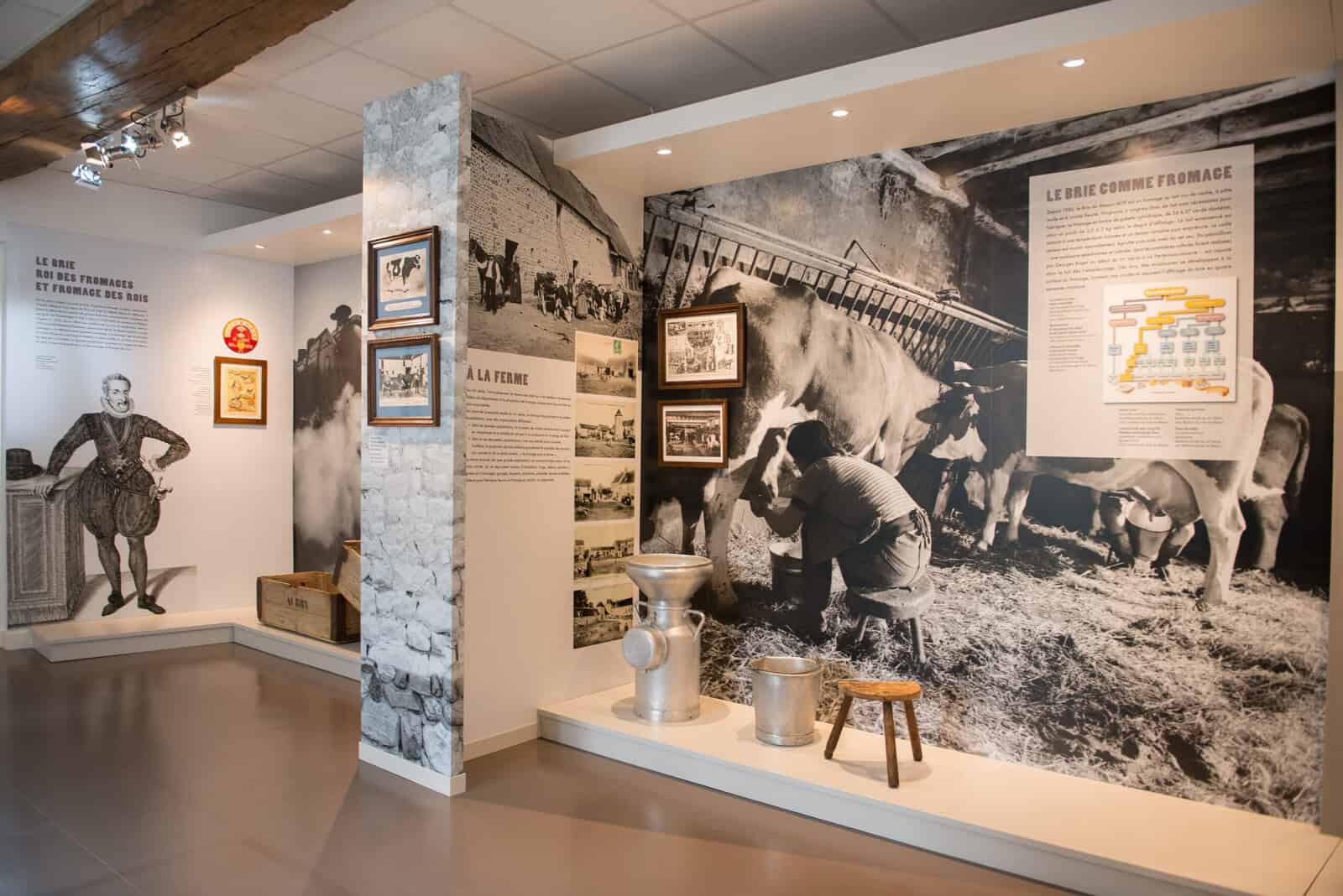
The Brie de Meaux Museum explores the history, tools, and traditions behind France’s most famous cheese. Photographed by Gilles Puech.
Looking (Way) Back
During the eighth century, farmers in Meaux made soft cheeses from cow’s milk, but it was medieval monks who refined the process. Abbeys functioned as early laboratories of agriculture and preservation, where monks developed techniques for handling delicate curds, managing moisture, and aging cheeses in cool, stone cellars. They worked slowly—adjusting based on season, milk quality, and environment—laying the groundwork for a process that defines the cheese today.
“It was a cheese enjoyed by both kings and the common people,” says Anthony Dorkel, coordinator and activities manager for La Maison du Brie de Meaux, a museum dedicated to the wheel. “Originally, it was a cheese made to avoid wasting milk and was not intended to be a ‘noble’ product.”
One of the most important—and often overlooked—elements of early Brie de Meaux production was the use of straw mats during draining and aging. Fresh wheels were placed on woven reeds or hay, which naturally carried ambient molds and microflora from the surrounding environment. Among them: Penicillium candidum, the white mold that defines brie’s bloomy rind.
By the Middle Ages, brie was already moving beyond the farm. Its proximity to Paris made Meaux a natural hub, where cheese could easily travel from pasture to palace. It became a staple in regional markets and a fixture on royal tables, building a reputation that extended well beyond the countryside.
“Brie de Meaux is a powerful marker of identity,” Dorkel explains. “It is present at large festive gatherings, in major traditional recipes such as bouchée à la reine, and during local festivals throughout the region.”
What began as a practical, perishable farmstead cheese eventually became one of France’s most codified foods. In 1980, Brie de Meaux was granted Appellation d’Origine Contrôlée (AOC) status—which was later upgraded to Appellation d’Origine Protégée (AOP/PDO) in 1996—legally protecting not just where it’s made, but how.
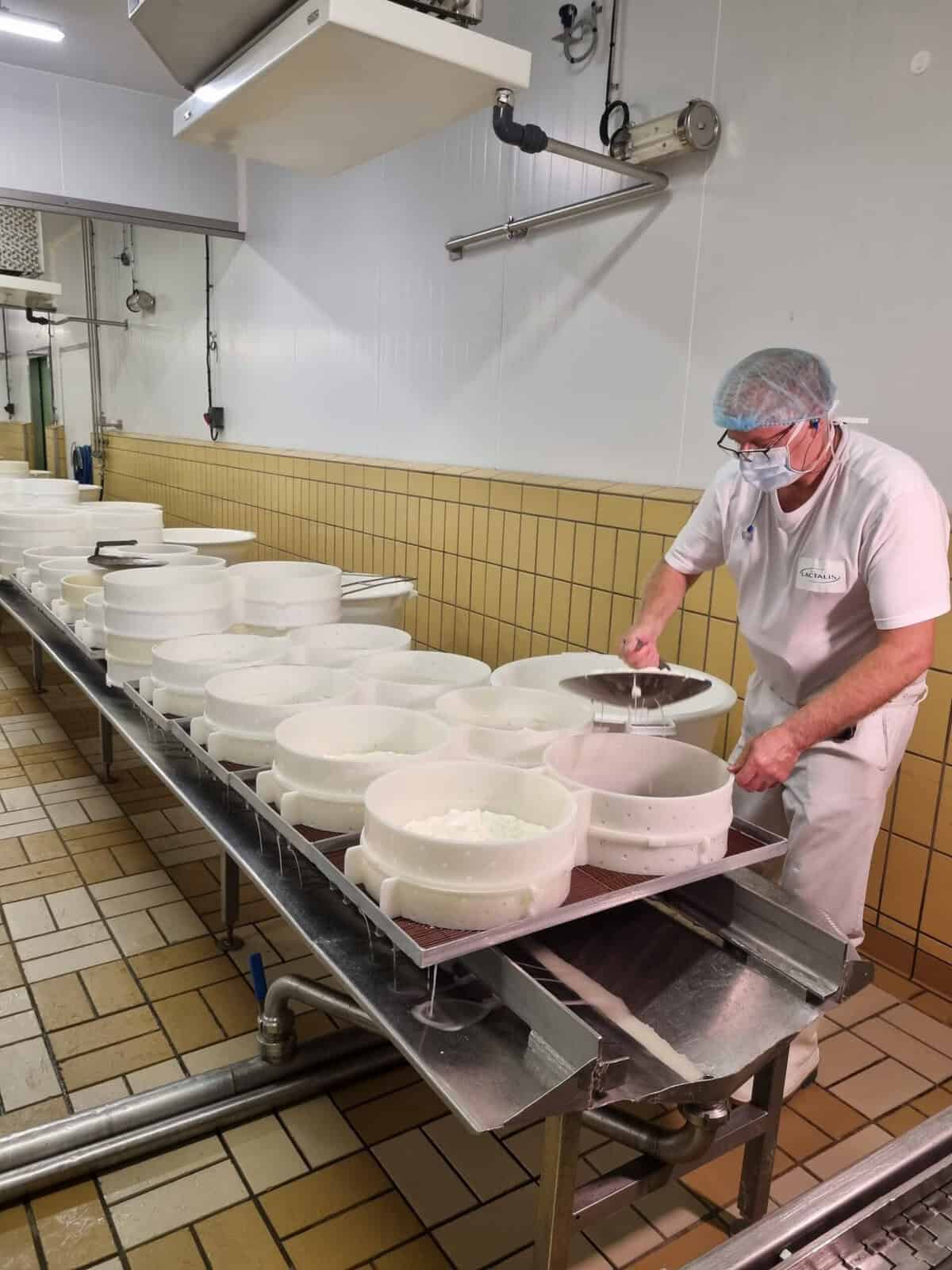
Brie de Meaux is traditionally hand ladled into molds in thin layers. Photographed by Mellie Jumelle.
Terroir That Hits Different
Established in 1998, Fromagerie de Meaux Saint-Faron is the only dairy making Brie de Meaux inside the city limits. Their biggest hits are Brie de Meaux AOP, Brie de Melun AOP, and a decadent triple cream, all made with raw cow’s milk under strict guidelines to maintain quality and taste. A 10-minute drive from the Meaux train station, Saint-Faron boasts a small cheese shop offering local cheese, cider, beer, and mustard, as well as tours of their facilities to see how the magic is made.
Ten to 12 local farms truck milk to the dairy three times a week. Under AOP rules, milk must come from a tightly defined zone in the Brie region and must be used quickly. This short window between cow and vat means the microbial life in the milk is still very much alive and active when cheesemaking begins.
“What influences the flavor of the cheese is time,” says Romain Ricciardi, manager of the shop and tours at Fromagerie de Meaux Saint-Faron. “Also, the storage temperature of the milk. As soon as milking is finished, the milk is stored in tanks between 3 degrees Celsius [37 degrees Fahrenheit] and 6 degrees Celsius [43 degrees Fahrenheit] for a maximum of 36 hours. This cold temperature reduces bacterial development and prevents aromas from becoming too powerful or too bitter.”
The milk arrives early and is rigorously tested for unwanted bacteria. Once it passes muster, the cheesemaking begins. After the milk goes in the vat, rennet is added, then the mixture rests for an hour to curdle. The curds are then gently hand ladled into large molds using a flat, perforated scoop called “pelle à brie,” before being left to drain naturally. The wheels are never pressed. As the aging process continues, the wheels are dusted with salt and sprayed with P. candidum to create the cheese’s signature bloomy rind. Flipped twice a day and aged for a minimum of 28 days, the result is a large wheel—around 14 to 15 inches in diameter—with more complex tasting notes than the commercial snowy white pucks we have in the US.
“Brie de Meaux is a raw-milk cheese, unlike American brie, which is pasteurized,” Ricciardi says. “The production of Brie de Meaux follows strict rules. For example, the diet of the cows producing the milk is clearly defined—grass, legumes, and fodder beets—in the specifications, as is the production method that must be respected by all producers.”
The texture is lush and custardy with an oozing and decadent cream line. Tasting notes evolve from fresh cream and melted butter to mushroom and damp earth depending on the age of the cheese. There’s also an aged version of Brie de Meaux called Brie Noir, or “Black Brie.” Instead of aging for four to eight weeks, this wheel is aged for many months, resulting in a dense and crumbly texture with a deep umami. Brie de Meaux’s bolder cousin, Brie de Melun, is a bit more barnyardy and slightly assertive.
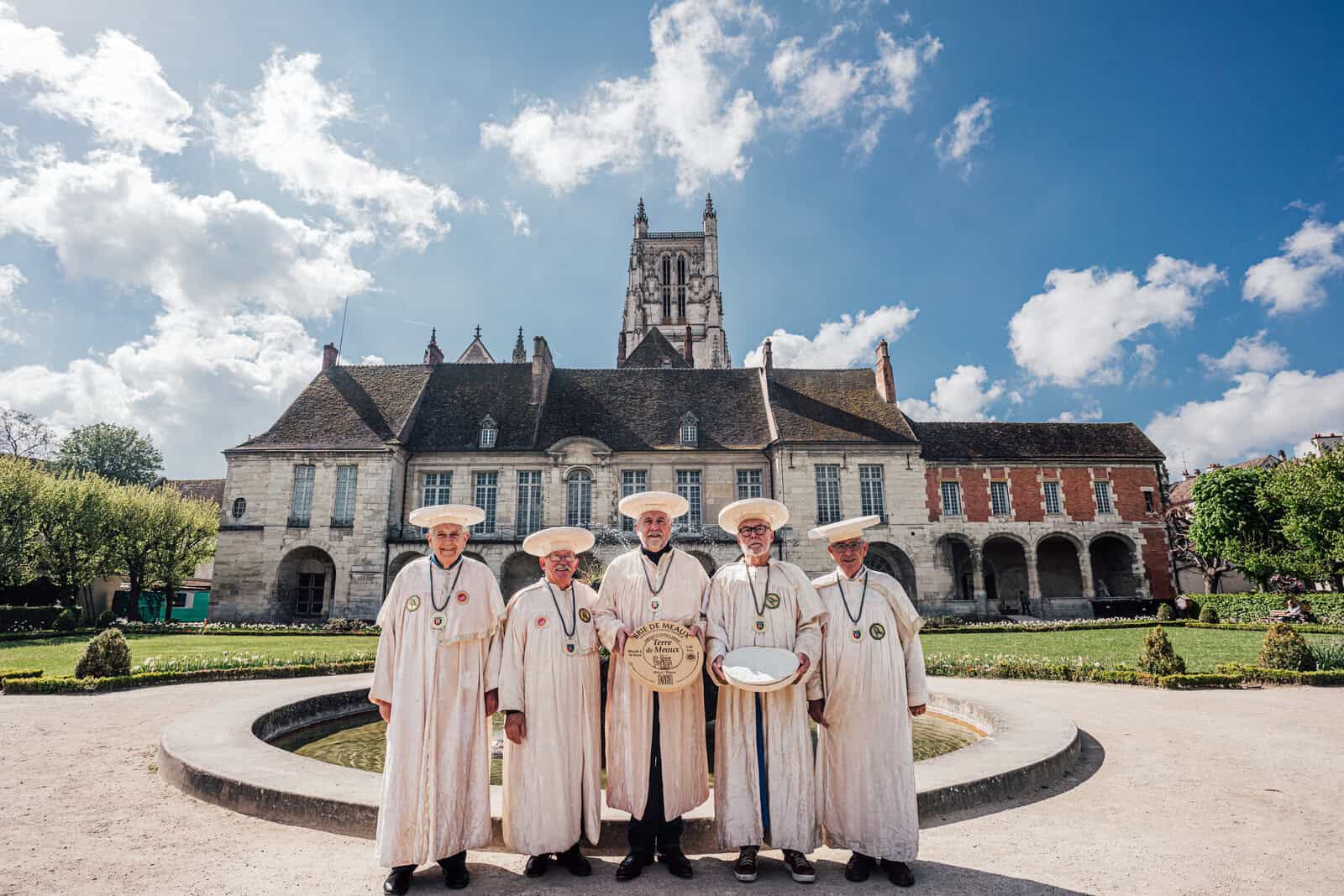
The Brotherhood of Brie standing outside of Saint Stephen’s Cathedral of Meaux. Photographed by Nordine Benchaib.
A Brotherhood of Brie
For all the precision behind Brie de Meaux’s production, there’s an equally deliberate effort to protect what happens after it leaves the dairy. Enter the Confrérie des Compagnons du Brie de Meaux, or “The Brotherhood of the Companions of Brie de Meaux,” a formal organization dedicated to preserving, promoting, and celebrating the cheese.
Founded in 1980 (the same year Brie de Meaux earned its first protected designation), the group operates somewhere between a guild, a marketing arm, and a cultural preservation society. Members dressed in ceremonial robes and wide-brimmed hats that mimic a wheel of brie gather for inductions, tastings, and public events where the cheese is honored.
“The role of the Brotherhood is to promote Brie de Meaux wherever we go,” says Roger Meallier, grand master of the Confrérie des Compagnons du Brie de Meaux. “We visit other brotherhoods in France and abroad, attend the Paris International Agricultural Show (Salon de l’Agriculture), the fairs of Melun and Coulommiers, and PDO exhibitions to promote the ‘Cheese of Kings and Prince of Desserts,’ which is part of Meaux’s DNA.”
Beyond the pageantry, their mission is practical: The Brotherhood works to uphold standards, support producers, and reinforce the connection between cheese and origin. In a global market where brie has become shorthand for a style rather than a specific product, they act as a checkpoint. And the organization is continuing to evolve, despite tradition.
“In recent years, we’ve included women in ceremonial dress within the Grand Council of the Order,” notes Meallier. “Additionally, we are trying to recruit young retirees—both men and women—to lower the average age.”
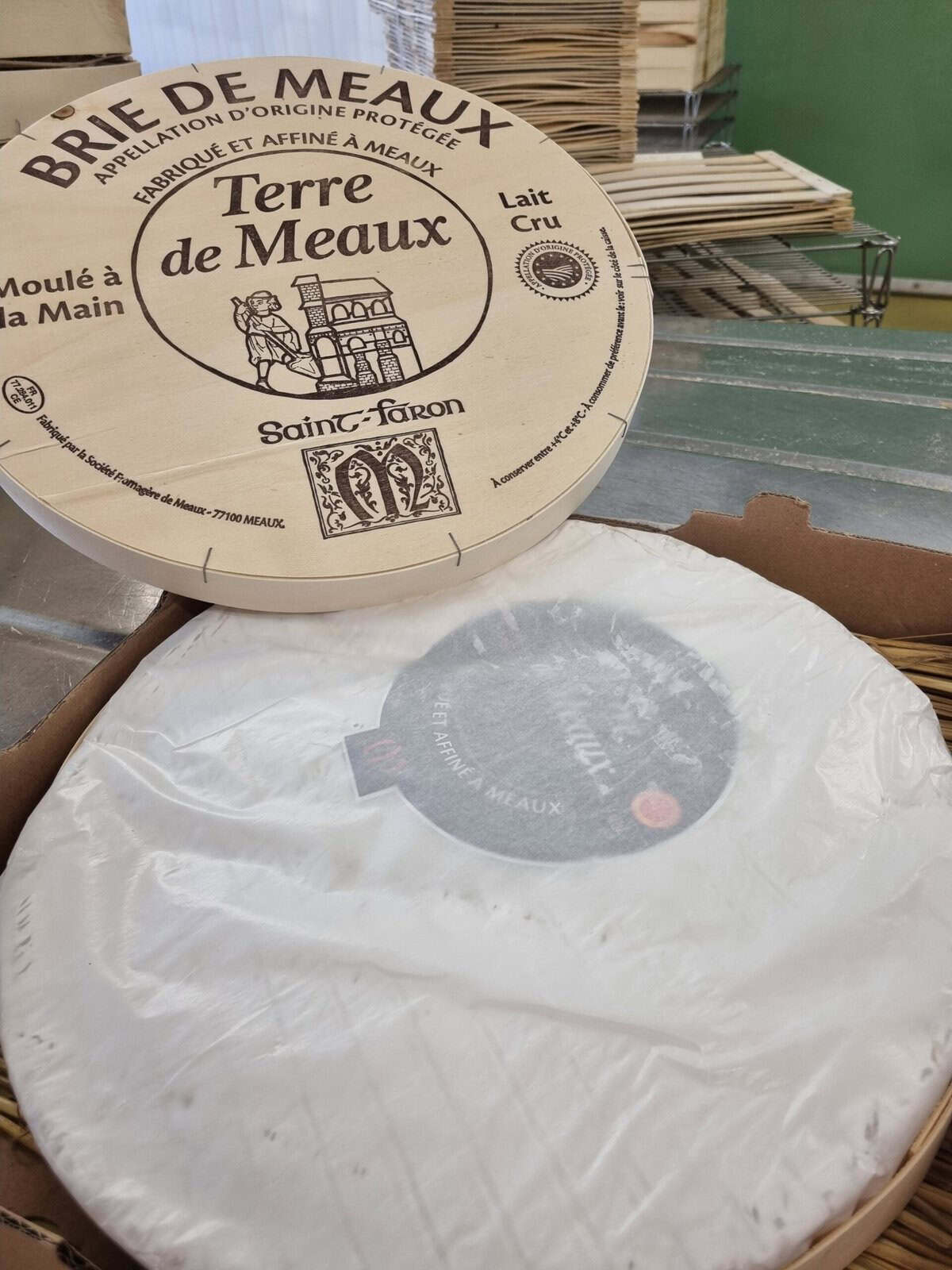
Brie de Meaux was reportedly crowned “The King of Cheeses” in 1815 at the Congress of Vienna after a diplomatic tasting between Europe’s finest cheeses. Photographed by Mellie Jumelle.
Brie de Meaux Versus the Brie You Know
Brie found in America is made with pasteurized milk, produced in smaller formats, and designed to ripen evenly and predictably. This doesn’t necessarily mean the cheese is flawed—it’s just created with different goals in mind. Pasteurization reduces microbial diversity, while smaller wheels increase surface-area-to-volume ratio, allowing for more uniform ripening. It also creates consistency from wheel to wheel—something American eaters appreciate when reaching for their favorite cheeses at the grocery store.
Brie de Meaux operates differently because it’s made with raw milk. It retains a broader range of native bacteria and enzymes that interact with P. candidum during aging, driving more complex proteolysis (protein breakdown) and lipolysis (fat breakdown), resulting in a wider spectrum of flavor. Its large format slows ripening, creating a gradient from firmer center to fully broken-down cream line at the edge, and the layered ladling of curd preserves moisture while opening protein structure. This allows enzymes to move more freely through the paste. The result is a dynamic cheese that continues to evolve even after it’s cut.
“At its peak of ripening—eight weeks,” explains Ricciardi, “Brie de Meaux PDO will have a supple, paste-like texture with pronounced aromas of garlic and cream, and a slightly salty-briny note.”
There’s a practical reason Brie de Meaux can’t be found in the US: it doesn’t travel well. Its window of peak quality is narrow and unpredictable. Export timelines, refrigeration, and regulatory hurdles can push the cheese past its ideal state before it ever reaches a counter.
Some producers and affineurs have experimented with stabilizing bloomy rind cheeses—essentially slowing or halting the ripening process to extend shelf life—but that comes at a cost. You gain consistency and longevity but lose the very thing that defines Brie de Meaux: its movement.
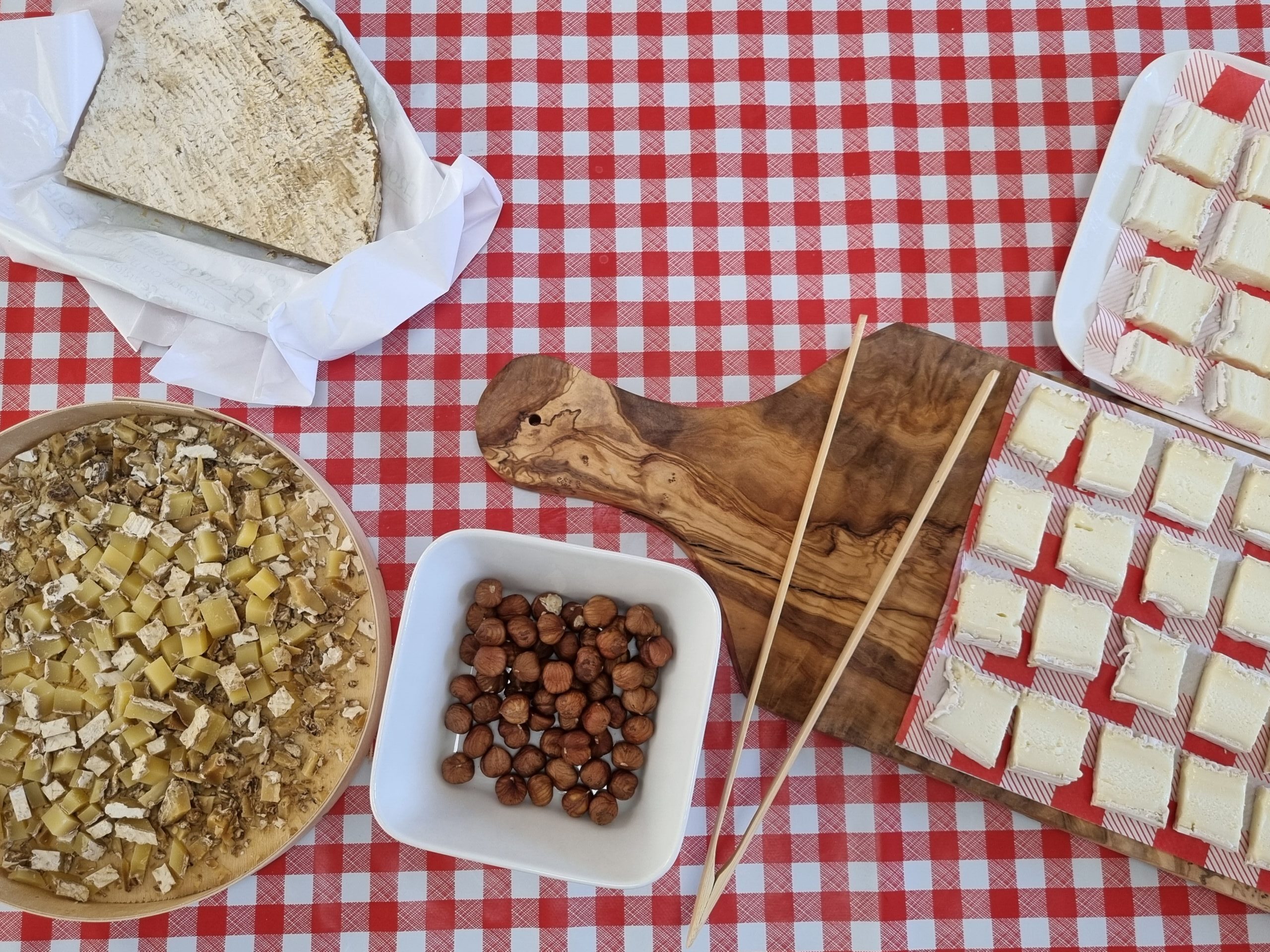
If you want to eat Brie de Meaux like a local, mustard is a must. Photographed by Luna Ngo Sieu Hong.
Comme il Faut (“As it Should Be”)
Much like the slow and languid shifting of Brie de Meaux’s flavor profile, eating the staple should be just as simple, thoughtful, and unfussy. The French aren’t fiddling with phyllo or swirling the cheese into complex sauces. A thick, pudgy wedge is placed on a board, sliced with a small, sharp knife, and slathered onto a torn crusty baguette. If you really want to eat Brie de Meaux like a local, plop a healthy dollop of grainy Moutarde de Meaux on top. Rustic and winey, the condiment adds a toothsome and acidic contrast to the lush cheese. Up the ante with sips of local cider or beer in between bites.
Meallier sums up the experience succinctly: “There is no single ‘best’ way to taste Brie; it simply must be well-ripened, creamy, and flavorful.”

Mallory Scyphers
Mallory Scyphers is culture's Executive Content Director and has been with the company since 2018. She lives on Mobile Bay with her husband, two young daughters, one rambunctious golden retriever, and two loyal cats. Her favorite cheeses are alpine styles and mineral-y blues.