
Photos provided by Oakfield Artisanal
If you’re lucky, the cheese aisle at your local supermarket offers some variety—American, cheddar, Swiss at least. A bag of store-brand shredded mozz works in a pinch for lasagna. But quality-wise, that mozzarella won’t taste the same as Mozzarella di Bufala, for example—especially if you’re from Italy.
Now imagine you’re far from home, in a town with not so many choices, missing your favorite dish—the one your mother used to cook for you. You have an overwhelming craving for just one more bite. It may be within your ability to recreate the meal, but as any home chef knows, quality ingredients make a big difference. Store-brand stuff doesn’t always cut it.
This was true for the Hispanic community in Oakfield, New York. But local dairy Oakfield Corners seized an opportunity to break into the cheese world and bridge a cultural gap.
Opportunity Knocks
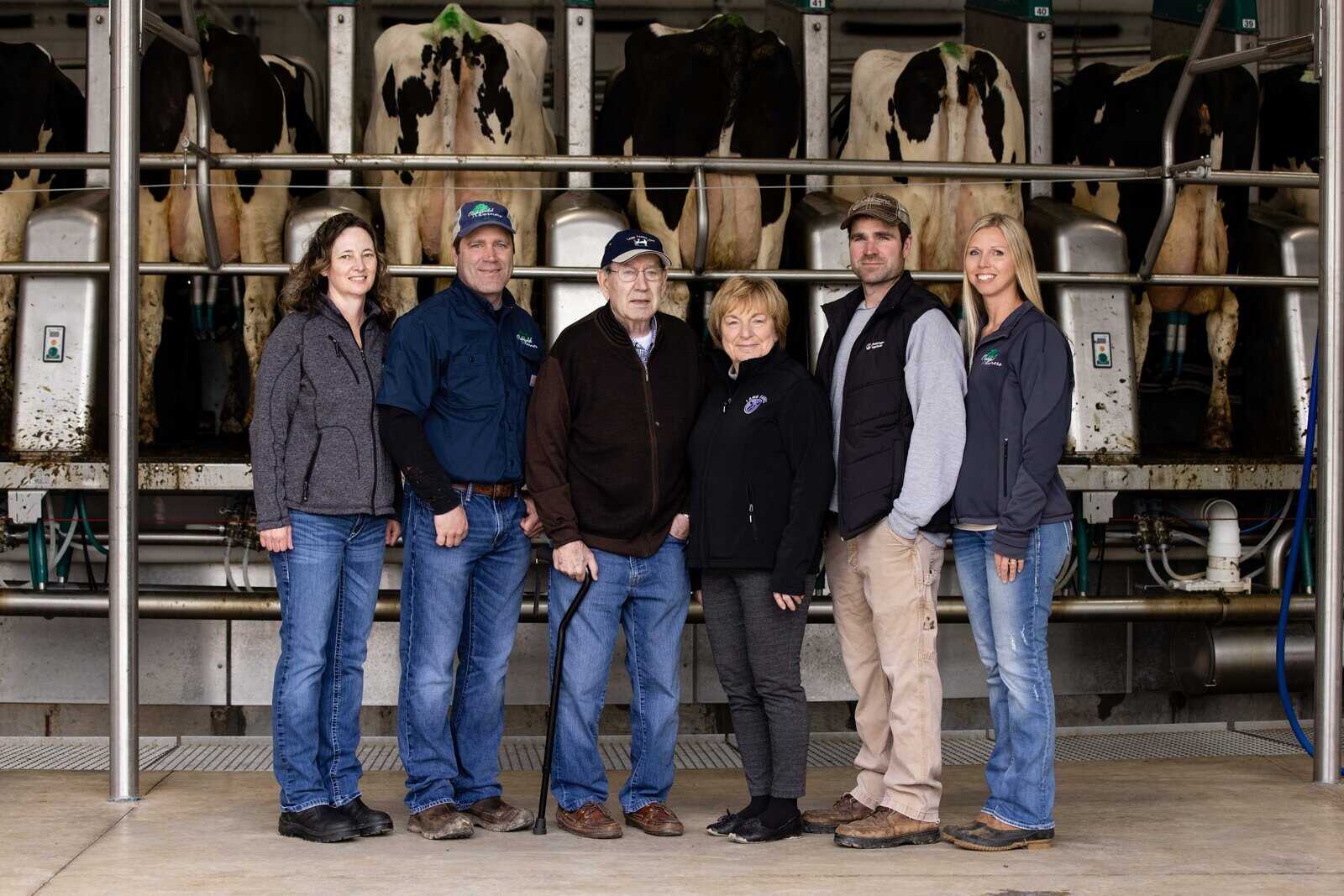
Oakfield Corners is nestled in rural Batavia, which lies halfway between Buffalo and Rochester. It’s a farm full of happy cows who lounge in the smart barn, where there’s nary a moo to be heard. Alicia Lamb and her husband Jonathan, who is a 12th-generation farmer, helm the operation; her role is primarily in the genetics program.
Year after year, Oakfield Corners has earned awards for its high-quality milk—including a Platinum award at the 2022 National Dairy Quality Awards. “We’re really proud of the milk we produce,” Lamb says. “We emphasize low somatic cell count and low bacteria, so it’s the best quality.” Coupled with the farm’s strong genetics program—one that Lamb says is uncommon—the result is buttery, protein-packed milk. “We’ve noticed with our cheese production that our yields are higher than the standard,” she adds.
Making cheese was a means of diversification, and Lamb knew she didn’t want to make another farmstead cheddar. She wanted to create something unique, so she started doing her homework. “It kept coming up from local markets: ‘People are asking for Mexican cheeses, and we don’t have any authentic Mexican cheeses,’” she says. After hearing that, Lamb polled another group closer to home: Oakfield Corners’ Hispanic workers, who make up roughly 60 percent of its workforce. “We asked the guys we work with and they were like, ‘We can get it, but it’s not good.’” Those fresh Mexican-style cheeses were traveling across state lines from Texas, Wisconsin, or as far as California, Lamb learned.
Further research revealed that nearly 20 percent of New York’s population is Hispanic—and that number is growing; it’s the US’ second largest demographic group. The course was set. Not only was there a market for Mexican-style cheeses, but a loud-and-clear want and need.

Trial and Error
Securing an authentic recipe for a Mexican-style cheese was the next step, and it was important for that cheese to taste authentic, too. Lamb had an eager arsenal of volunteer testers who could guide her, and she had a name: Oakfield Artisanal. But what Lamb needed was another pair of hands to get the cheesemaking in motion.
Molly Moffett, an intern on the farm, was set to return to her native Ohio when Lamb extended her a full-time offer. Moffett grew up on a dairy farm, but her cheesemaking experience consisted of one mozzarella class that she took with her mom for fun.
“I had no idea what it took to make cheese,” Moffett says. “I didn’t realize the craftsmanship it takes, the skill, the knowledge … I obviously love cheese, but I never thought about the process it takes to [make it].”
In short, Moffett needed training. Who better to consult than Cornell University’s Food Processing and Development Lab, just a two-hour drive away? Moffett diligently shadowed cheesemakers at the university, then she was ready to try her hand at a Mexican-style recipe. “I wanted to make sure I was being respectful and portraying someone else’s culture in a manner they would like,” she says.
“The funny thing is, [Cornell] has a beautiful testing lab, but they didn’t have the knowledge of Mexican-style cheeses,” Lamb says. “They’re great with cheddars, yogurts, ice creams, everything else. But they didn’t have that knowledge. It took a lot of trial and error just to get a product.”
Moffett’s first attempt at queso fresco came from a generic acid-based recipe Cornell found online. The resulting cheese had strong lime notes and a mushy texture—as opposed to traditional queso fresco’s mild flavor and crumbly consistency. It was not well-received by Oakfield’s workers.
After six more months of trial and error, her efforts paid off. Encouraged by Cornell staff to enter a grant competition held by the Northeast Dairy Business Innovation Center, Lamb and Moffett wrote a proposal with a business plan. Oakfield Artisanal was chosen as a 2023 finalist, given $20,000 for competition-related expenses, and paired with a mentor who encouraged them to take a culture-based approach to queso fresco.
Oakfield Artisanal then went on to win the grand prize: $55,000 to scale the business. With these funds, the duo fine-tuned their make process, something Moffett continues to do to this day. “My queso fresco still doesn’t look like what’s in stores, but I’m handmaking it,” she says.
Making queso fresco was in the bag, but not the grocery bag—yet. Moffett knew she wanted to approach supermarkets with two products in hand, so she shifted her focus to queso Chihuahua, which is better for melting. Her concerns shifted, too. “[I] was afraid it wasn’t going to melt,” Moffett says. Her initial wheels did melt, just not very well, but the flavor was on point. “It had that sharp pungency,” she says. A couple more tweaks and Moffett knew it was time to call Lilia Cormone.

Collaboration
Cormone, an avid home chef, helps Moffett in the make room. “I love the food [here], but [I miss the food] from my country,” Cormone says. A Michoacán, Mexico, native, Cormone was well-equipped to determine the authenticity of Moffett’s queso Chihuahua. “I want to make sure the cheese is the best quality,” she says.
Moffett was eager to get her feedback, too. “I said, ‘Here, please take this, try it, share it with your family and friends—you know, make different dishes, fry it,” Moffett says. “Anything you can do with it, do it.’” And Cormone did exactly that. When she texted Moffett photos of fried sticks of queso Chihuahua, Moffett knew it was ready to sell.
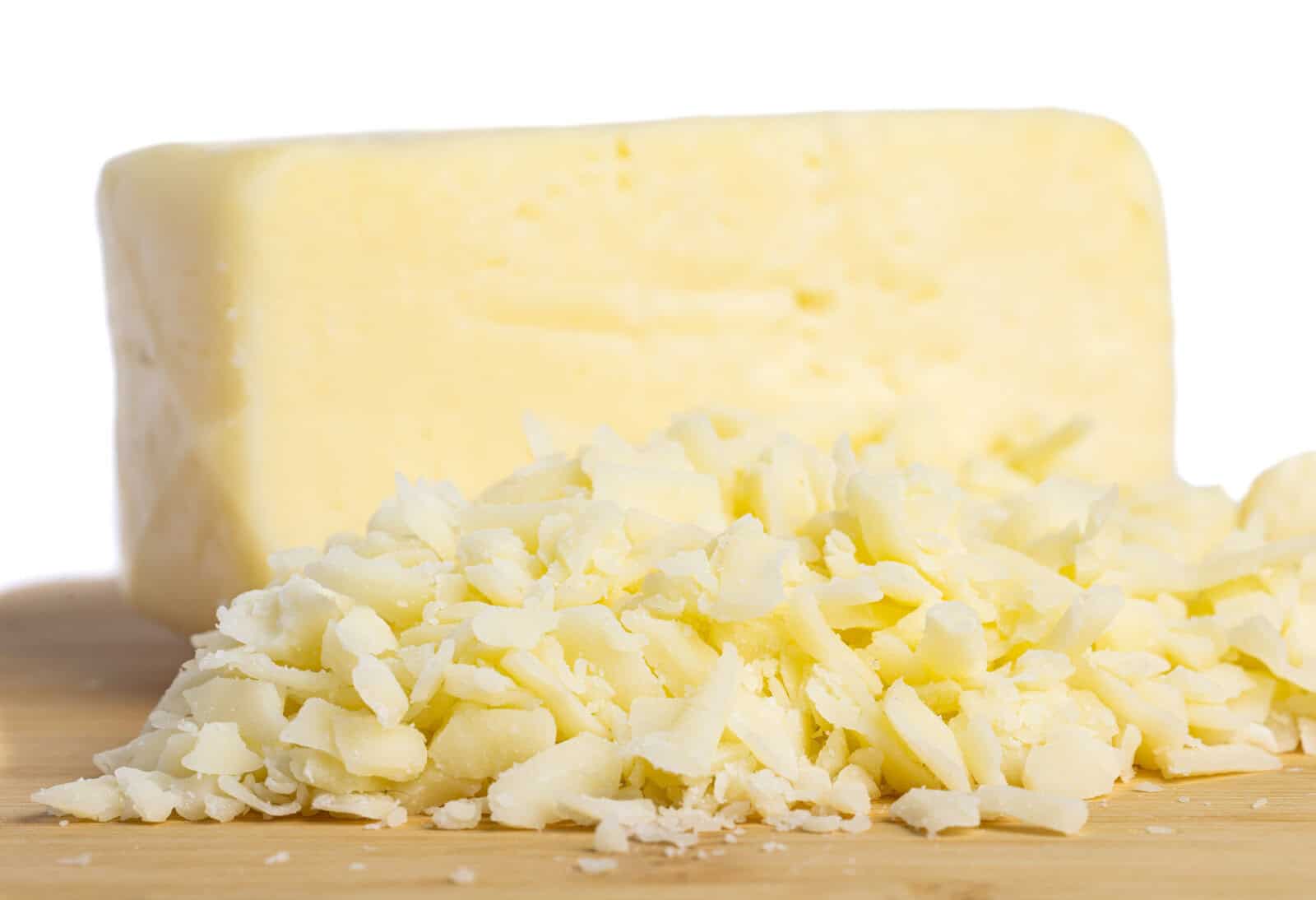
Following the success of queso Chihuahua, the team tried making queso Oaxaca. Moffett stumbled across the string cheese as she and Emily Harbison, a technical specialist at Dairy Connection, were emailing back and forth about Mexican cheese. When Moffett proposed queso Oaxaca to the workers, they confirmed their interest but warned they were picky about queso Oaxaca. Commercial versions are too salty or the texture is wrong.
Moffett quickly discovered that queso Oaxaca was difficult to replicate. “This has been the hardest cheese,” she says. In initial attempts, she went through 150 gallons of milk only to get 10 pounds of cheese that wasn’t all that stretchy. But a lightbulb went off at the 2024 American Cheese Society (ACS) Conference. Moffett approached Dairy Connection’s booth to ask how mozzarella was made. The answer? With really hot water. Suddenly, Moffett was on the right track. Lamb ordered extra hot plates and everything stretched into place.
On queso Oaxaca make days, Moffett taps Cormone to do the stretching. “She does a beautiful job, she’s definitely the best at [it],” Moffett says. Cormone often cooks with queso Oaxaca, but queso fresco is her favorite. “With this cheese, you can do a lot in the kitchen,” she says. Cormone has made empanadas, quesadillas, and chile rellenos with the Oakfield Artisanal lineup. When Cormone prepares meals for her family, they compliment the cheese and say how fresh it tastes.
The ACS seems to agree. At the 2024 conference, Oakfield’s queso Chihuahua placed Third for Hispanic-style melting cheeses. At the 2025 conference, queso Oaxaca won First for fresh Hispanic-style cheeses. “The next day, I came to the farm and I shared [the news] with the team,” Moffett says. “I was like, ‘Look guys, we did that.’”
Community & Cultural Exchange
Oakfield Artisanal cheeses are showing up in grocers and restaurants across Western New York, quickly garnering a foodie fan base. “Our breakfast burrito, chilaquiles, and taquitos are all elevated with the addition of Oakfield’s amazing lineup,” says Keith Myers, chef-owner of Rochester bakery Flour City Bread Company. “We even sell little snack bags in our grab-and-go cooler—unless the staff eats them all first.”
Oakfield Artisanal’s farm shop has garnered its own audience via word of mouth; Lamb estimates that well over half of its customers are Hispanic. Her staff are fans, crumbling queso fresco atop tacos and bringing queso Chihuahua and queso Oaxaca home to cook with. Cormone says it’s because these cheeses meet the cultural needs of her community. “I think it’s so wonderful. It’s bringing part of Mexico here,” she says. “They can taste a little bit of the flavor of [my home country].”
“I didn’t realize the challenges they have in securing foods that are culturally relevant,” Lamb says. “But until you really understand how they cook their foods or what they’re eating, it’s like, yeah, there’s a difference.”
In the make room, Moffett teaches Cormone about cheesemaking while Cormone teaches Moffett Spanish. Their cultural exchange is underscored by female empowerment—only women make and sell Oakfield’s cheeses.
Moffett also serves as secretary for the New York State Cheese Council, but she feels imposter syndrome now and again. When it creeps in, she looks at the medals her cheeses have won. “I have to remind myself, ‘You’re doing this not just for you, but for others. Even not coming from the culture, you’re still honoring it,’” she says. “If I can just be a listening ear to those who are in it, that’s my biggest reminder why I got into [cheesemaking] and the purpose for it.”

Alana Pedalino
Alana Pedalino serves as Managing Editor of culture. Her work has been featured in Bon Appétit, Chicken Soup for the Soul, and more. She loves to write, cook, and kayak. Find her bylines at alanapedalino.com.