
For one sixth-generation dairy farmer, building a future means honoring the past while finding new ways to keep the business alive.
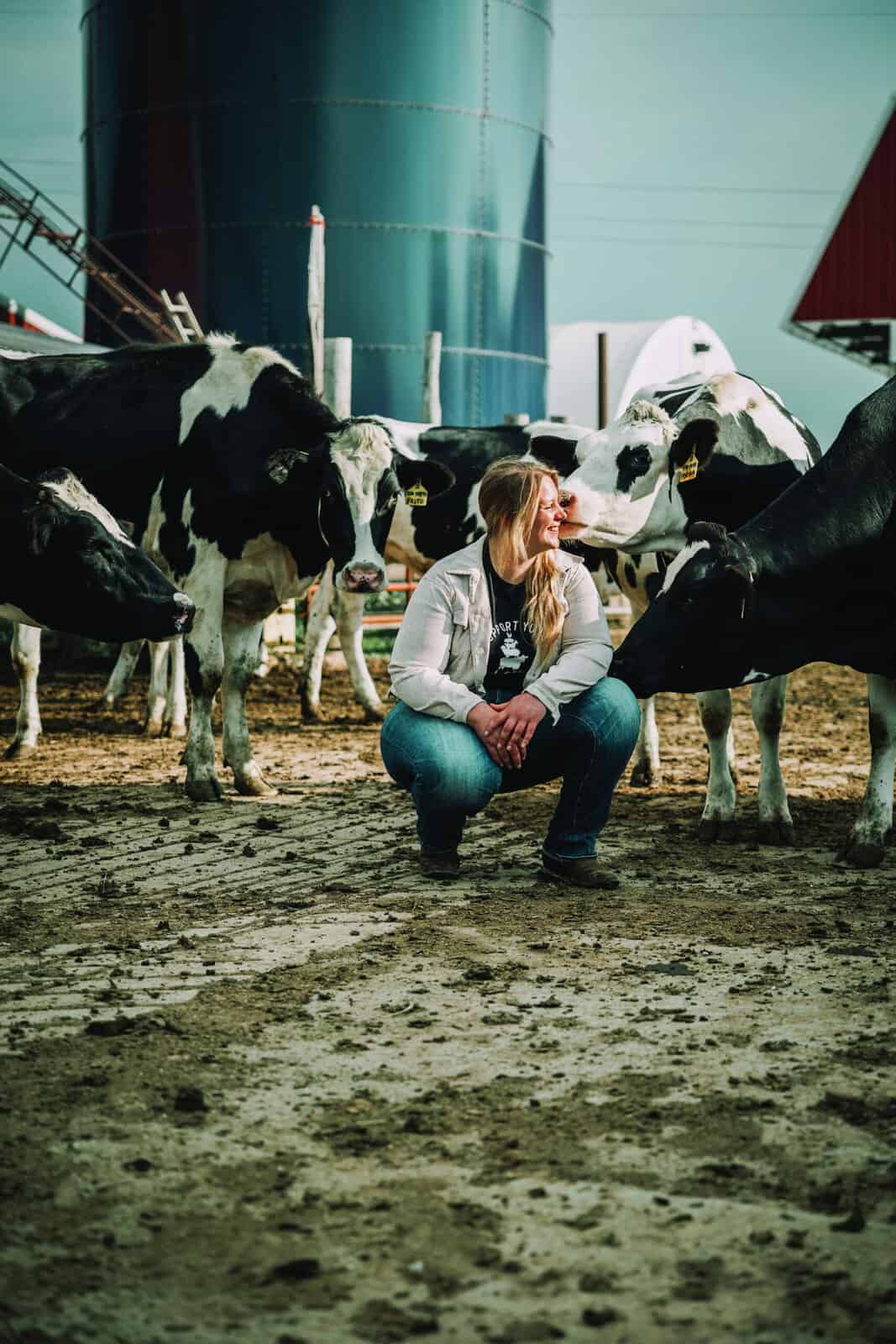
Photographed by Baili Young.
Through the front window of our 120-year-old farmhouse, I look out and see what the five generations before me have built: a red barn, a white fence, and cows grazing on soil that has been cared for by my ancestors for 155 years. I also see my own contributions—two small buildings (one a commercial kitchen and the other a self-service cheese shop) that will hopefully allow me to continue calling this place home.
Over the years, dairy farming evolved from milking by hand into a bucket to the pipeline and an automated system, and eventually to milking robots. Our farm falls somewhere between those latter two extremes. Our milking units gauge time, temperature, and volume of milk and conductivity for each cow. They utilize an automatic takeoff when her milk flow slows, so she isn’t overmilked and never overworked. Regardless of the equipment, technology, or farm size, every farmer I know is committed to taking the best care of their animals. The more comfortable the cow, the higher quality the milk, and the higher the premium.
But that premium is also the biggest problem. The demand for affordable food puts us in a chokehold. Our input costs have increased year after year. The rising costs of equipment, land, feed, and living affects us, too. Farmers may choose to grow their herd and take on more operating costs, find ways to decrease expenses, or try to increase milk production. Or, as a growing number of dairies the size of my family’s farm have done, find innovative ways to expand. Farm tours, calf cuddling, farm stands, a meal delivery service, on-farm artisan production, adding a trucking or concrete business—farmers are truly trying it all. This is not to get rich. It’s often to make ends meet. I’ve only been a full-time farmer for 8 years, but I’ve seen prices lower than they were half a century ago.
I don’t write any of this for pity. I don’t want readers to think “Oh, those poor farmers” because, for me at least, this is something I actively choose to do. I begged my family to let me come home, connect with these incredible bovines, and do work that grounds and guides me. My cheese education, along with my cheese board and micro cheese shop business, has allowed me to supplement my farm income while telling the stories behind the cheeses I bring in and the farming story that shaped my own.
But when you talk about cheese, don’t just mention the animals, their feed, and the makers. Remember the farmers, too.
Christine Leonard
Christine Leonard is a sixth-generation dairy farmer on her family’s 150-year-old farm near Waconia, Minnesota. Their farm is also home to her cheese business, The Grater Good. While Leonard doesn’t make her own cheese (yet!), she does work with artisan producers in Minnesota and throughout the Midwest to create cheese platters, teach cheese education classes, and sell wedges at her micro cheese shop. She loves using cheese to tell the story of local agriculture.