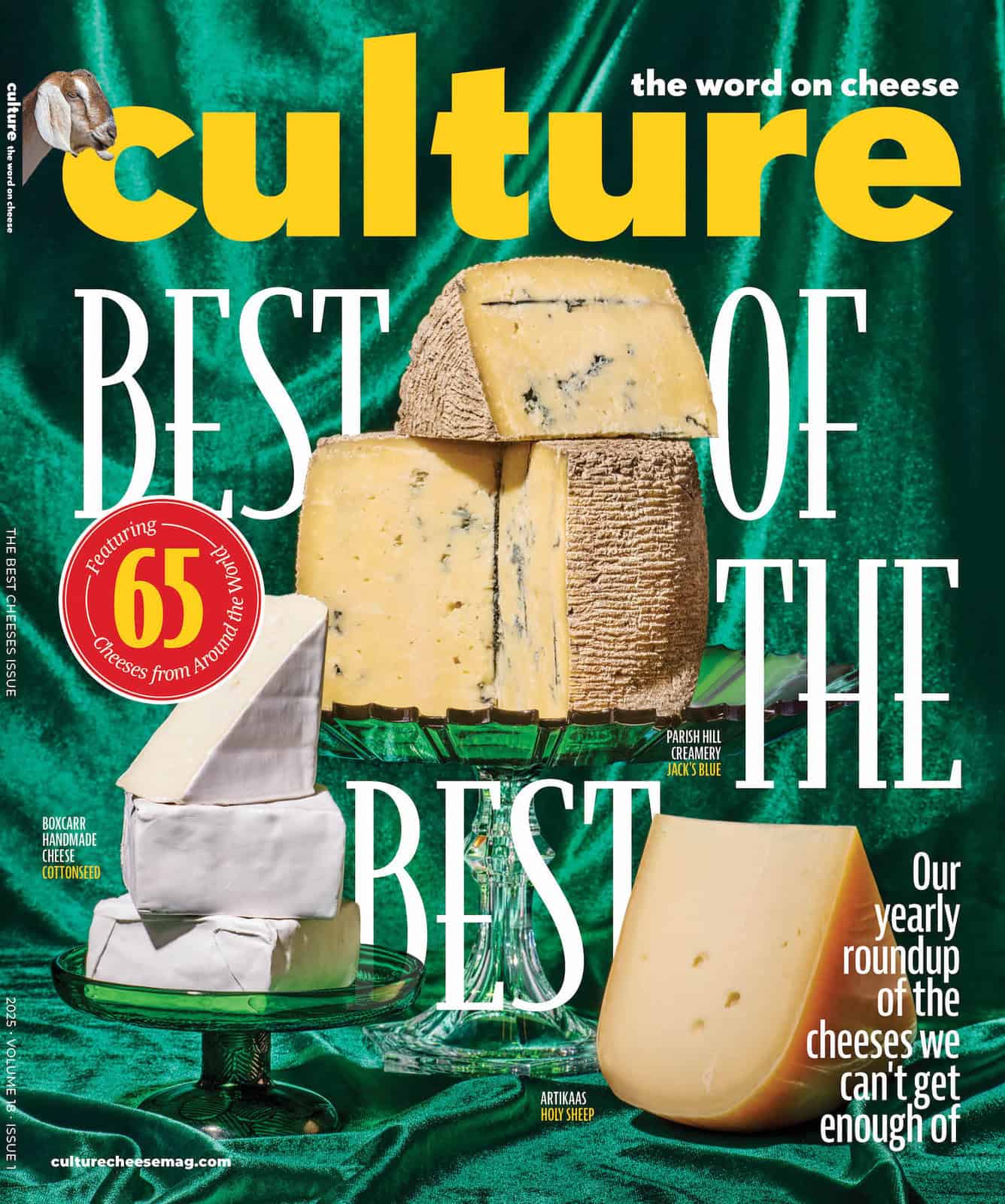

The host of Cheese: Searching for a Taste of Place shares why cheese is worthy of the quest.
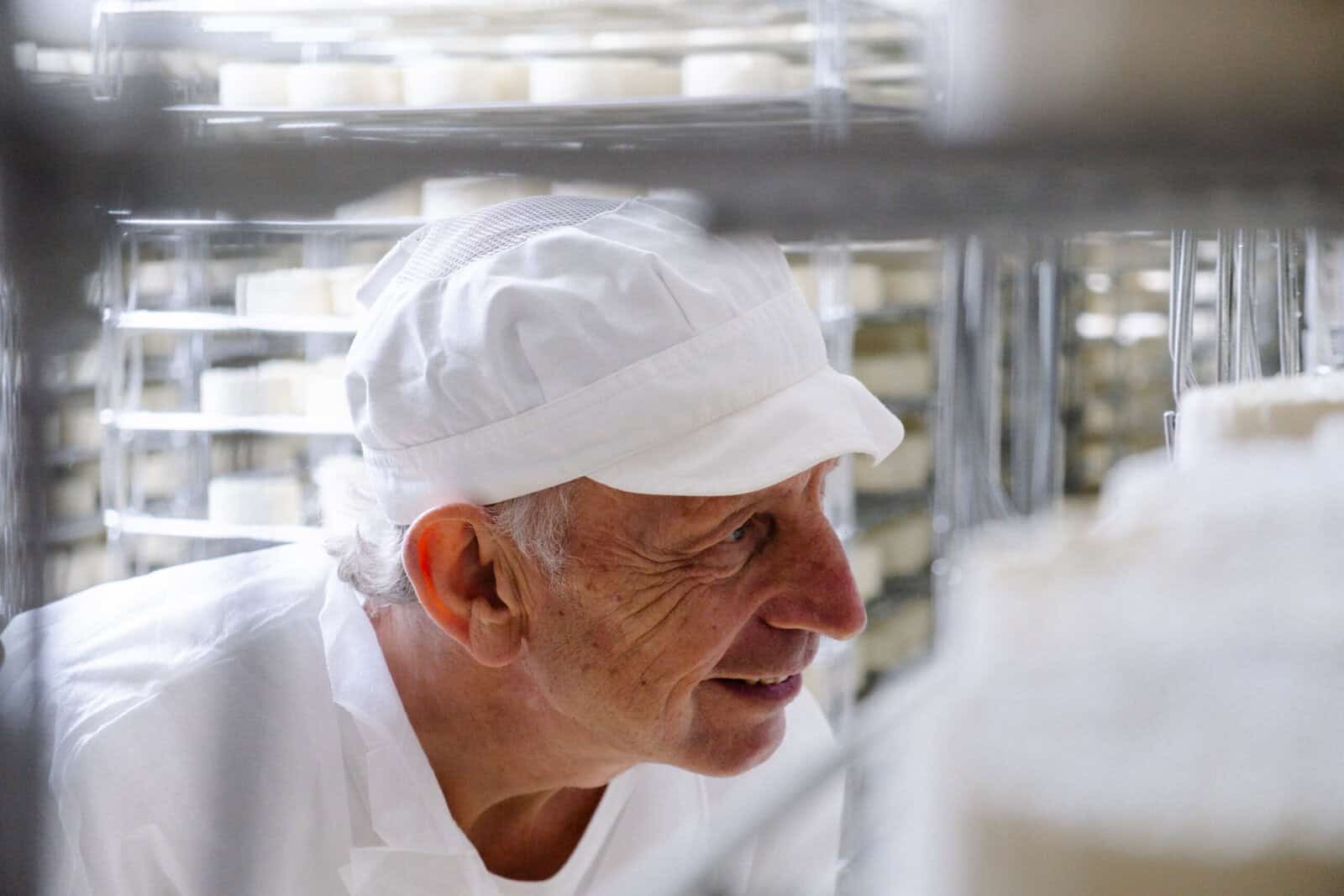
Aussie cheese legend Will Studd browses aging wheels of cheese in Burgundy, France, in his documentary series “Cheese: Searching for a Taste of Place.” Photograph courtesy of Will Studd.
For more than 25 years, Will Studd has been asking questions about cheese that extend far beyond how it tastes. Where does it come from? What traditions shaped it? What happens when those traditions collide with regulation, industrialization, consolidation, and changing consumer expectations? What is lost when cheese becomes disconnected from the place it’s from and people that made it?
Those questions are at the heart of Cheese: Searching for a Taste of Place, Studd’s latest documentary series and what he describes as a “legacy project” after decades spent traveling the world as a cheese educator, affineur, author, and filmmaker. The series moves between historic European cheesemaking regions and the evolving American artisan cheese landscape, exploring everything from raw milk and terroir to succession, scale, and the challenge of preserving character as demand grows.
We spoke with Studd about what “taste of place” means after a lifetime spent pursuing it, the cheesemakers and conversations that stayed with him, and why he still believes artisan cheese—and the people stubborn enough to make it—has a future worth fighting for.
Culture Media (CM): You describe the series as a search for “taste of place.” After traveling across so many cheesemaking regions, what does that phrase mean to you today, and has your definition changed?
Will Studd (WS): I strongly believe that only cheese made from raw milk can claim to reflect a pure and authentic taste of place. Cheese made from unpasteurized milk represents the ultimate expression of the craft of cheesemaking, and offers interesting flavor, diversity, and respect for integrity.
I also acknowledge that there are many delicious and interesting artisan cheeses made from pasteurized milk that have credible connections to place of origin.
In Cheese: Searching for a Taste of Place, I cover stories on both raw milk and pasteurized cheese and leave it to the viewer to make a call on a definition of “taste of place.”
CM: Was there a particular moment during filming that surprised you or challenged a long-held assumption about cheese?
WS: Filming cheese always offers intriguing surprises. For example, I never knew that cow’s breath could be used as an indicator of milk quality until I filmed with Andy Hatch in Wisconsin. Delphine Carles changed my assumption that May was the best month to produce Roquefort—try January. I didn’t know until we filmed in Cyprus that the type of milk and size of Halloumi was once strictly regional on the island, and in Greece I discovered Galotyri, a delicious ancient shepherd’s cheese which is perhaps the world’s oldest surviving spreadable cheese.
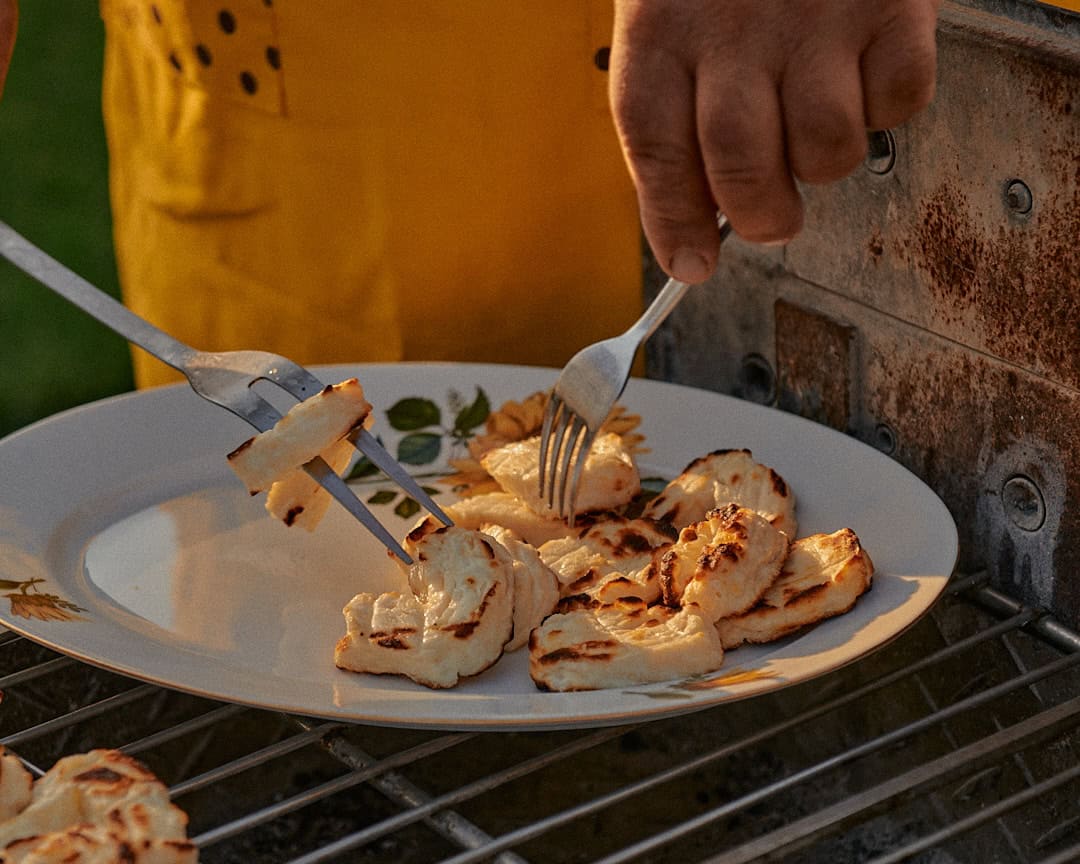
A close-up of authentic Cypriot Halloumi. Photograph courtesy of Will Studd.
CM: Documentaries often ask viewers to slow down and pay attention. What do you hope people notice about cheese after watching the series that they may have overlooked before?
WS: Every episode has a theme, and we have tried to layer them with interesting yet diverse stories and unusual information. For example, while filming the story on the renaissance of Camembert Fernier in Normandy, we looked at the history of Marie Harel and how her statue was rebuilt with American dairy donations after the head was blown off in World War II. I think curious viewers, and cheese lovers, will be intrigued by the information long after they have watched the show.
CM: The US episode celebrates American cheesemakers, but what do you think distinguishes the American artisan cheese movement today from where it was 20 or 30 years ago?
WS: Over the past 25 years, I have filmed hours of footage with US cheesemakers. Looking back to those early days while making this documentary, it is amazing to see the changes. Artisan cheese is no longer just the dream of a few alternative counterculture dreamers. Consumer demand for cheese with distinctive flavors, texture and aromas has encouraged a revolution in artisan cheese. There is now a US cheese culture, and it’s no surprise that American artisan cheese is considered world-class, and now winning notable international awards.
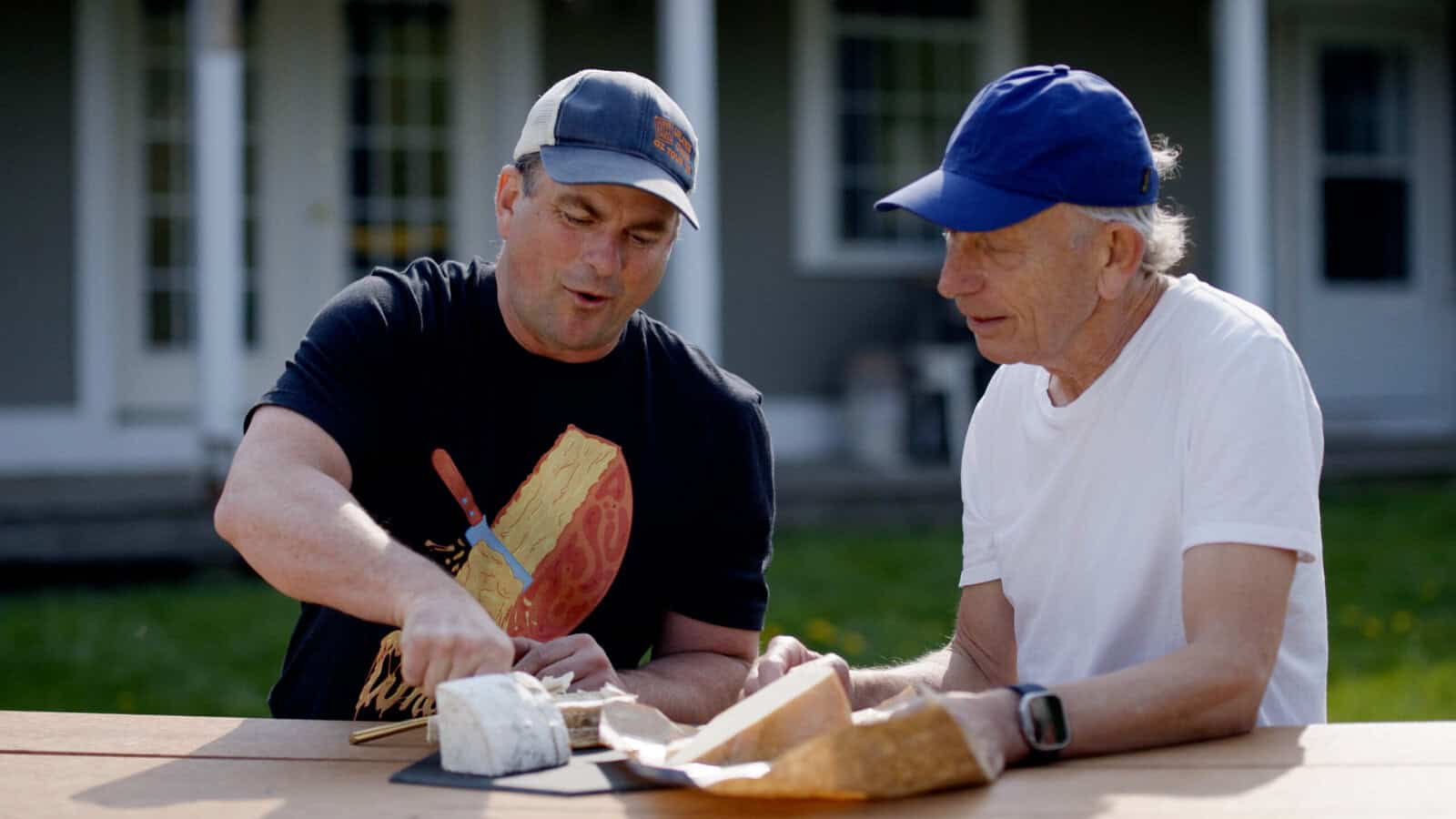
Mateo Kehler of Jasper Hill Farm shares his cheese with Will Studd for an outdoor picnic in Vermont. Photograph courtesy of Will Studd.
CM: Did filming in the US change your perspective on American cheese in any way? If so, how?
WS: America has had a huge influence on industrial cheesemaking for more than a century, and the resurgence of interest in artisan cheese is very encouraging. There is now confidence in a sustainable future. The new, state-of-the-art dairy facilities on the farm at Jasper Hill and Mateo Kehler’s explanation on how the team is ensuring interesting flavor using time-honored traditional techniques was inspiring. On a smaller scale, it was a similar story with Andy Hatch, who has substantially increased production at Uplands without compromise to quality or integrity. We also filmed interviews with Dr. Catherine Donnelly, Ed Behr, and Cathy Strange, and looked at the struggles US artisan cheesemakers have faced, challenging the status quo with their compelling drive for change.
CM: Is there a common thread you noticed among the American producers you featured, regardless of the size of their operation or the style of cheese they make?
WS: The most common thread was the challenge of success–how to grow without losing the fundamental character and diverse flavors of the original cheese. Increasing consumer demand, higher finance and operating costs, regulation, changes to counter service, and creeping corporate consolidation offers were also raised. The dilemma on succession is not unique to artisan cheesemakers in the US; the series explores similar challenges facing small, family-owned dairies in France.
CM: You’ve spent decades helping people understand cheese. Why do you think film can communicate something about cheese that books, magazines, or television segments can’t?
WS: Film is about audience reach and numbers. I wrote a couple of cheese books before deciding to try my hand at producing a documentary series on cheese. Little did I know then that Cheese Slices would end up filming in 22 countries, or that the 62 episodes would stream around the world 25 years later. In comparison, the print run for the books was 20,000 copies, and they are out of print. If you want to make a difference, film wins!
Cheese: Searching for a Taste of Place is distributed by Banijay, and is or will be available to stream online in many countries around the world.
CM: Cheese is inherently sensory, yet film can’t convey aroma or flavor. How do you tell the story of taste without the audience tasting alongside you?
WS: One of the great joys of sharing a truly exceptional cheese is that its character speaks for itself. Get it right and there is that special moment when a cheese cracks a smile of pleasure, and eyes light up and sparkle with shared appreciation. Of course that is very hard to convey on film, but we can take the viewer on a beautiful visual journey and tell the story behind the origin of a cheese in pictures to get them emotionally hooked on the idea, as well as explain what to look out for in terms of flavor.
CM: Did making this documentary change the way you think about your role—not just as an affineur or educator, but as a storyteller?
WS: This documentary series was produced by Stuart Goodman, an award-winning documentarian. Stuart spent considerable time researching and cross-checking my original concept and added depth. We had many long discussions about what should and should not be included, and I learned a great deal about storytelling from the process. Stuart is passionate about production details and a perfectionist, he even persuaded me to commission a Mozart piano concerto for the soundtrack.
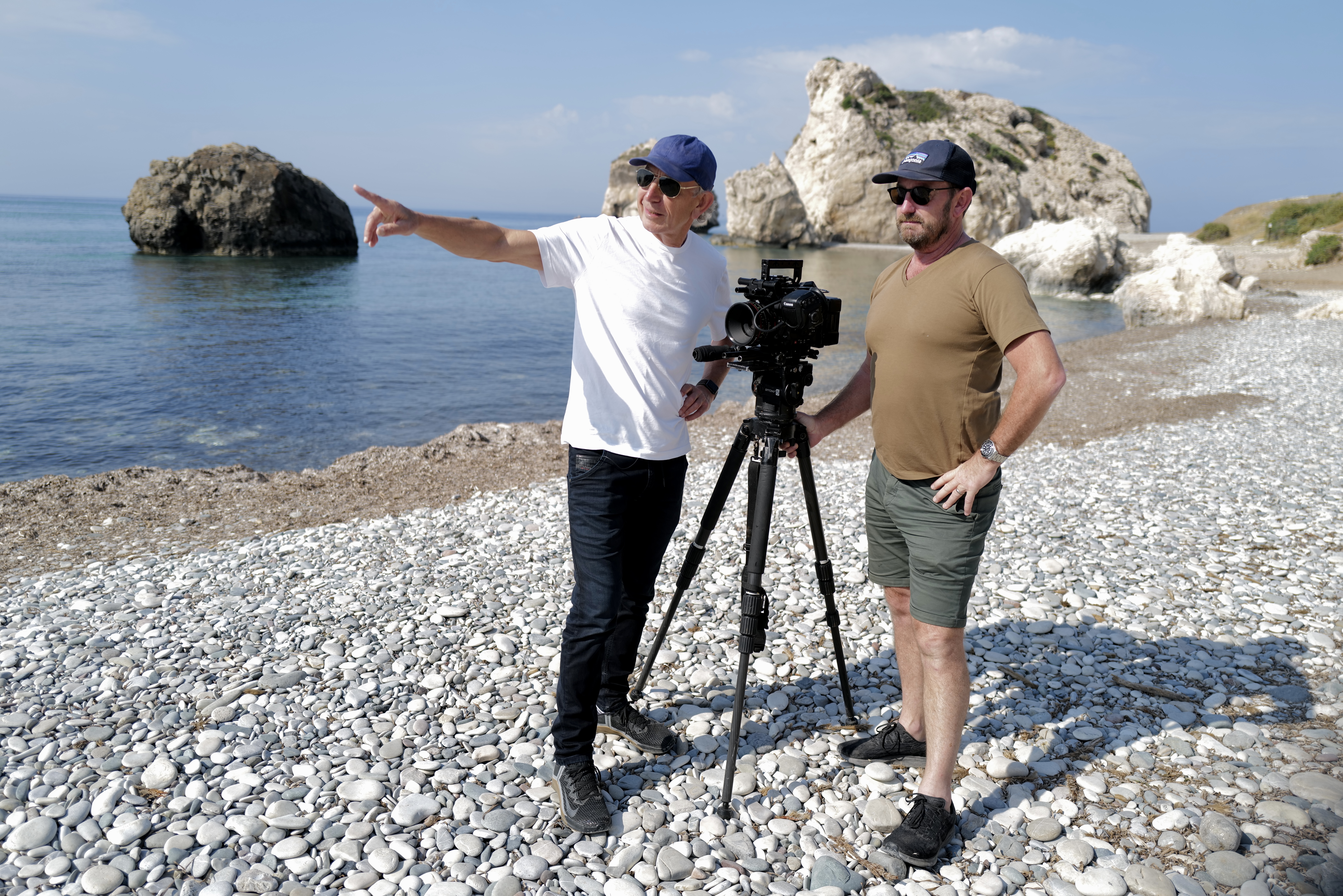
A scene from filming in Cyprus. Photograph courtesy of Will Studd.
CM: Of the cheesemakers you interviewed, are there qualities that the most memorable ones share?
WS: The artisan cheese movement is built on close relationships and shared goals. It probably sounds like hype, but it is not just about business, but an obsession: a cause to support and believe in with like-minded people. Creating diverse, game-changing cheese with a taste of place is important to those involved. I have been incredibly fortunate to interview some brilliant cheesemakers, and their dedication, skill, patience, and intuition is truly extraordinary. Trying to capture what motivates them on film is utterly fascinating.
CM: Many of the producers in the film are stewards of traditions that stretch back generations. Do today’s cheesemakers have a responsibility to preserve those traditions while still innovating?
WS: There is no doubt that respecting tradition and protecting time-honored cheesemaking techniques from extinction is important. But change is not always harmful. Cheese has always evolved in response to circumstance. Although traditional cheesemaking has faced its greatest threats over the past 50 years, the artisan cheese revival has ironically been created by consumers fed up with the growth of predictable bland industrial cheese. Artisan cheesemakers have adapted traditional techniques to innovate exciting new cheese with a point of difference.
CM: Were there any conversations with cheesemakers that stayed with you long after filming wrapped?
WS: There were many memorable conversations, but perhaps the most touching was with David Gremmels, creator of award-winning Rogue River Blue. I was with David when he launched the cheese with Neal’s Yard Dairy in London almost 20 years ago with the help of Cathy Strange. We filmed in the car park outside the creamery on the day the large French group, Savencia, took ownership of the Rogue business because he was locked out. It was difficult to see David letting go of his dream, and only time will tell how the takeover will shape his legacy.
CM: We often talk about terroir, but do you think “taste of place” is as much about people and culture as it is geography?
WS: The concept of terroir begins with good quality raw milk from healthy animals in a strictly defined region. A complex and intricate web of factors, including people and culture, influence the type and character of the cheese. There is a fascinating comparison in the series between Salers Tradition and Kirkham’s Lancashire that underlines how important geography, people, and culture are to terroir. I also raise questions on the future implications of clean raw milk devoid of microbes for raw milk cheese, and the growing influence of modern industrial starters.
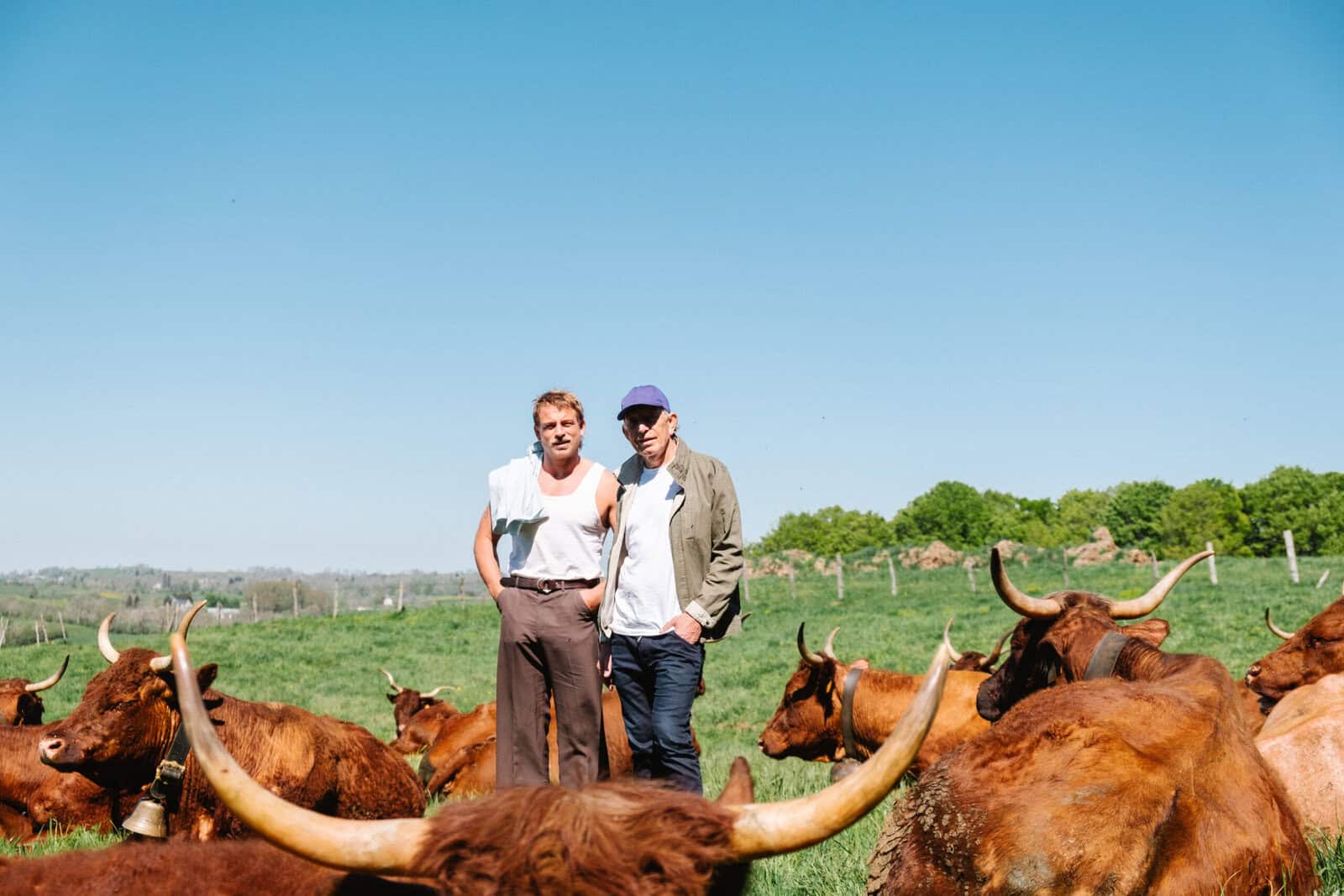
Sam Studd, a cheese professional and the son of Will, and his father observe a herd of Salers cattle. Photograph courtesy of Will Studd.
CM: If someone watches the documentary without knowing much about cheese, what do you hope they take away beyond a desire to eat more of it?
WS: There is a growing consumer awareness of what we eat, how it is made and where it comes from. There is no point in making exceptional artisan cheese if consumers don’t understand what is available and why it is different. I hope in making this documentary series that it will help viewers understand the diverse choice of artisan cheeses available and raise questions about what they choose to eat.
CM: What gives you the most optimism about the future of artisan cheese?
WS: There is a great future for artisan cheese as long as makers continue to produce tastier, more interesting cheese with a point of difference. Of course there will always be challenges, but you only have to look at France–where there are now more dedicated cheese shops than McDonald’s–to believe in the power of consumer choice.
CM: If this documentary is ultimately about “taste of place,” what place still feels unfinished in your own journey?
WS: This series is a legacy project to explain why artisan cheese has value and deserves a rightful place on the table. It took many false starts and more than three years to complete, and was entirely self-funded. It would be great to make another, but if it turns out to be the last, that is OK. I have achieved what I set out to do, and it’s been an incredibly fun ride getting there.
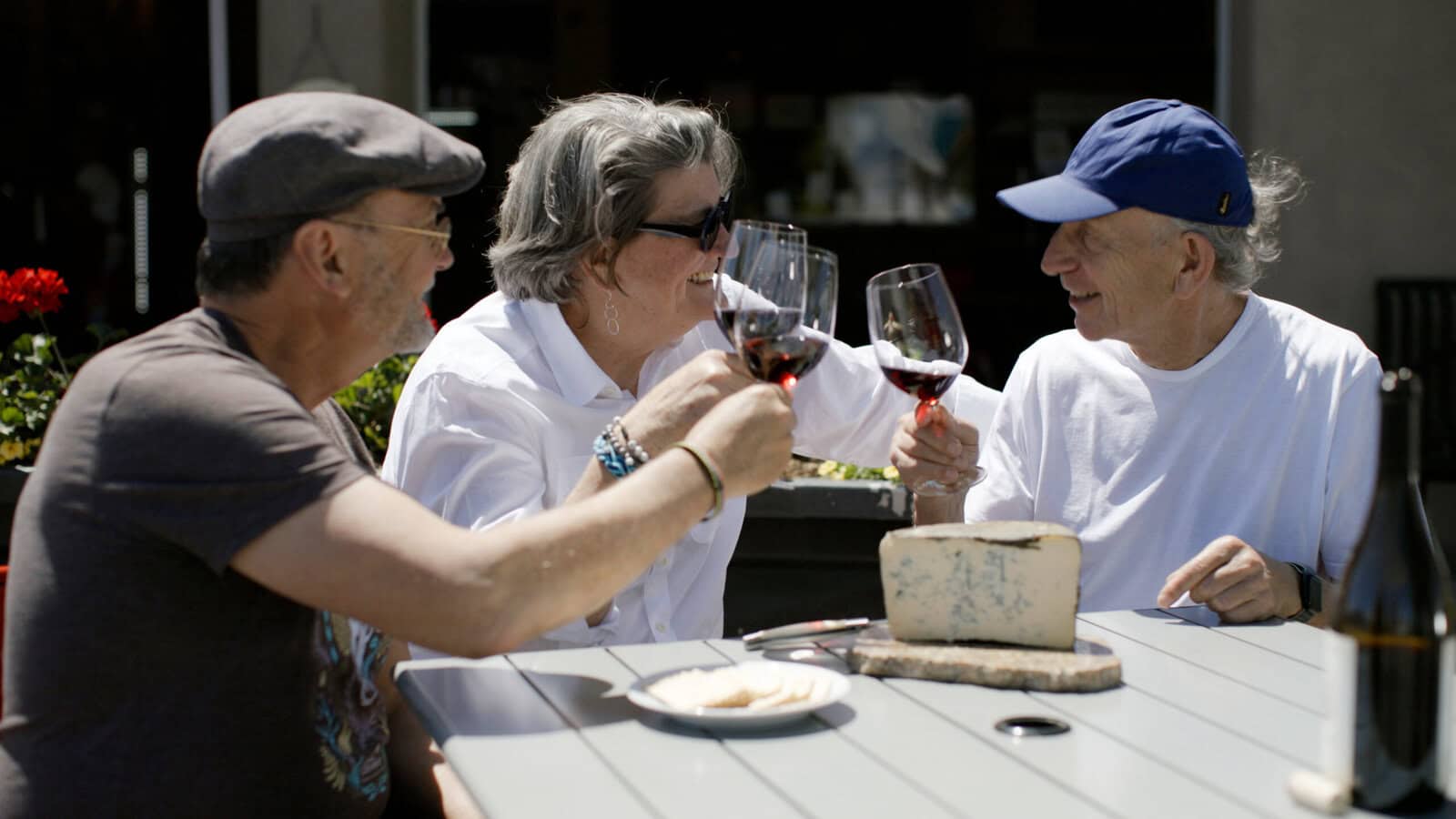
David Gremmels, the former president of Rogue Creamery, Cathy Strange of Whole Foods, and Will Studd share a toast in Oregon. Photograph courtesy of Will Studd.
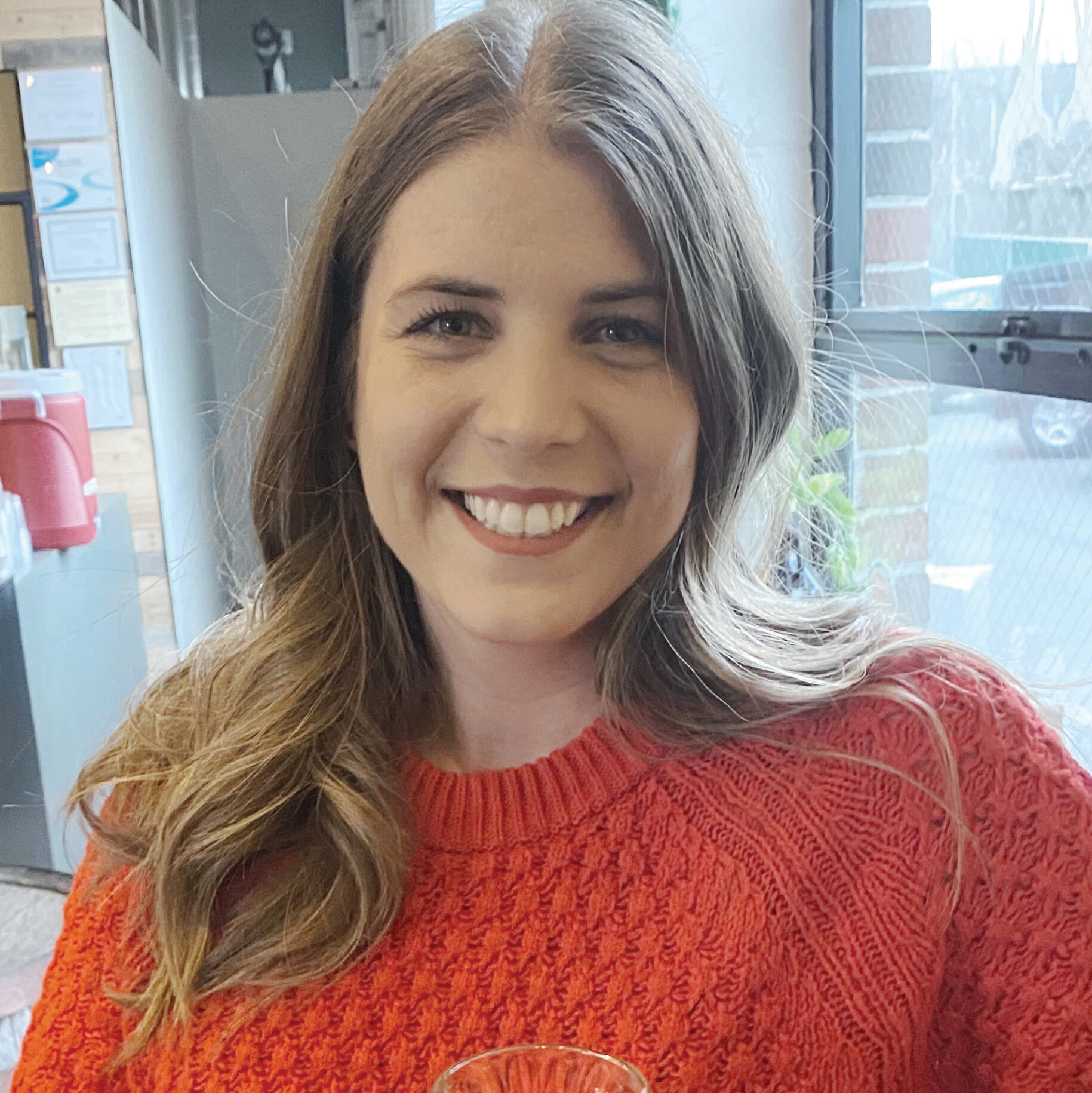
Mallory Scyphers
Mallory Scyphers is culture's Executive Content Director and has been with the company since 2018. She lives on Mobile Bay with her husband, two young daughters, one rambunctious golden retriever, and two loyal cats. Her favorite cheeses are alpine styles and mineral-y blues.