
Kat Craddock reflects on restaurant life, independent publishing, and cultivating a “Swiss Army knife mentality.”
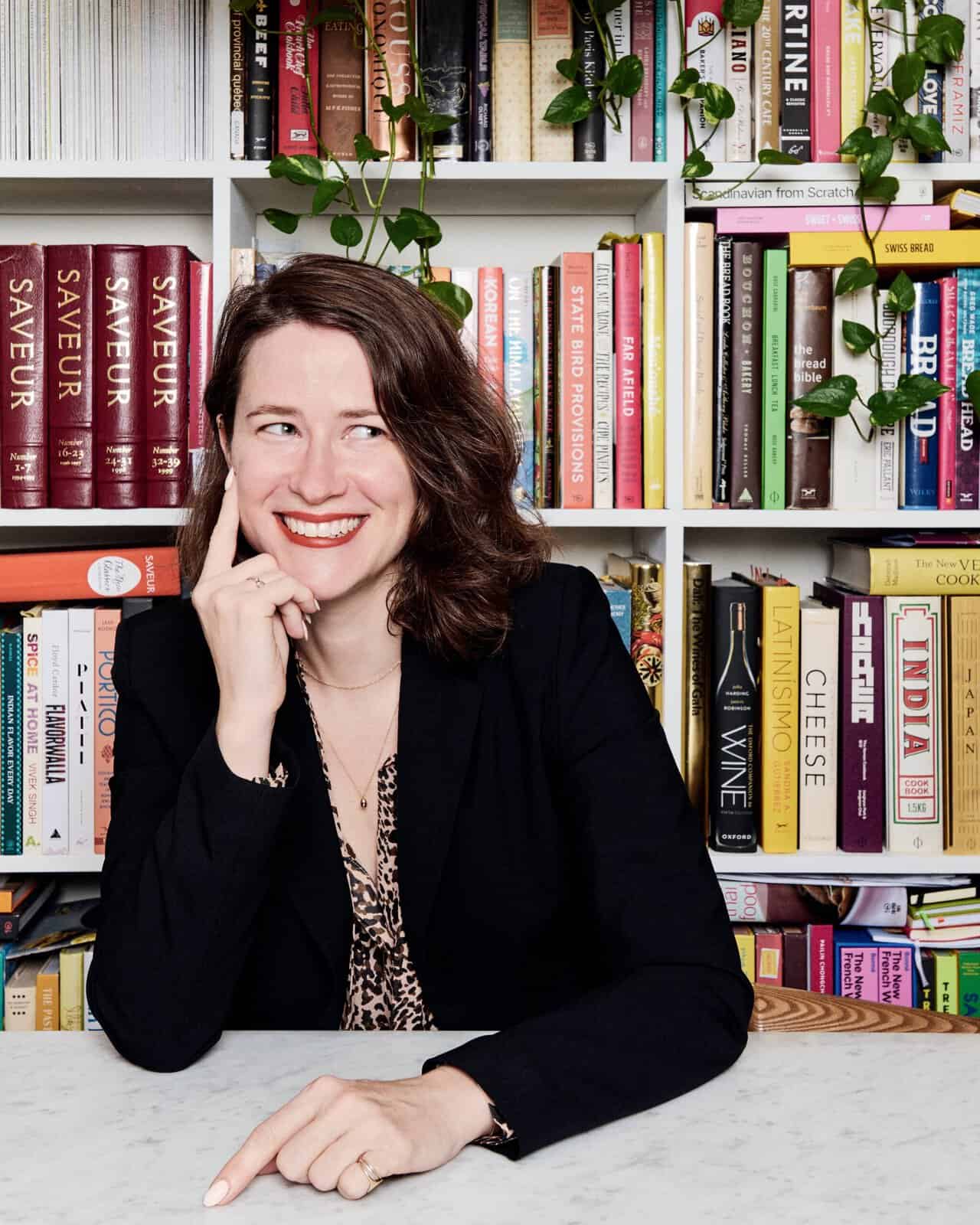
There’s a certain kind of confidence that comes from knowing a system inside and out, then choosing to remake it on your own terms. After slinging cheese behind a counter in Massachusetts, working her way through professional kitchens in New York, and climbing the editorial ranks at SAVEUR, Kat Craddock now owns the magazine she grew up reading—reshaping it as an independent, print-forward, multi-platform brand in a media landscape that’s constantly shifting. In some ways, SAVEUR exists to push back against the fast-paced world of TikTok and doomscrolling, and Craddock’s mission is to maintain the brand’s legacy of immersive storytelling via food and travel while tightrope walking through the digital noise.
We caught up with Craddock to talk shop about publishing, restaurant life, and how following curiosity (with thick skin) can lead you further than any carefully mapped-out career path.
culture (CM): Before we get into everything you’re doing now—I’m always curious about origin stories. Was there a food moment that shifted things for you or has it always been a big part of your life?
Kat Craddock (KC): I can’t really pinpoint one. Food has always been a major part of my life. I’m an only child, and food was really important to my parents and me. Whenever we went on vacation or out to eat, it was always part of the conversation—where are we going, what are we eating after that? Food is how we show love for one another, and its how I’ve shown love to the people around me my whole life.
One of my earliest food memories is eating chocolate mousse out of a chocolate cup on some family trip. It blew my mind that that was possible. As a little girl, a surprising presentation was always really exciting to me. That sense of novelty was always driving my curiosity.
CM: That idea of curiosity really comes through in your career—you didn’t follow a straight line into publishing. You were in kitchens, behind counters, and in the world of food first. How did that shape the way you tell stories now?
KC: My first food job was scooping ice cream at Ben & Jerry’s in Providence, and then in college I worked as a cheesemonger. There’s so much storytelling in cheese—I may have learned more about writing while working as a cheesemonger than I did when I was getting my English degree.
My understanding of how to convey a sense of place through food really solidified at that time. And the level of customer service that the job instilled in me became a core transferable skill that I’ve used in every stage of my career.
I didn’t have a plan to end up in publishing. I just kept working in food in the places that seemed right for me. Following that path of curiosity has served me well so far.
CM: At what point did you start to feel like you might want something beyond restaurant life?
KC: I went to culinary school after college in part because I didn’t have another plan. And then I worked in restaurants for around five years in pastry and five years in bread. I did stay in the cheese world tangentially during that time too, curating the cheese programs at some of the restaurants where I worked.
At my 10-year college reunion, when I had been in professional kitchens for about a decade, I started thinking, is this what I want to be doing at the next one? And the next one after that?
I knew I wasn’t looking to open my own restaurant, so I started thinking back to my English degree and about what else I was good at—how I could combine those things. At that point, while I continued to work in restaurants for a little longer, I started easing into the editorial world as a recipe tester and developer and doing some freelance writing projects.
CM: Restaurant life is such a formative experience for so many people in food. What did you take from that time that you still carry with you?
KC: I was fortunate to work for some very strong and talented women chefs early in my career. Even though I was in the industry before a lot of the reckoning that has happened in recent years, that good leadership shielded me from much of the poor treatment that others in the business experienced. I’m so thankful for that.
I do have a thick skin, though, and I thrived in the intensity of the environment.
I think being able to take feedback, even when it’s not positive, and learn from it—that’s been a really useful skill, especially when it comes to being edited and editing.
CM: You grew up reading SAVEUR. When did publishing start to feel like a real possibility for you—not just something you loved, but something you could actually do?
KC: My mom subscribed to the magazine in the ’90s when I was a teenager, and I read it whenever it came in. There were always food magazines around the house when I was growing up.
But at that time, I never imagined I would end up working in the magazine business. After college, I wanted to live somewhere outside of the Northeast, so I went to culinary school in Chicago and worked there for a while. Eventually, I moved to New York City where I got a job as the overnight bread baker at Per Se. While that was the right location for a pivot into media—a lot of the publishing industry is based in New York—there was still really only one clear path into working in magazines at that time (interning for free), which was not something I was in a position to do.
CM: So how did you actually get in the door at SAVEUR?
KC: I started doing cold outreach—LinkedIn, email, wherever I could find a contact for someone in publishing—asking if I could come and help out. I got through to Amanda Hesser at Food52, and she kindly put me in touch with Adam Sachs, who was then the editor-in-chief at SAVEUR.
He had me come in for a chat with him and Farideh Sadeghin, who was running the test kitchen. I told him I was still working five days a week at a bakery and asked if I could come in on my days off and help out with anything.
They said yes. So on those days, I tested recipes, helped out at events, did dishes, assisted on photo shoots—in kind of a culinary production assistant–editorial assistant flex role.
That was also a really strange time in the industry. Every year the company—maybe all of publishing—was downsizing. It was a scary time to arrive at what otherwise felt like a dream job. But I knew I could always go back to restaurants, so I just dug into it.
Gradually, I weaned myself off the bakery work and ended up full-time at SAVEUR—taking on more writing, editing, food styling support, even helping the ad sales team when I could. I learned very quickly about a lot of different parts of the business.
CM: And then over time, you didn’t just grow within the brand—you ended up owning it, which still feels kind of unbelievable.
KC: It’s funny you say that because after I took over the brand, an old friend I had worked with early on texted me and asked if I remembered the time she had asked me what my dream job was, and I told her I wanted to own SAVEUR one day. I absolutely did not remember that.
But anyhow, after a series of leadership changes, we were eventually sold to a tech company that invested in improving our website, but it also stopped our regular print magazine. Being part of that ownership transition gave me insight into what goes into buying and selling a magazine brand.
Things were going well with that owner for a while, but SAVEUR’s content is especially costly to create—so many resources go into testing and photographing our recipes, and that’s on top of all the original, on-location reporting and photography we’re assigning all around the world. There are ways to make it work, but it’s always been challenging to fit us into business models that work for other brands.
So a few years later, I approached the owners and asked if they would ever consider selling the brand—and if they would consider selling it to me. And they didn’t laugh me out of the room!
They said, “Make us an offer.” So I found some investment support, went back, and continued the conversation. In 2023, we closed on the purchase and broke SAVEUR out as an independent brand.
CM: What did that moment feel like—suddenly being responsible for something with that much history behind it?
KC: It was surreal! And exciting. SAVEUR has always been about food and travel equally, but during and after the pandemic, we became much more focused on home cooking. When we broke off on our own, and when travel became possible again, we were able to lean back into the SAVEUR DNA more fully, with a lot more travel, design, culture, and storytelling.
CM: You also made the decision to bring print back, which may feel counterintuitive to a lot of people right now. What made you confident in that?
KC: People still want print magazines. It’s not the lack of demand that’s the problem, it’s an outdated business model.
While we have this great brand already established, we were able to start from the ground up with our print model. I’m grateful for that because we could set up our own distribution systems and establish direct relationships with retailers and subscribers.
We increased the price of the magazine, but we made it a much longer, thicker, and more premium physical product—something for people to keep and spend time reading through, like a coffee table book.
I like to say we see our print product as the couture expression of our brand. It’s meant to be special and rare, while our digital content gives us the ability to reach a much wider audience and to connect with new readers.
CM: Who are you making that for? Who is the SAVEUR reader now?
KC: We have a lot of subscribers who have been with us for more than 10 years, many going all the way back to the ’90s when SAVEUR began. It’s a very loyal audience. About 20 percent are people in the food and beverage or hospitality industries.
But most importantly, our readers are people who see and experience the world food-first. We do have a relatively affluent audience, but I’d say our content is aspirational rather than exclusionary.
CM: On the editorial side, how do you know when something is a SAVEUR story?
KC: The team often debates how to answer that question. At heart, what we’re always trying to do is convey a sense of place—wherever that place may be. And to do so from that food-first perspective. We’ll tell stories about Michelin-star restaurants, but we also publish stories about home cooking and hot dog vendors.
We use an internal questionnaire in our weekly pitch meetings: What is this idea actually about? Why are you interested? Has it been covered before? Have we covered it before? Why do we want to tell this story now?
I know it’s really hard out there for freelance writers, and we try to give each pitch as much consideration as possible. But we’re also a very small team and with a limited amount of budget and space; sometimes we have to turn down a great idea because we’ve recently assigned something similar. It’s the ones that get away that keep me up at night.
CM: If you had to distill it, what really matters most to you in food storytelling?
KC: Finding the human angle.
It’s only going to get easier to make up a story or generate a recipe out of thin air. But AI will never be able to truly replicate the human experience.
That’s what’s special about this brand and the kind of content we create—our food stories aren’t purely instructional. We’re using cuisine as a lens through which to see and understand the world around us.
CM: That feels like a natural segue—what’s your stance on AI in publishing right now?
KC: We don’t publish AI-generated content—written or visual. I’m uneasy about the false sense of security AI creates around editorial tasks that folks outside of our business see as easy automations—like fact-checking and copy editing. That’s not to say we never use AI as a tool, like we’d use any other tool. As a small business owner, I find it useful on the back end—with administrative tasks, parsing data, some basic brainstorming. But creatively, what we do is rooted in human experience; it’s important to me that we protect that.
CM: You’re running the editorial side, the business side—you own it. How do you manage all of that at once?
KC: Hopefully sufficiently.
My role is increasingly common, which is exciting. There’s a growing network of independent brands and publisher-owners out there, and we’re all kind of figuring things out together. It’s hard sometimes, but having that community support is energizing.
SAVEUR is still in startup mode. We’re 32 years old, but we’ve never been independent before. So, as we’re growing and scaling and setting up new systems every day, this is my life.
CM: When you think about the future—of SAVEUR, of media in general—what feels exciting to you right now?
KC: I’d like to keep growing our print list. Learning how to be an e-commerce business (on top of a print and digital publication and, increasingly, an event business) has been daunting!
At the rate tech and media are evolving, it’s hard to say exactly where we’ll be in 10 years. We’ll continue adapting, and we’ll continue telling the types of stories that have drawn people to our brand from the beginning.
We’ll be a print-first publication as long as it makes sense—and it still makes sense! And as new forms of storytelling emerge, it will become clear what we layer on from there.
CM: If someone is standing where you once were—maybe unsure, maybe curious, maybe wanting to build something of their own—what would you tell them?
KC: When I was working in restaurants, we had so many career-change interns come through—former lawyers, former finance people—who seemed to think working in a restaurant would be easier, or that the hours were going to be better. Really?
I love a career pivot and a fresh start and would encourage anyone who feels that pull—and who has the freedom to do so—to take that jump. I’d also remind them to brace for the fact that just because a new path is fun or exciting or rewarding doesn’t mean starting back at the very beginning isn’t going to demand an extraordinary amount of risk and work.
Also, if you want to get into writing or any kind of content creation, don’t wait for permission, just start doing it. Having a portfolio of work—even if it’s just on your personal site or social accounts—makes it a lot easier to talk about what you want to be doing, and to get a foot in the door.
Lastly, I think that cultivating a bit of a Swiss Army knife mentality—an ability to work across a lot of different departments and understand as much as you can about what goes into the finished product—is such an invaluable asset.
Just about every industry is going to continue evolving more and more quickly. The people who are able to adapt—and who stay curious—are the ones who are going to find their place.
Mallory Scyphers
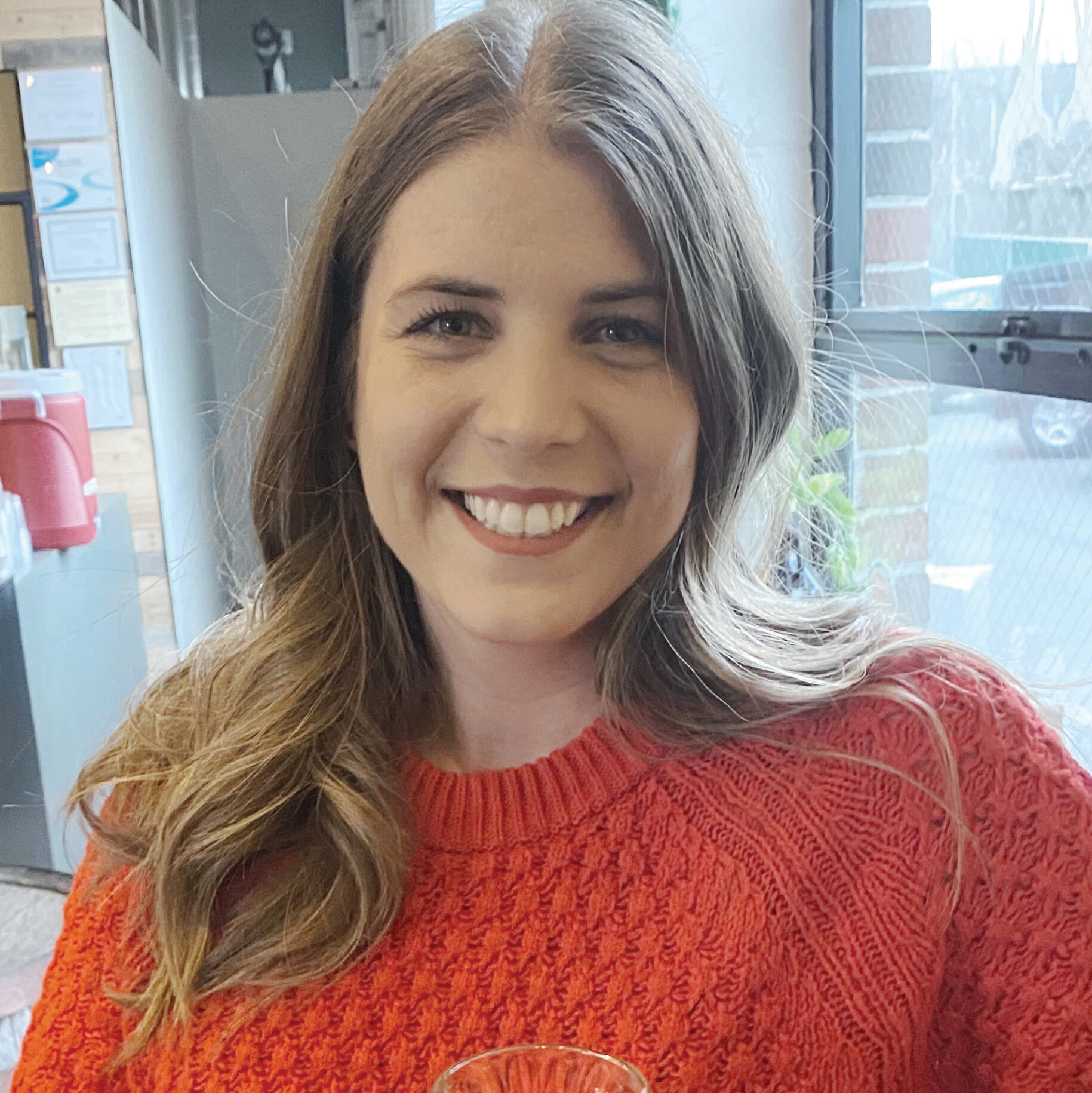
Mallory Scyphers is culture's Executive Content Director and has been with the company since 2018. She lives on Mobile Bay with her husband, two young daughters, one rambunctious golden retriever, and two loyal cats. Her favorite cheeses are alpine styles and mineral-y blues.