
A conversation with three power mongers on their experiences in the competitive cheesemongering ring
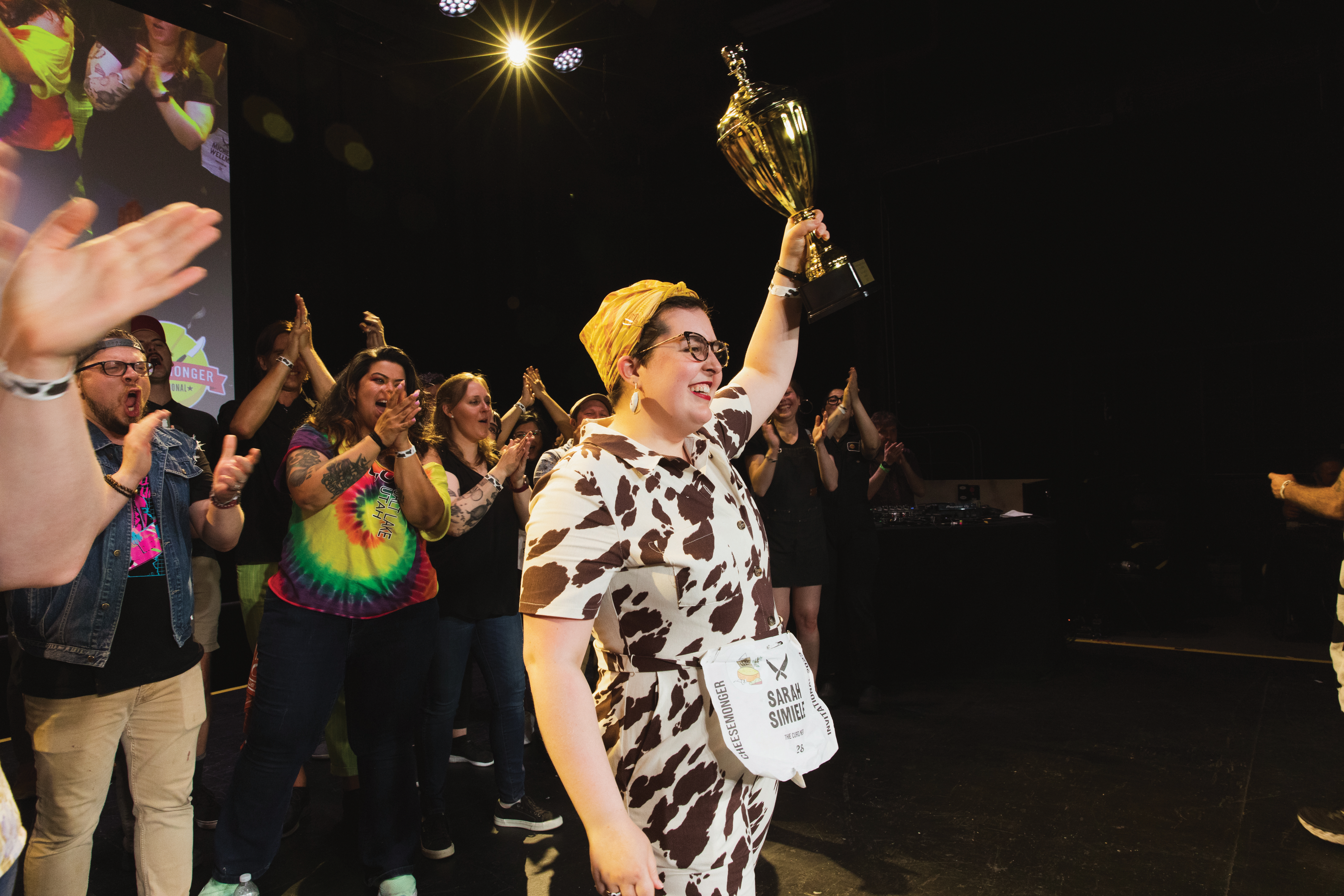
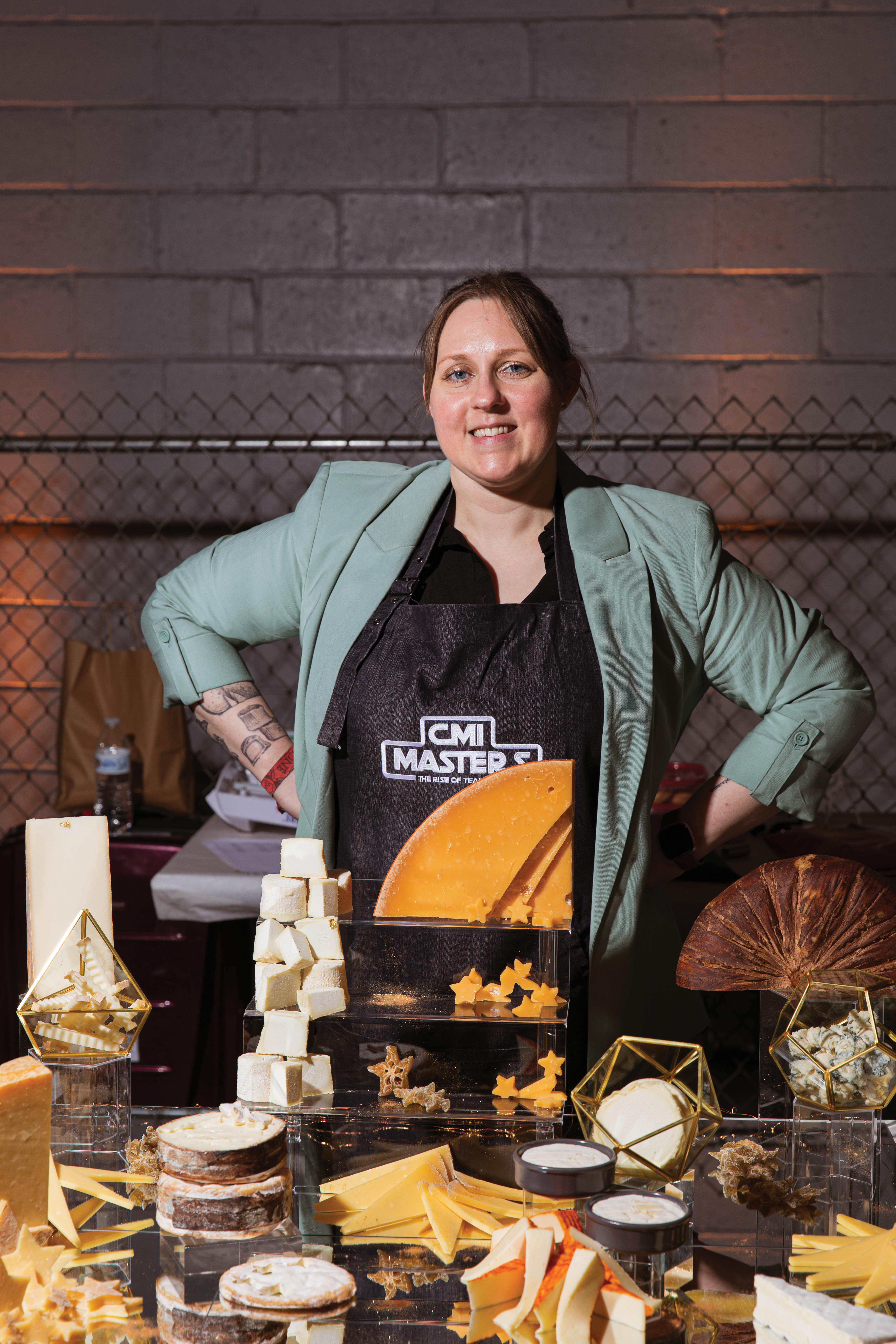
Sarah Simiele, Emilia D’Albero, and Courtney Johnson are competitive cheesemongers. Simiele won the Cheesemonger Invitational (CMI) in 2023. D’Albero won the virtual CMI: Meat Me Online in 2021, placed second at CMI later that year, and placed first at the CMI Masters in 2025, earning her a spot on Team USA alongside Courtney Johnson for the Concours Mondial du Meilleur Fromager in France. D’Albero recently won the title of Best Cheesemonger in the World at the 2025 Concours Mondial du Meilleur Fromager. Johnson placed second at CMI in 2019 and 2022, won CMI Masters in 2023, placed seventh at Concours Mondial du Meilleur Fromager in 2023, placed second at the CMI Masters in 2025, and placed third at Concours Mondial du Meilleur Fromager in 2025.
Learn what it takes to be a competitive cheesemonger in 2025 by reading our interview with America’s most talented mongers today.
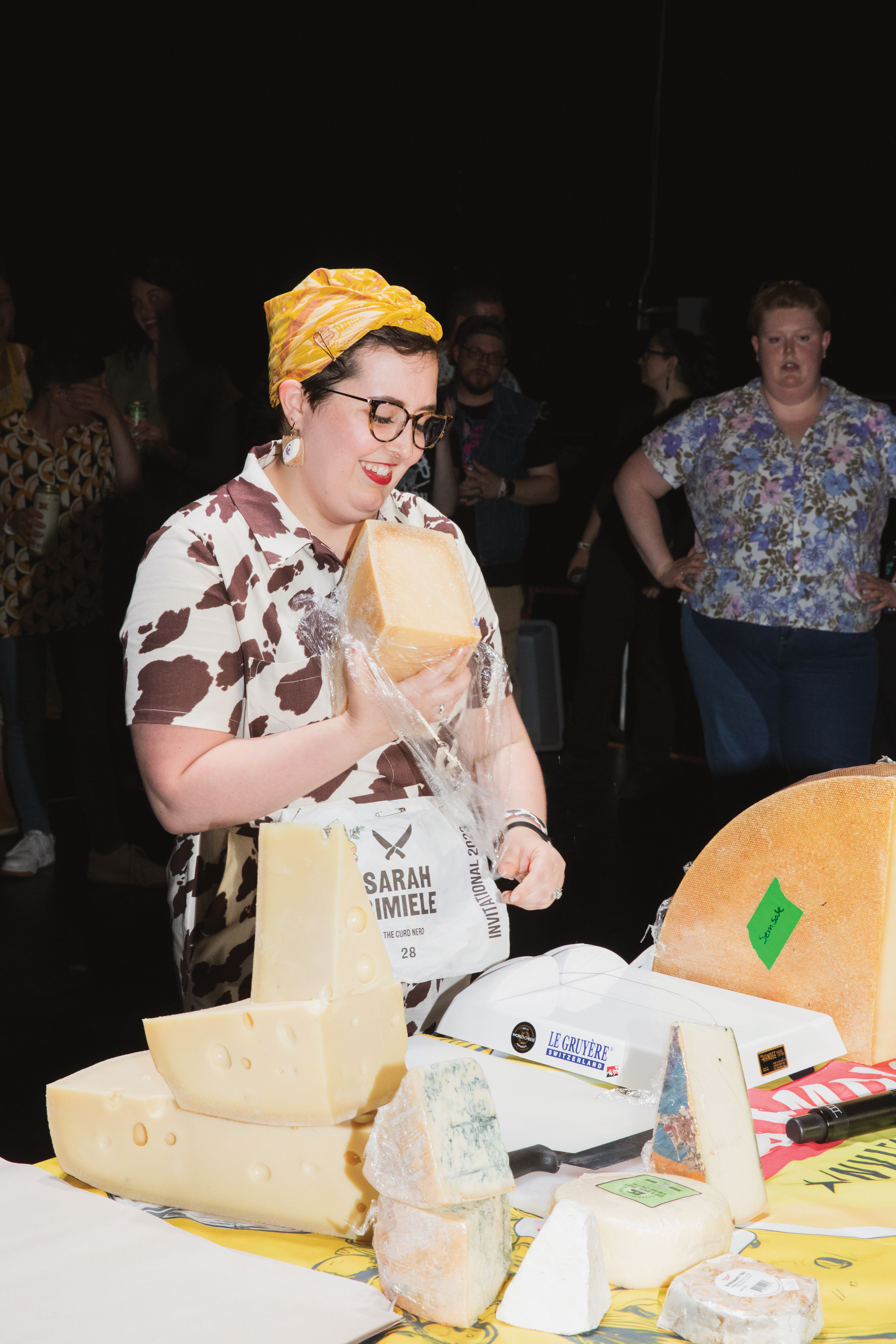
Culture Media (CM): Why did you decide to get into competitive mongering?
Courtney Johnson (CJ): I became a cheesemonger because of competitive cheesemongering. I was talking to my future cheese mentor about what the job entailed, and she told me that you can take a test to get certified, and you can compete in the cheesemonger Olympics. And I was like, OK, let’s do this. I came for the competitions and stayed for the cheese.
Emilia D’Albero (ED): I signed up for my first CMI in 2018 as a baby monger and didn’t do well, but it was fun. I did CMI again in 2021 after becoming the manager of a cheese counter in 2020, and I thought it would be my last CMI; I was planning on getting out of cheese retail after working in a grocery store during COVID.
I really wanted to give my best effort, assuming it would be my last time competing, and I ended up placing second. I agreed to do Masters in 2025 as a fun activity alongside my partner, Tommy [Amorim], who was also competing as the CMI 2021 champion. Long story short, I like a challenge and I have to be working toward achieving something.
Sarah Simiele (SS): I didn’t decide to get into competitive cheesemongering, I just wanted to make friends and meet distributors. I’m also a very competitive person, so it’s something I spent weeks prepping for. But that’s also because I wanted to prove something to myself. And now, I’ll keep doing Masters because they won’t let me do regular CMI anymore.

CM: Would you say it takes a certain personality type to thrive in this space?
SS: I absolutely think there are some mongers who like to compete just for fun, but that doesn’t mean they’re into competitive mongering. It takes someone who wants to compete with themselves more than others, really.
CJ: Totally. The undercurrent of what we’ve all just said is that we’re competitive people. We like to have a project. We are always pushing ourselves and doing something; we have to work toward a goal.
ED: Especially for something like Masters or Mondial, it takes a certain type of person—someone who can shut the rest of the world out, focus, and thrive in the inherent chaos of the environment. You also have to be really good at time management and prioritizing.
CM: How much time does it take to prepare?
ED: Courtney and I started prepping in November for the Masters competition in March. I was dedicating at least two hours a day, and many more on weekends.
CJ: I think I did an hour a day, but there were some weekend days where I did five- to eight-hour blocks.
SS: For Masters, I really started my prep in January because the holidays take over my life as a shop owner. So, I tabled Masters prep until the first week of January because the shop is closed then. That’s when I started deciding what my whole layout would look like. I started doing trials of my bite and plate that week.
I spent all of January dialing in, and then all of February practicing. Plus, we started our study group in January! The overall answer is a lot of time—more time than you think.
ED: Having that time is a privilege. I’ve always attributed my doing well at Masters to having free time and extra money. If I didn’t have those two things because of my flexible schedule and good job, I wouldn’t have done as well.
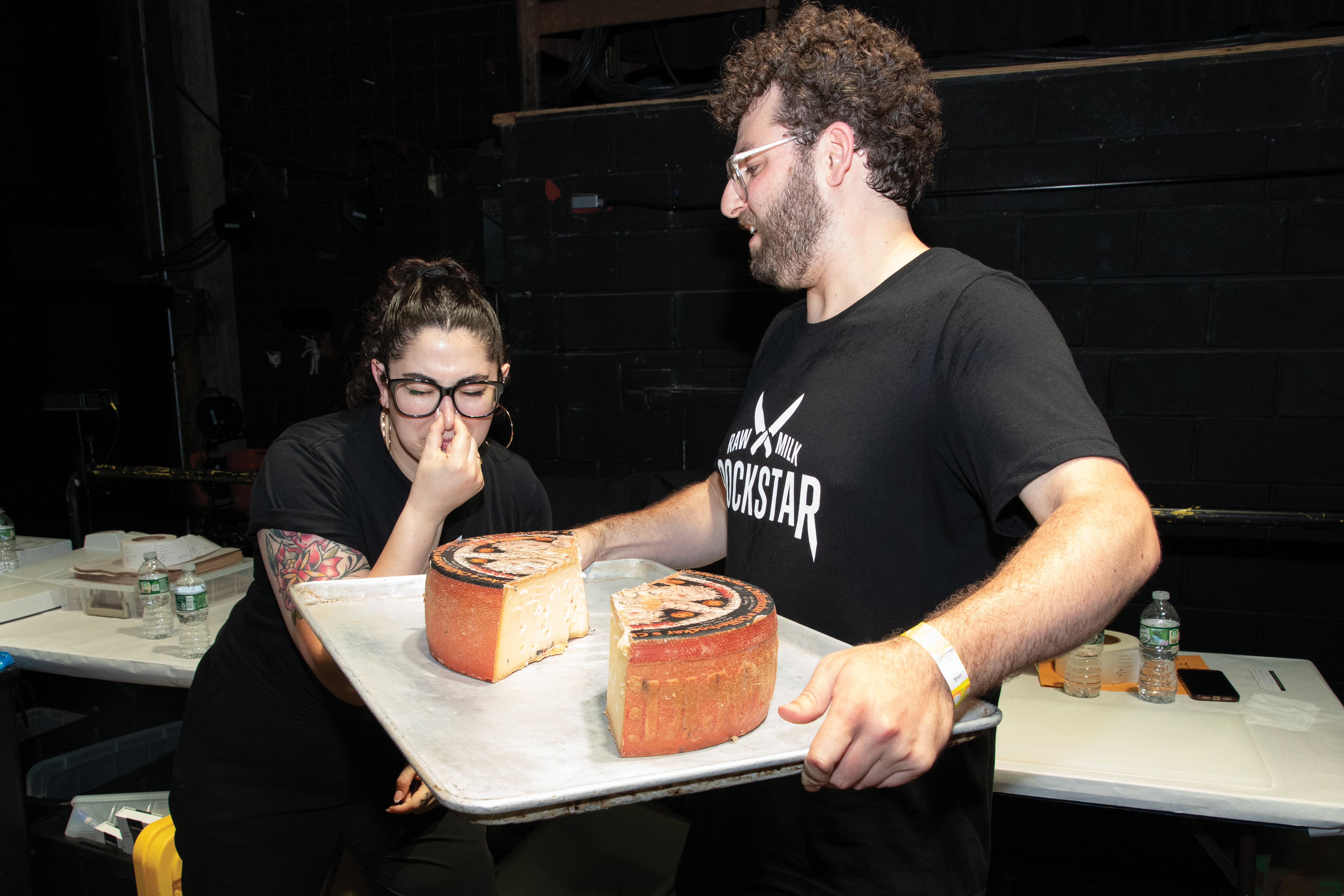
CM: Is there more cost involved in these competitions than the general public is aware of?
SS: I forget who it was who told me this story about the first time they competed in CMI: They didn’t have enough money to buy two bottles of wine they thought would be the perfect pairing for the cheese they were assigned, so they had to buy one bottle and hope it was a good pairing.
It’s prohibitive to taste around, you know what I mean? Sure, they could have come up with a different pairing, but the one they picked ended up knocking it out of the park.
ED: When I worked in a grocery store, we were doing passive sampling all the time. Any pairing I wanted to test out, I would just sample out what I needed to and then have the bites up on the counter for customers to try. In the process, I sold some cheese and accoutrements. I had the ability to play around with anything I wanted in that setting.
But I work from home now, so for Masters I had to go out and buy everything I needed to do recipe testing. All of those little expenses add up: buying cheese and ingredients, buying endless tiny pieces of PDO cheeses for blind tasting practice, all the display pieces and supports for the plateau, any equipment or spare parts I needed. Then there are costs you don’t always consider, like gas to get to the competition, housing, food, study resources…
CJ: I spent over $3,000 for Masters, and I’ve spent more since then.
SS: I think both competitions are very expensive, especially when you take into consideration travel for anybody who doesn’t live in New York. I have the privilege of owning my shop, but that makes it hard financially because I have to decide whether to use cheese and product for practice or sell it and make my investment back.
ED: For all of the CMIs I’ve done, I lived in New York and spent a minimum of $500 each time. It’s a huge cost, and if you are an employer, you should be financially assisting your mongers in some way, whether it be a stipend for ingredients or paying them for their time at the competition. They’re representing your company and improving their skills. CMI is the best thing a monger can do for themselves these days, skill-wise.
CJ: And distributors should be pitching in. One company I worked for would not give me financial support but told me to ask our big, local distributor. The first time I competed, the distributor bought my plane ticket and hotel room in San Francisco—and the second time. And for my first Masters, they gave me $500.
SS: I also feel like people overvalue the whole competition part. Like, if nothing else, I think the purpose of any of the competitions is that they’re all educational events.
ED: If you learn something or pick up a new skill in the process, then good for you. That’s what it’s all about. For me, CMI is a creative outlet—it gave me the ability to do things and play around with cheese in a way I couldn’t at my regular job.
CJ: For me this year, it went like this: I won Masters last time, so if I get less than first, how does that look? Probably nobody cares. But I wanted to compete and do well to prove to myself that I’m actually continuing to learn and grow as a cheesemonger—that I’m not just getting stale and solidifying in my little silo.
ED: I totally get that. Having worked from home for the past two years, I was desperately afraid of embarrassing myself and finding out my skills had gone stale, like you said. Spoiler alert: they didn’t! And I’m still really good at multiple-choice tests.

CM: A lot of mongers talk about battling imposter syndrome. Is entering the competitive mongering arena helpful for that?
SS: I feel like imposter syndrome makes it worse up until the actual competition. And then when you’re doing it, it feels better because you realize everybody else also has imposter syndrome, too.
CJ: For the six months leading up to Mondial in 2023, I was in this terrible spiral with imposter syndrome. It felt like, you won this thing, and you don’t feel like you should have won it, and now you have to go compete on another stage with people who won the contest in their own countries, and they’re probably better than you. I think it’s also worse when you’re in the thick of it.
At the end, I had this moment of levity and realized that everybody feels like this—that I did it and I’m not that bad!
ED: But there’s also something to be said about getting to a point where you’ve won increasingly difficult things over time. For me, I won the virtual CMI, placed second in regular CMI, and placed at Masters this year. Courtney has made Team USA twice! At some point, you have to admit that you’re good at what you do and you wouldn’t have gotten to this point if you weren’t.
Maybe the imposter syndrome sort of humbles you, too, because for us, this isn’t really a bragging situation, it’s an opportunity to keep improving and keep growing.
SS: I think the imposter syndrome is what makes you work harder, too. I didn’t do all of that prep because I thought it would help me win. I did it because I just didn’t want to choke in the middle of a challenge and embarrass myself.
CM: What advice would you give to someone who’s thinking about getting into competitive mongering?
CJ: Just have fun. Don’t think of it as a competition.
SS: Yeah. Don’t go to CMI for the competition. Go for the education.
ED: It’s not as serious as you think it is. No one is going to look down on you and shame you if you don’t do as well as you want to. I was terrified the judges were going to see my performance and be disappointed because they expected more from me or thought I would do better.
If you do your best, that’s what counts. And have fun with it!
Mallory Scyphers
Mallory Scyphers is culture's Executive Content Director and has been with the company since 2018. She lives on Mobile Bay with her husband, two young daughters, one rambunctious golden retriever, and two loyal cats. Her favorite cheeses are alpine styles and mineral-y blues.